Bee Experience
In nature, there is a group of insects known for their diligence – bees. They evolved from the era of dinosaurs and have survived to this day. They not only provide honey for humans but also complete pollination while obtaining food from flowers. Pollination is the most important part of plant reproduction, and plants and bees carry out the cycle of life in a mutually beneficial way. The first bee experience in Xinjiang began with an encounter that spanned thousands of miles. In April 2025, I received an inquiry about a bee experience. There were two children, aged 3 and 5, and the parent asked if the 3-year-old was too young. My reply was that it might be a bit too small; observing bees would be fine, but they wouldn't fully understand the bee knowledge part. The parent asked for the location and said they would arrange a time. A year later, on May 28, I received a message again. This time it was very direct – they saw I was in Yining and asked when they could schedule a bee experience. The sudden bee experience thus began.
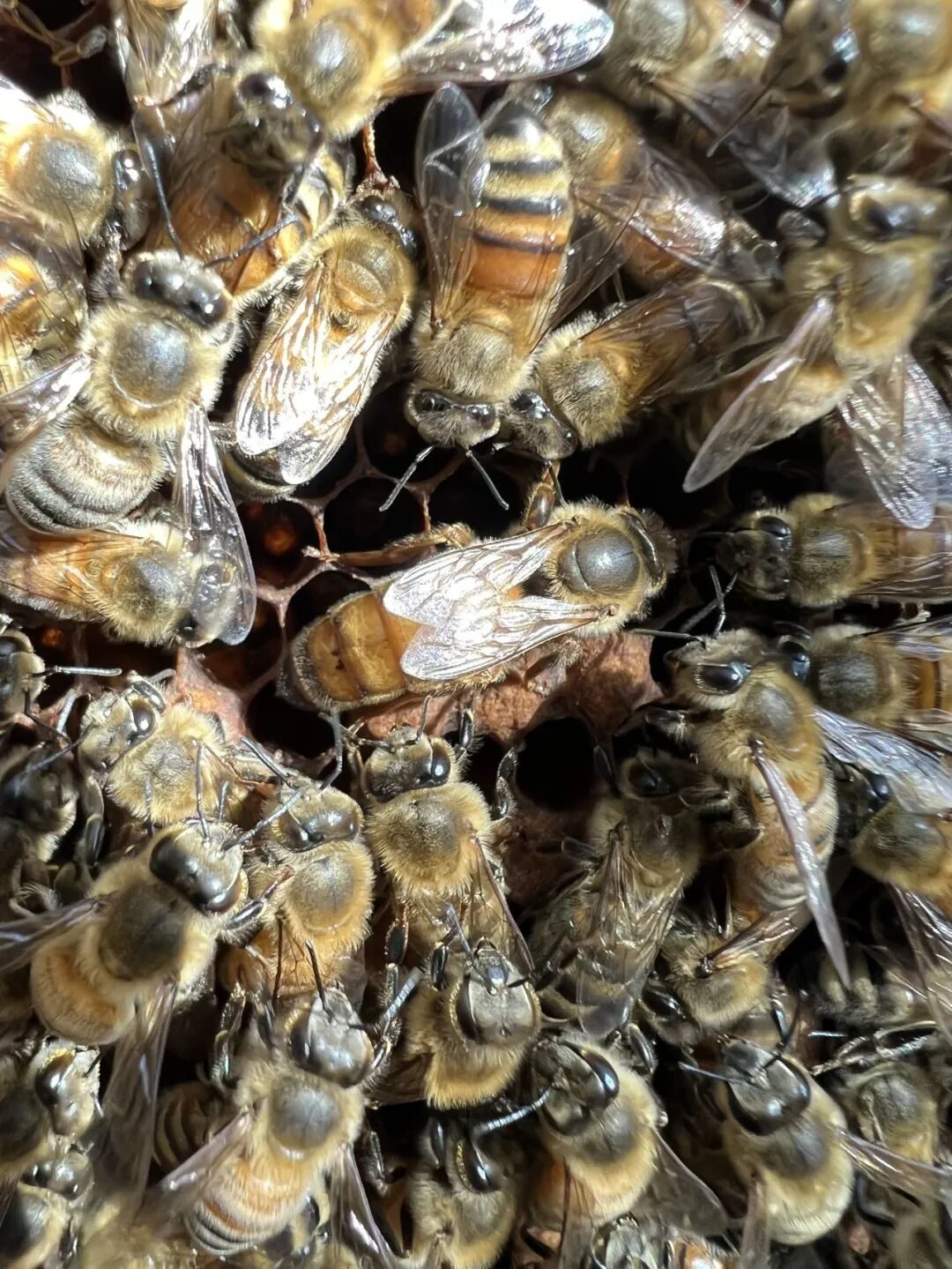
In nature, there is a group of insects known for their diligence – bees. They evolved from the era of dinosaurs and have survived to this day. They not only provide honey for humans but also complete pollination while obtaining food from flowers. Pollination is the most important part of plant reproduction, and plants and bees carry out the cycle of life in a mutually beneficial way.
The first bee experience in Xinjiang began with an encounter that spanned thousands of miles. In April 2025, I received an inquiry about a bee experience. There were two children, aged 3 and 5, and the parent asked if the 3-year-old was too young. My reply was that it might be a bit too small; observing bees would be fine, but they wouldn't fully understand the bee knowledge part. The parent asked for the location and said they would arrange a time. A year later, on May 28, I received a message again. This time it was very direct – they saw I was in Yining and asked when they could schedule a bee experience. The sudden bee experience thus began.
The family of the little ones set off from Guangzhou and came to Ili, Xinjiang. I had kept bees since I drove from Dali to Ili, but I had never written an introduction to the bee experience. The experience started in 2023 and has been going on for 4 years, with over a thousand participants. There is so much to write, and I never knew where to start. Since the experience had such an unexpected beginning, I will start from the first session in Xinjiang. Every session prepares some simple fruits for the children.
The bee experience begins with sharing knowledge about bees with the children and their parents. The composition of a bee colony (queen, drones, workers), their respective roles in survival and evolution. How bees collect nectar from flowers and bring it back home to make honey, and how they store it so that honey can last for thousands of years without spoiling. How they collect pollen and process it. Why there are two different forms of female bees in the colony: the female bees that do the collecting live only about 50 days, while the female bee that gives birth every day can live 3 to 6 years. The male bees in the colony lead a wandering life, only eating without working, and they enjoy food that is obtained without effort in various colonies. Why do bees still keep them? The above questions are all answered during the experience.
After the knowledge sharing part, everyone puts on protective suits to observe bees. They can see up close what is happening in the bee colony at that moment. Combined with the knowledge explained, they can see the queen, drones, and worker bees up close. Why are bees called genius architects? When you see the hive, the answer is revealed along with the explanation. You can also see the pollen brought back by bees and the honey stored in the hive. With luck, you might also witness the bee dance that conveys food information to companions.
Finally, you can see the process of bees being born. Newly born bees do not sting. The stinging behavior of bees is a defensive act that has not degenerated in evolution. They only attack once in their lifetime, and after completing the sting, the bee dies. Under protection, the probability of being stung during observation is extremely low. Finally, honeycombs are taken out from the hive, and you can taste honey that is still warm. The whole activity lasts about 2 hours.
Activity summary:
- Composition of bee colony and respective roles
- Worker bees' collection, honey-making, and dancing
- Observing the bee colony
- Tasting honey
The first session in 2023.
Photos and videos
続けて読む
3
Jason | Using AI to Create Your Own Mini Program/Website
Two months ago in Chiang Mai, I stumbled upon the chance to start learning how to build mini programs. My AI programming mentor, Wangshen, told me, 'Once you finish your mini program, write a summary report.' Now I've completed the new mini program for Cangshan Hiking Home, and it's already being tested. It not only solves problems I've wanted to address for a while, like adding age tags to filter activities and providing an English version, but it has also introduced new features, such as browsing restaurants, guesthouses, and meeting points on a map for a more intuitive experience, and using AI to provide quite intelligent responses.
Learn AI Programming Together
Some information about AI programming
Celebrate the Torch Festival in a Nanzhao Royal Clan Village
Over the past two years, we have taken guests to celebrate the Torch Festival in Songhe Village, Eryuan. Together we slaughtered a sheep, and with the whole village, erected a huge torch in the center of the village square. Everyone made their own torches from hemp stalks, and together with the older and younger villagers, we rushed to grab the blessing baba (cakes) from the big torch, passing blessings to each other with fire. Even for me, a native Bai person, these are rare and precious traditional festival experiences. Dali has endless festivals, and I want to experience them more before they fade away. I remember the Torch Festival of my childhood: torches were no longer enough for me. Before the festival, I would tell my dad to prepare a bucket of waste engine oil and diesel, mix them together, and then I would tightly bind cotton and old cloth with rope into a ball (some kids would secretly take cotton from their quilts at home to make it). Finally, I would make an iron wire ball, soak it in the bucket of oil, and secretly take it out every day to look at it, looking forward to having a great time on the day of the Torch Festival. We would compete in the village and by the rice fields to see whose fireball or torch was more impressive. When the torches and fireballs were almost burned out, we would rush home, walk around the potted fruit trees in circles, and say blessing words, hoping they would grow even better in the coming year.