Jason | Rucheng
Except for his monk's robes, he looked no different from many years ago—still thin and dark, with sharp facial features, gentle and smiling, and clear eyes.
On the night Free left, Xiaozhou said: 'A monk master will come from Jizu Mountain to perform a ritual to release the soul. I just called him, and he is driving down the mountain now.' Jizu Mountain is east of Dali Old Town, going around Erhai Lake and Huoshan, about 80 kilometers away, a two-hour drive.
As soon as Xiaozhou said that, I roughly knew who it was. But I wasn't sure what name to call him. Over the years, I had heard his Buddhist name after he became a monk: Master Rucheng.
By the time he arrived near the house, it was completely dark, and I went out to meet him. He was walking up from the bottom of the slope, wearing a gray monk's robe in the night, his face thin and handsome. I walked up and called him 'Brother Meng,' feeling a mix of indescribable emotions, my eyes burning. He smiled warmly and talked with me. After finishing a sentence, he used his catchphrase: 'Zhen hao' (How nice).
Except for his monk's robes, he looked no different from many years ago—still thin and dark, with sharp facial features, gentle and smiling, and clear eyes.
When I first met him, he was one of the owners of the September Folk Bar on Renmin Road. Some called him Brother Meng, others Xiao Meng. My first late-night eatery was on Huguo Road, just one alley away from September. He, Xiao Wei, and Song Jie often came to eat after work late at night, and September's customers often followed. They were my main clientele at the time. September was then the most popular folk bar among Dali residents. Many singers and musicians would go there, and even some who had become somewhat famous would play impromptu like ordinary customers. Brother Meng also played guitar and sang. He treated younger newcomers, like Xiao Chun and other young people who had just arrived in Dali, with sincerity.
They often came to eat, and over time, as we got to know and trust each other, I found Brother Meng gentle and refined, Xiao Wei more passionate, and Song Jie had the demeanor of an older sister. They were all kind. When they came to my shop, I was happy to see them. At that time, my restaurant had few customers, and as a newcomer, my cooking was still rough. They never minded whether the food came quickly or slowly, or how it was prepared—everything was fine.
Back then, Wang Yong set up a stall outside September selling CDs and sometimes recited poetry inside. As Dali's tourism developed, he rose to fame and became the number-one street vendor in Dali. With Zhang Yang's short film 'Life Elsewhere,' many people came in search of him.
It was only years later that I realized those years were his best—the most shining period of his life—and it was largely due to the people at September who protected him and gave him a place to stay and a stage. Otherwise, with his rebellious and controversial personality, often extreme attitude toward others, and the trouble he stirred up, it would have been hard for him to be accepted. I guessed that he caused headaches for the September people many times, but they always tolerated him. Later, Brother Meng, Xiao Wei, and Song Jie left Dali one after another, and September moved away from Renmin Road. He lost his refuge and those who truly cared for him.
A year later, my restaurant moved to the bustling Renmin Road. As the internet era arrived and Dali's niche culture became popular, business improved, and so did September. Rapid change always brings troubles and rifts. After a couple of years, I no longer wanted to run the restaurant and handed it over to Xiao Chun. Later, I heard that Brother Meng had become a monk at Fangguan Temple on Jizu Mountain, and Xiao Wei followed him, living nearby at Hengyang Convent. After that, he became known as 'Master Rucheng.'
A few minutes later, we arrived at Free's residence. He nodded to everyone, asked a few questions, and asked Xiaozhou to bring a bowl of water. He skillfully performed a simple ritual in his own way. One small detail: Yaoyao hoped to do it in the Tibetan Buddhist style, as she was a Tibetan Buddhist disciple. He smiled and said, 'All are fine.' I thought to myself: 'Zhen hao.'
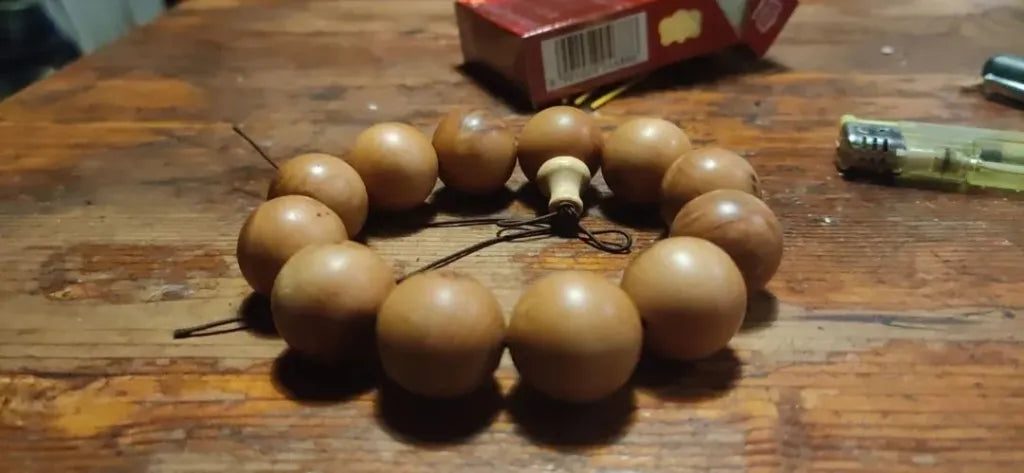
Before he got into the car to leave, he gave me his prayer beads. I had never wanted a string of prayer beads, but I joyfully accepted them.
Thinking of Brother Meng back then, playing the guitar with youthful passion, softly singing moving songs, I feel that Master Rucheng now, in his monk's robes, light and calm, is equally moving. Perhaps the difference is that he himself has gained more ease and peace.
Later, Free's ashes were divided: one portion was taken to Jizu Mountain and buried near the ruins of Huayan Temple, under a century-old cypress tree that Master Rucheng selected, because Free had lived on Jizu Mountain for the last few months of his life; one portion was taken by Yaoyao to Suosong Village in Tibet, where Free had lived, and scattered into the Yarlung Tsangpo River; and one portion was scattered on Cangshan Mountain by me, Deng Shi, and Jiang Cuo, and Yatou.
Keep reading
3
Jason | Using AI to Create Your Own Mini Program/Website
Two months ago in Chiang Mai, I stumbled upon the chance to start learning how to build mini programs. My AI programming mentor, Wangshen, told me, 'Once you finish your mini program, write a summary report.' Now I've completed the new mini program for Cangshan Hiking Home, and it's already being tested. It not only solves problems I've wanted to address for a while, like adding age tags to filter activities and providing an English version, but it has also introduced new features, such as browsing restaurants, guesthouses, and meeting points on a map for a more intuitive experience, and using AI to provide quite intelligent responses.
Learn AI Programming Together
Some information about AI programming
Celebrate the Torch Festival in a Nanzhao Royal Clan Village
Over the past two years, we have taken guests to celebrate the Torch Festival in Songhe Village, Eryuan. Together we slaughtered a sheep, and with the whole village, erected a huge torch in the center of the village square. Everyone made their own torches from hemp stalks, and together with the older and younger villagers, we rushed to grab the blessing baba (cakes) from the big torch, passing blessings to each other with fire. Even for me, a native Bai person, these are rare and precious traditional festival experiences. Dali has endless festivals, and I want to experience them more before they fade away. I remember the Torch Festival of my childhood: torches were no longer enough for me. Before the festival, I would tell my dad to prepare a bucket of waste engine oil and diesel, mix them together, and then I would tightly bind cotton and old cloth with rope into a ball (some kids would secretly take cotton from their quilts at home to make it). Finally, I would make an iron wire ball, soak it in the bucket of oil, and secretly take it out every day to look at it, looking forward to having a great time on the day of the Torch Festival. We would compete in the village and by the rice fields to see whose fireball or torch was more impressive. When the torches and fireballs were almost burned out, we would rush home, walk around the potted fruit trees in circles, and say blessing words, hoping they would grow even better in the coming year.