Jason | 04.30 Uji
During Japan's Golden Week, school is closed for ten days. The day before the holiday, my homeroom teacher, Mr. Kuroda, told me: 'Chen-san, your last day of school has been changed from June 8th to June 20th.' So I decided to go for a bike ride, planning to make a loop, and if time allowed, ride 250 kilometers to Roku's new home. More
During Japan's Golden Week, school is closed for ten days. The day before the holiday, my homeroom teacher, Mr. Kuroda, told me: 'Chen-san, your last day of school has been changed from June 8th to June 20th.'
So I decided to go for a bike ride, planning to make a loop, and if time allowed, ride 250 kilometers to Roku's new home.
I texted him saying I might come, and he hesitated a bit: 'Actually, we're busy with renovations, fixing up the house, farming, etc., so we won't be able to host you. If that's okay with you, that's fine [facepalm]. But our house is in the mountains, are you considering staying?'
We don't know each other well at all, so it's perfectly normal. I said: 'No need to host me, I have my bike, tent, sleeping bag. I often camp out. I just don't want to disturb you. I'll decide when I pass by, not coming specifically.'
He replied: 'Okay, but my house isn't on any route you'd just pass by [facepalm][chuckle]. I'll send you a pin.'
At 3 p.m., I set off on my bike. First to Uji – I have three classmates from language school who took the train there today.
Riding along the Kamo River, there was a quiet stretch where a small family was picnicking. The stream flowed by, and the sandbanks were covered in green grass – it was beautiful. I sat for a while, opened Duolingo to do some Japanese exercises, finished a couple of lessons, then reminded myself not to get addicted and had to move on.
On the way I passed Fushimi Inari Shrine and Kiyomizu-dera. There were so many people, I really didn't feel like going in, no matter how beautiful the architecture. Many people were wearing kimonos, but you could easily tell foreigners from Japanese; occasional wearers looked awkward, their walking posture very different.
When I reached the Uji River, there were hardly any people. I kept cycling along the river. The evening light was so liberating.
Arriving in Uji just as the sun was almost setting, it was the most beautiful time. Going back the next day during the day wouldn't compare at all.
oplus_1179648
" data-medium-file="https://lingjiec.home.blog/wp-content/uploads/2025/04/img20250429183944475876553611157617.jpg?w=300" data-large-file="https://lingjiec.home.blog/wp-content/uploads/2025/04/img20250429183944475876553611157617.jpg?w=1024" width="1024" height="576" src="https://lingjiec.home.blog/wp-content/uploads/2025/04/img20250429183944475876553611157617.jpg?w=1024" alt="" class="wp-image-1165" style="height: auto; max-width: 100%; border: 0px; box-sizing: border-box; vertical-align: middle; border-radius: 3px;">
oplus_1179648
" data-medium-file="https://lingjiec.home.blog/wp-content/uploads/2025/04/img202504291840426170730721099534317.jpg?w=300" data-large-file="https://lingjiec.home.blog/wp-content/uploads/2025/04/img202504291840426170730721099534317.jpg?w=1024" width="1024" height="576" src="https://lingjiec.home.blog/wp-content/uploads/2025/04/img202504291840426170730721099534317.jpg?w=1024" alt="" class="wp-image-1166" style="height: auto; max-width: 100%; border: 0px; box-sizing: border-box; vertical-align: middle; border-radius: 3px;">
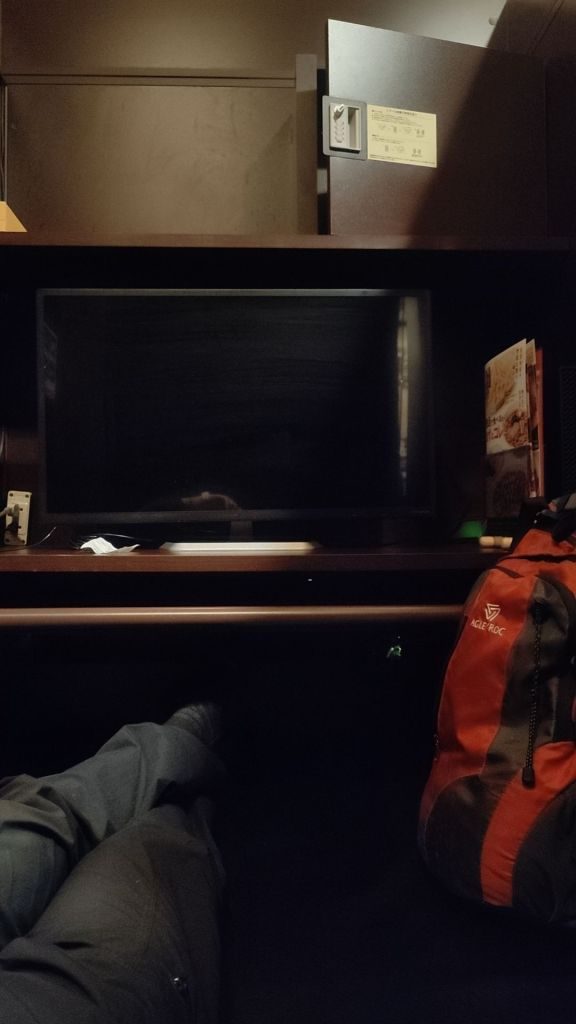
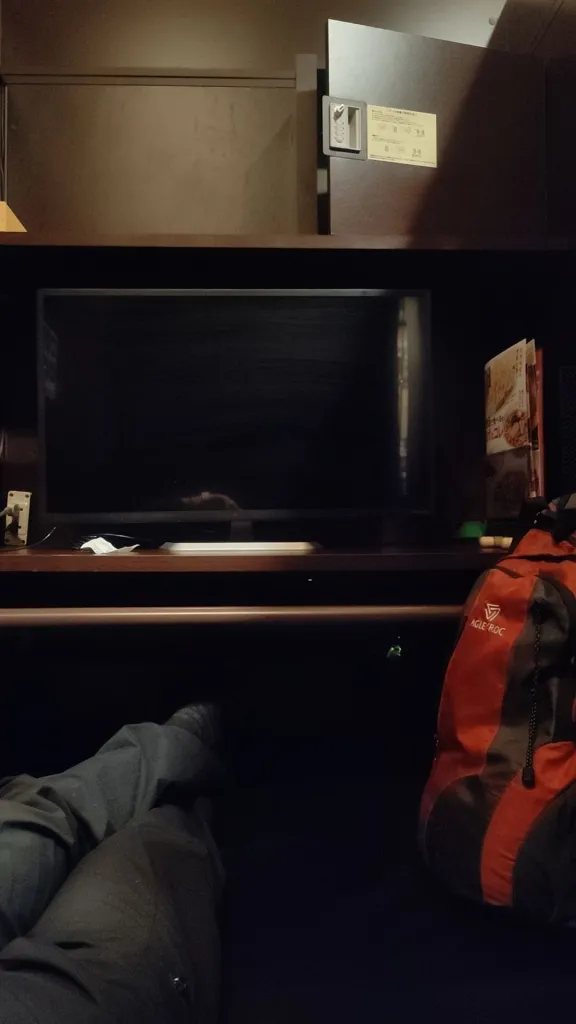
I met up briefly with my classmates at the bridge. They had watched the sunset from the mountains and were taking the train back. So I headed to 'Kaikatsu CLUB' to stay the night. Unlocking this internet café gave me a lot of freedom – I didn't need to carry my tent or sleeping bag.
It felt like coming home.
This morning, I still wanted to check out Byodo-in Temple, but when I got to the entrance, I gave up. There were too many tourists; I felt like going in but didn't. Let's get some matcha, but the nearby matcha shops were packed with tourists, so I crossed to the other side of the river for a walk.
On the opposite bank of the Uji River from Byodo-in, I found a traditional restaurant called Sabo Kunugi. It's a pleasant walk across the bridge. Quiet, you can eat matcha food and drinks, by the river, with a view of the Uji River. It should dilute the 'hotspot vibe' I experienced around Byodo-in. (I didn't go in myself, as I wasn't hungry. This is the only place near there that I intuitively felt was good after my loop, and it's not expensive: a set meal plus drink should be around 50–100 per person.)
Opening the map, I searched for 'kissaten' and found this matcha roastery a little off the beaten path. It's a very local matcha café in an alleyway. They have desserts; I ordered a matcha latte and yokan (total 50 yuan). There's a small traditional courtyard.
oplus_1179648
" data-medium-file="https://lingjiec.home.blog/wp-content/uploads/2025/04/img202504301350186856535865431746122.jpg?w=300" data-large-file="https://lingjiec.home.blog/wp-content/uploads/2025/04/img202504301350186856535865431746122.jpg?w=1024" loading="lazy" width="1024" height="576" src="https://lingjiec.home.blog/wp-content/uploads/2025/04/img202504301350186856535865431746122.jpg?w=1024" alt="" class="wp-image-1168" style="height: auto; max-width: 100%; border: 0px; box-sizing: border-box; vertical-align: middle; border-radius: 3px;">
oplus_1179648
" data-medium-file="https://lingjiec.home.blog/wp-content/uploads/2025/04/img202504301357174696293444913919473.jpg?w=300" data-large-file="https://lingjiec.home.blog/wp-content/uploads/2025/04/img202504301357174696293444913919473.jpg?w=1024" loading="lazy" width="1024" height="576" src="https://lingjiec.home.blog/wp-content/uploads/2025/04/img202504301357174696293444913919473.jpg?w=1024" alt="" class="wp-image-1169" style="height: auto; max-width: 100%; border: 0px; box-sizing: border-box; vertical-align: middle; border-radius: 3px;">
Here, everyone speaking is Japanese. My next seat was an elderly woman, slim, about seventy. When I was taking photos of the courtyard, she said something to me in Japanese. I thought I might be doing something wrong, so I asked her. Hearing I'm not Japanese, she smiled and said, 'Sorry, I thought you were Japanese.' She asked in English, 'Where are you from?' I said, 'From China.' She said, 'Asian faces all look similar, so I couldn't tell. I'm also visiting, from Kyoto.'
I asked her: 'You speak English – what's the reason? Work?'
She replied, 'A little. When I was very young, I went to the US and lived there for a year, homestay. But too many years have passed; I've forgotten most of it.'
'Studying? Why did you stay a year?'
'Not studying. When I was a child, I really wanted to go to the US, so I went and lived there for a year.'
I wanted to know how she went – was it an exchange program? But she didn't seem to understand, so I wasn't quite clear on the details.
'Afterwards we sent Christmas cards, they sent them to me, and I sent them back.'
In Japanese, I told her I cycled from Kyoto and was staying in Saga-Arashiyama, studying at a language school for two months, only speaking a little Japanese. She was also surprised. We chatted for a while, mixing English and Japanese.
I asked her: 'Are you traveling alone?'
She said: 'My home is in Kyoto City, but relatively close to Uji. I sometimes come here for tea. Uji's tea is excellent, and I like the courtyard. This café, I'm visiting for the first time.'
After a while, she got up to leave, smiled and said 'take care.'
As I left Uji and cycled toward Kobe, I thought about this elderly woman's youth. It was approximately the mid-to-late 1960s, when Japan's economy was growing rapidly, becoming the world's second-largest economy – similar to China now. The economy doubled in seven years, and young people began to aspire to the outside world, with the financial ability to travel abroad or even work overseas with large corporations. The outside world was exciting and still unfamiliar.
A few days ago, I listened to a podcast, 'Japan Floating.' The two hosts, who studied at Japanese universities for undergraduate/graduate degrees, mentioned that schools strongly encourage Japanese university students to study abroad, but students seem reluctant. One host said: 'When I mention studying abroad to my Japanese friend (a doctoral student at Ochanomizu University in Tokyo), she looks distressed.' Even though the destinations were Switzerland and the US. Compared to the current domestic enthusiasm for studying in developed countries, it's very different.
From 1990 to 2023, Japan's average wages have not increased for thirty years. Considering inflation, purchasing power has actually decreased (roughly $2,580/month). In China in 1990, excluding farmers, the average monthly wage for urban workers was only 178 RMB (approximately $37).
So you can imagine how tough it was for Chinese students studying abroad back then. Their parents' monthly salary could buy about 12 bowls of ramen (approximately 5,933 yen, ramen at 500 yen per bowl).
Photos
続けて読む
3
Jason | Using AI to Create Your Own Mini Program/Website
Two months ago in Chiang Mai, I stumbled upon the chance to start learning how to build mini programs. My AI programming mentor, Wangshen, told me, 'Once you finish your mini program, write a summary report.' Now I've completed the new mini program for Cangshan Hiking Home, and it's already being tested. It not only solves problems I've wanted to address for a while, like adding age tags to filter activities and providing an English version, but it has also introduced new features, such as browsing restaurants, guesthouses, and meeting points on a map for a more intuitive experience, and using AI to provide quite intelligent responses.
Learn AI Programming Together
Some information about AI programming
Celebrate the Torch Festival in a Nanzhao Royal Clan Village
Over the past two years, we have taken guests to celebrate the Torch Festival in Songhe Village, Eryuan. Together we slaughtered a sheep, and with the whole village, erected a huge torch in the center of the village square. Everyone made their own torches from hemp stalks, and together with the older and younger villagers, we rushed to grab the blessing baba (cakes) from the big torch, passing blessings to each other with fire. Even for me, a native Bai person, these are rare and precious traditional festival experiences. Dali has endless festivals, and I want to experience them more before they fade away. I remember the Torch Festival of my childhood: torches were no longer enough for me. Before the festival, I would tell my dad to prepare a bucket of waste engine oil and diesel, mix them together, and then I would tightly bind cotton and old cloth with rope into a ball (some kids would secretly take cotton from their quilts at home to make it). Finally, I would make an iron wire ball, soak it in the bucket of oil, and secretly take it out every day to look at it, looking forward to having a great time on the day of the Torch Festival. We would compete in the village and by the rice fields to see whose fireball or torch was more impressive. When the torches and fireballs were almost burned out, we would rush home, walk around the potted fruit trees in circles, and say blessing words, hoping they would grow even better in the coming year.