Yang Mo | Living in Dali
I once did a podcast with a friend where we talked about why I chose to live in Dali. At that time, I gave the following reasons:
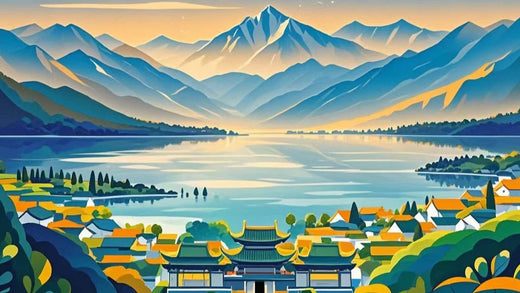
I once did a podcast with a friend where we talked about why I chose to live in Dali. At that time, I gave the following reasons:
1. Dali is a small place.
Compared to the massive scale of first- and second-tier cities in China, Dali is a small town tucked away in a corner. The pace of life in a small town suits me. I don't need to spend two or three hours commuting every day. In Dali, walking and cycling can cover ninety percent of daily transportation. Meeting friends doesn't require planning a day in advance, because after sending a message, we can meet at the agreed location in half an hour.
A "small place" means you can live nearby: you can walk ten minutes to the market to buy groceries, you know every street and alley in the area, you know where the well water is sweet and refreshing for making tea, you know when the winter cherry blossoms at the intersection bloom, and you know where around a corner there is a small shop you frequent, where you might run into acquaintances. These details of life form a picture of living, imprinted in your mind, creating a sense of stability in your heart.
I grew up in such a small town, and this picture of life suits me.
2. Dali is a small place with mobility.
There are tens of thousands of small towns in China, but few have mobility. Like every time I return to my hometown, I feel time passes so slowly, nothing has changed, people's lives, their way of looking at the world, their values—nothing has changed. It's like a deep pool, a world unto itself, but not suitable for me now.
Dali is a special place. Not to mention that during the Nanzhao Kingdom period, Dali was once a crossroads of Asian cultures; even now, Dali is a place with frequent population movement. Mobility brings vitality, diversity, and creativity. There are tens of thousands of "new Dali locals" residing in Dali, and the daily flow of tourists is even livelier.
Dali has a unique cultural environment, thanks to the backpackers of the 1980s and 1990s. At that time, Dali was a remote corner nobody cared about, and people's impression of it mostly came from Jin Yong's novels. Before capital and tourists flooded in, foreign backpackers brought hippie culture. Hippie culture opposes the mainstream, and opposing the mainstream is precisely the soil for freedom, tolerance, and diversity.
Thus, Dali is a place of multiculturalism, both quiet and lively, both rustic and cosmopolitan. Some people set up a small courtyard here, quietly tending flowers and vegetables, drinking tea and playing with cats. Others come to do small business. Some come to lie flat. Some cheat and swindle. Some go up the mountain to cultivate immortality. Waves of young people pour in with their fresh faces, their youthful gains and losses.
3. Local conditions and climate.
Although this year's rainy season in Dali has been too long, the spring-like temperature all year round and the brilliant sunshine on clear days are still reasons many people stay in Dali.
Dali has a subtropical monsoon climate, with an average altitude of two thousand meters. Influenced by the Indian Ocean monsoon, rainfall is mostly concentrated from May to September. Dali is on a plateau, but there is no lack of oxygen. Cangshan is the southern extension of the Himalayan Mountains, with a vertical drop of over a thousand meters, lush vegetation, large forests and grasslands, and abundant flora and fauna.
Dali is an open flatland between Cangshan and Erhai. This openness not only serves as a landscape but also affects people's psychology. Sometimes, after staying in Dali for a long time, you might think the scenery is just ordinary, but every time you go deep into the mountains, every time you go to the lakeshore on a clear evening, Dali's beauty always surprises me, as if I were noticing these mountains, forests, and water ripples for the first time.
The above are still my reasons for living in Dali. But beneath all these appearances, there is actually a fundamental reason: Dali is suitable for people who want to build life according to their own ideas.
People often ask why I choose to stay in Dali, implying that there is nothing here—no resources of big cities, no social connections of hometowns, how can life be sustained? What I want to say is that perhaps precisely because of the lack of resources and social connections, life shows new possibilities. Many people who come to Dali learn painting, music, handicrafts, or master a skill to make a living halfway through life. They learn to run self-media, try street vending for the first time, attempt to become digital nomads and freelancers.
Nowadays, many people do not understand or even mock Dali's lying-flat culture, but I think this precisely reflects a characteristic of Dali: no matter what kind of person you are, you can conduct your life experiment here. Here, people do strange things, which might be a short, experimental rebellion against their own lives. Those who lie flat in Dali, from another perspective, are also people unwilling to be disciplined. And they have made their own choices for life.
Moreover, many people living in Dali are those who want to live more seriously. They have thought, hesitated, struggled, and still feel that they need to take on the responsibility of life themselves. The real responsibility of life is not those things in traditional social values. On the contrary, the heavy responsibility of life is that you need to find the value of life yourself and weave the web of meaning of life according to your true will.
If life is a play, in Dali, you have to fill in the blank pages of the script yourself.
Keep reading
3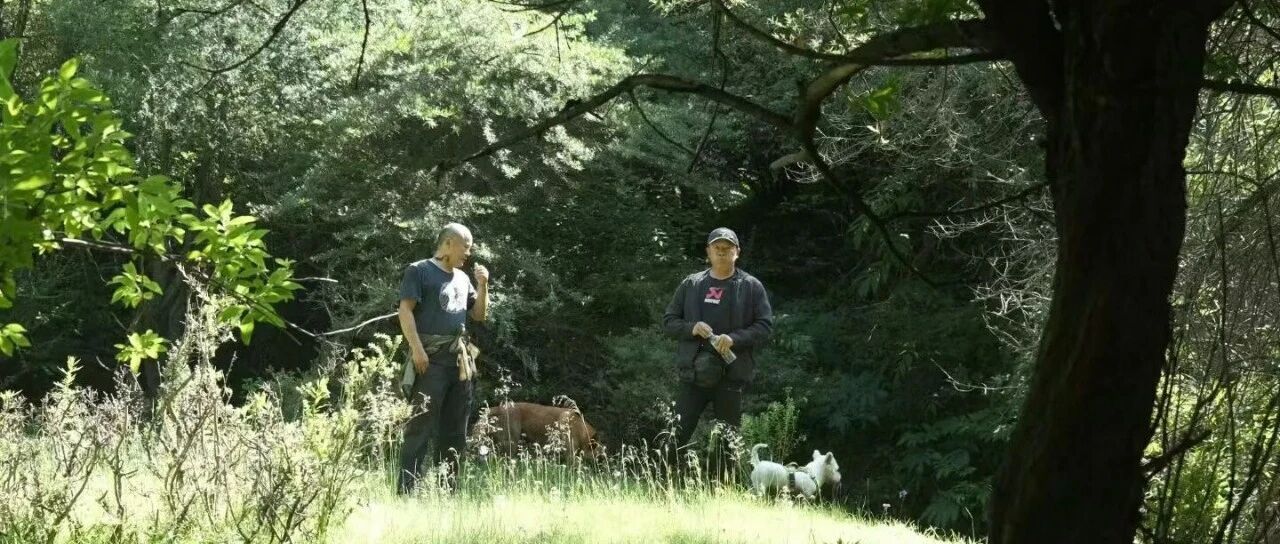
Jason | Using AI to Create Your Own Mini Program/Website
Two months ago in Chiang Mai, I stumbled upon the chance to start learning how to build mini programs. My AI programming mentor, Wangshen, told me, 'Once you finish your mini program, write a summary report.' Now I've completed the new mini program for Cangshan Hiking Home, and it's already being tested. It not only solves problems I've wanted to address for a while, like adding age tags to filter activities and providing an English version, but it has also introduced new features, such as browsing restaurants, guesthouses, and meeting points on a map for a more intuitive experience, and using AI to provide quite intelligent responses.
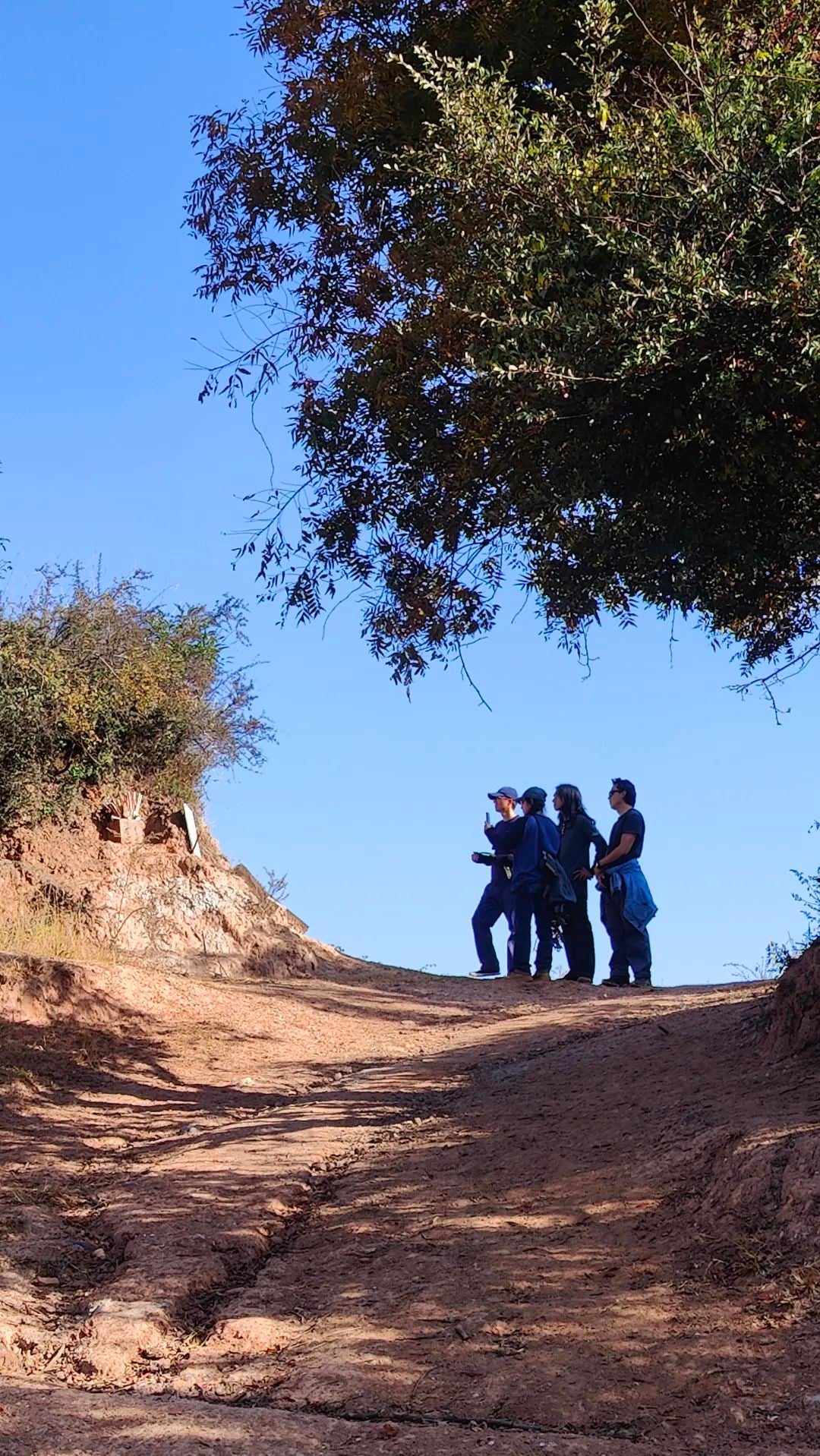
Learn AI Programming Together
Some information about AI programming
Celebrate the Torch Festival in a Nanzhao Royal Clan Village
Over the past two years, we have taken guests to celebrate the Torch Festival in Songhe Village, Eryuan. Together we slaughtered a sheep, and with the whole village, erected a huge torch in the center of the village square. Everyone made their own torches from hemp stalks, and together with the older and younger villagers, we rushed to grab the blessing baba (cakes) from the big torch, passing blessings to each other with fire. Even for me, a native Bai person, these are rare and precious traditional festival experiences. Dali has endless festivals, and I want to experience them more before they fade away. I remember the Torch Festival of my childhood: torches were no longer enough for me. Before the festival, I would tell my dad to prepare a bucket of waste engine oil and diesel, mix them together, and then I would tightly bind cotton and old cloth with rope into a ball (some kids would secretly take cotton from their quilts at home to make it). Finally, I would make an iron wire ball, soak it in the bucket of oil, and secretly take it out every day to look at it, looking forward to having a great time on the day of the Torch Festival. We would compete in the village and by the rice fields to see whose fireball or torch was more impressive. When the torches and fireballs were almost burned out, we would rush home, walk around the potted fruit trees in circles, and say blessing words, hoping they would grow even better in the coming year.