Jason | Da Hai
Twenty years ago, Da Hai was a junior colleague. Over time, we became friends. He's always been a capable and genuine person, still like a young man at heart.
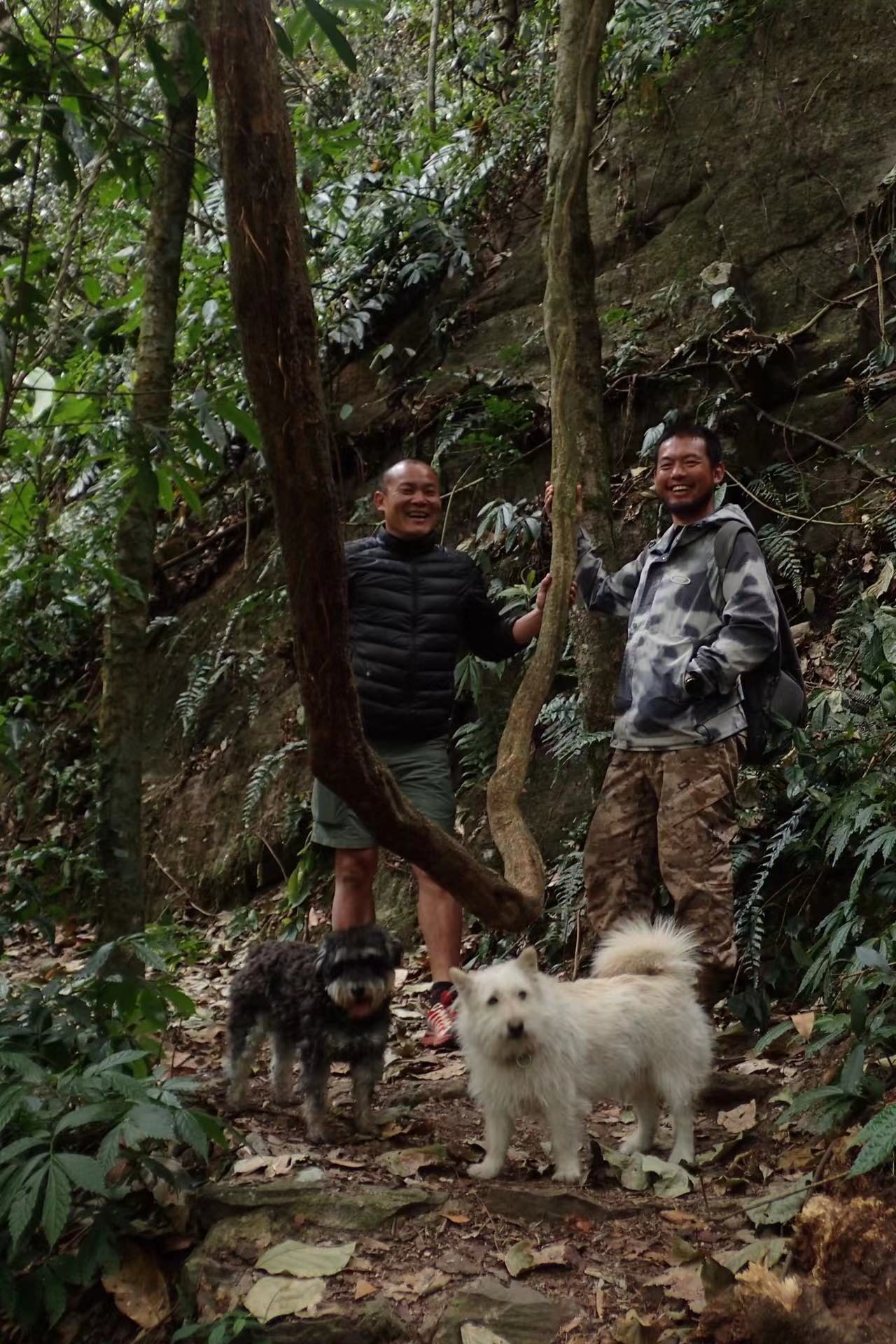
In July, Da Hai opened a restaurant in a village by Black Dragon Creek. The road sees little traffic, so most customers are his friends. Though he hasn't been in Dali long, he has more friends than I do. He loves cooking for people. People like him not because he's sociable—he doesn't talk much—but because he's versatile, knowledgeable, and sincere. He has the most diverse skills of anyone I know.
For the restaurant, he cleared a large abandoned yard, planted grass, vegetables, and herbs, transplanted a big tree, designed the layout, did the electrical and plumbing, and built the tables himself. He did almost everything except hire a few helpers.
Most people meet him as a fully capable man. But I've known him since his early youth, over twenty years, and our lives have intertwined. I've seen his journey.
Twenty years ago, in 2004 on Changle Road in Shanghai, there was an outdoor gear shop called "Wildfire." I was moving a heavy old TV with Xiao Hua in the warehouse upstairs. We were exhausted, stuck on the narrow stairs. Then a young man came in, short but sturdy, and said, "Let me try." He hugged the TV and carried it up effortlessly. That was Da Hai. I've never forgotten that first impression.
He was 21 then; I was 28. He had come from Beijing construction sites to Shanghai, worked as a barber for a year, but hated selling membership cards. Passing by our shop while seeing off his girlfriend, he saw a hiring sign and got the job. I learned this years later. In 2001, China joined the WTO, and new industries were booming. Anyone could find a job.
Two years earlier, I and some outdoor club friends had opened this shop as a side business. Hiking, camping, and backpacking abroad were trendy. The internet was just starting, with BBS forums. Young people were forming interest groups to go to the mountains, Yunnan, Tibet, even abroad. Running a small shop was a dream for some.
When I met Da Hai, I had no formal job. I lived near Xiangyang South Road, helped at the shop, and spent time at Buna Café on Xinle Road. Before that, I had been a finance manager at an ad agency, but after a messy breakup, I took a four-month escape trip through Chengdu, Tibet, Nepal, and India. That year, Nepal waived visa fees for Chinese; the year before, China first issued passports for individual travel.
After returning, I had no direction. I thought of opening an online store to sell outdoor gear. Taobao had just launched; eBay was dominant. I needed help and thought of Da Hai. I asked Xiao Hua to let him work with me.
Da Hai had little computer experience, only gaming at internet cafes. He wasn't good at school; after junior high, he went to work on a farm in the Greater Khingan Mountains. But he learned fast when interested. He quickly mastered uploading products and making Excel sheets. Within half a year, he saw Taobao's rise and we switched from eBay.
Looking back, Da Hai began to take charge of his life in Shanghai. His earlier experiences, like two years on the farm near the Russian border, were also important. Some relatives from Anhui had been there since the 1960s.
続けて読む
3
Jason | Using AI to Create Your Own Mini Program/Website
Two months ago in Chiang Mai, I stumbled upon the chance to start learning how to build mini programs. My AI programming mentor, Wangshen, told me, 'Once you finish your mini program, write a summary report.' Now I've completed the new mini program for Cangshan Hiking Home, and it's already being tested. It not only solves problems I've wanted to address for a while, like adding age tags to filter activities and providing an English version, but it has also introduced new features, such as browsing restaurants, guesthouses, and meeting points on a map for a more intuitive experience, and using AI to provide quite intelligent responses.
Learn AI Programming Together
Some information about AI programming
Celebrate the Torch Festival in a Nanzhao Royal Clan Village
Over the past two years, we have taken guests to celebrate the Torch Festival in Songhe Village, Eryuan. Together we slaughtered a sheep, and with the whole village, erected a huge torch in the center of the village square. Everyone made their own torches from hemp stalks, and together with the older and younger villagers, we rushed to grab the blessing baba (cakes) from the big torch, passing blessings to each other with fire. Even for me, a native Bai person, these are rare and precious traditional festival experiences. Dali has endless festivals, and I want to experience them more before they fade away. I remember the Torch Festival of my childhood: torches were no longer enough for me. Before the festival, I would tell my dad to prepare a bucket of waste engine oil and diesel, mix them together, and then I would tightly bind cotton and old cloth with rope into a ball (some kids would secretly take cotton from their quilts at home to make it). Finally, I would make an iron wire ball, soak it in the bucket of oil, and secretly take it out every day to look at it, looking forward to having a great time on the day of the Torch Festival. We would compete in the village and by the rice fields to see whose fireball or torch was more impressive. When the torches and fireballs were almost burned out, we would rush home, walk around the potted fruit trees in circles, and say blessing words, hoping they would grow even better in the coming year.