Jason | Several Iranians I Met on the Journey
Traveling in Iran, like in most parts of the world, places popular with tourists sometimes charge extra fees, and occasionally you might encounter unpleasant situations, though very rarely. But because I met people like Reza and Abbas, even if such things happen, they completely offset any other bad experiences.
Today I went to the post office in Shiraz to send an express mail to Reza, who lives in the northern province of Mazandaran, in the town of Amol by the Caspian Sea.
I first met him last year when I was smoking in the corridor of a traditional house in Kashan. He came to borrow a light, polite and straightforward. Reza was very young, with thick but neatly trimmed beard and hair, handsome and innocent, and his speech showed he was well educated. He had recently married Majan and was on a New Year trip with another couple, driving about 600 kilometers from his hometown to Kashan. In Iran, that unmarried couple couldn't share a room, so the two men stayed in one room and the two women in another.
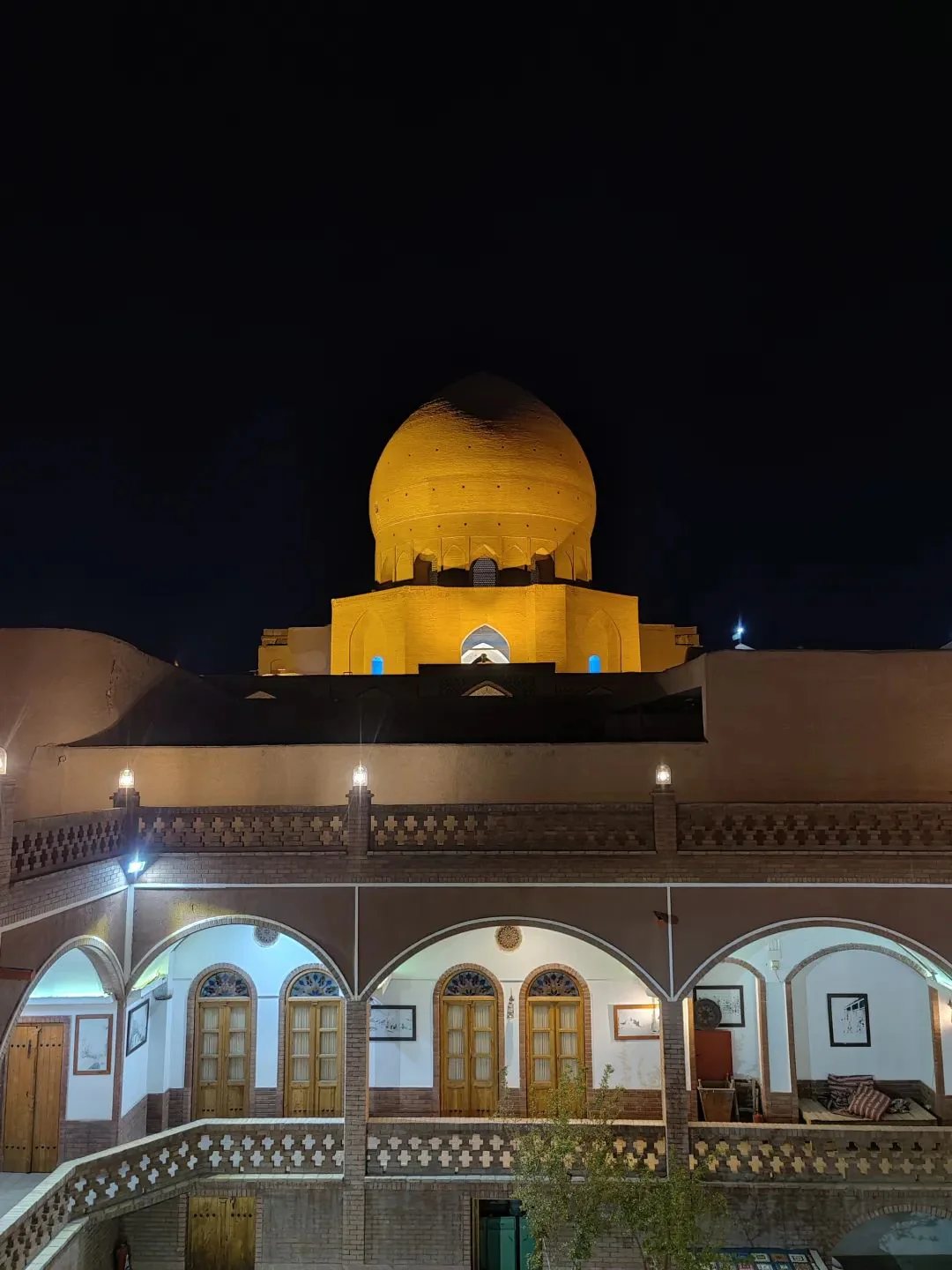
In the evening, they invited us up to the rooftop of the guesthouse to chat. Kashan's guesthouses are traditional sunken courtyard houses. From the rooftop you look down into the courtyard, which is a square pit. Probably due to the heat of the desert, the rooms are designed similarly to cave dwellings, cool in summer and warm in winter. They are quite exquisite, and the courtyard usually has a corridor and a rectangular blue mosaic pool in the center. The rooftop is level with the ground floor and accessible on foot. Reza brought out some homemade liquor to treat Xiaojing and Xiaoqiang, who both loved drinking and were very happy. Next to the guesthouse was a grand ancient mosque with a dome, its lights on before midnight, giving us an exotic atmosphere.
Later, because of Reza's sincere invitation, Xiaojing and I traveled for two consecutive days from the desert of central Iran, staying one night in a small town called Damghan, crossing the Alborz Mountains, and arriving at the green and humid small town of Amol in the north. Compared to conventional routes, this kind of travel to unknown destinations excited us more.
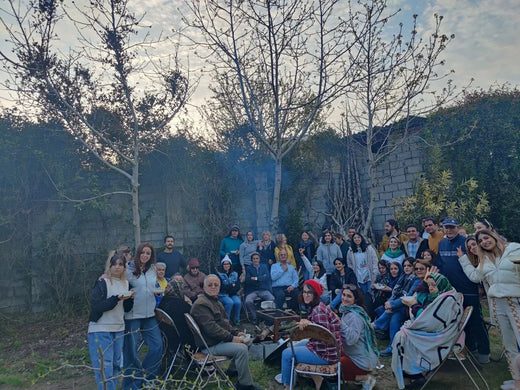
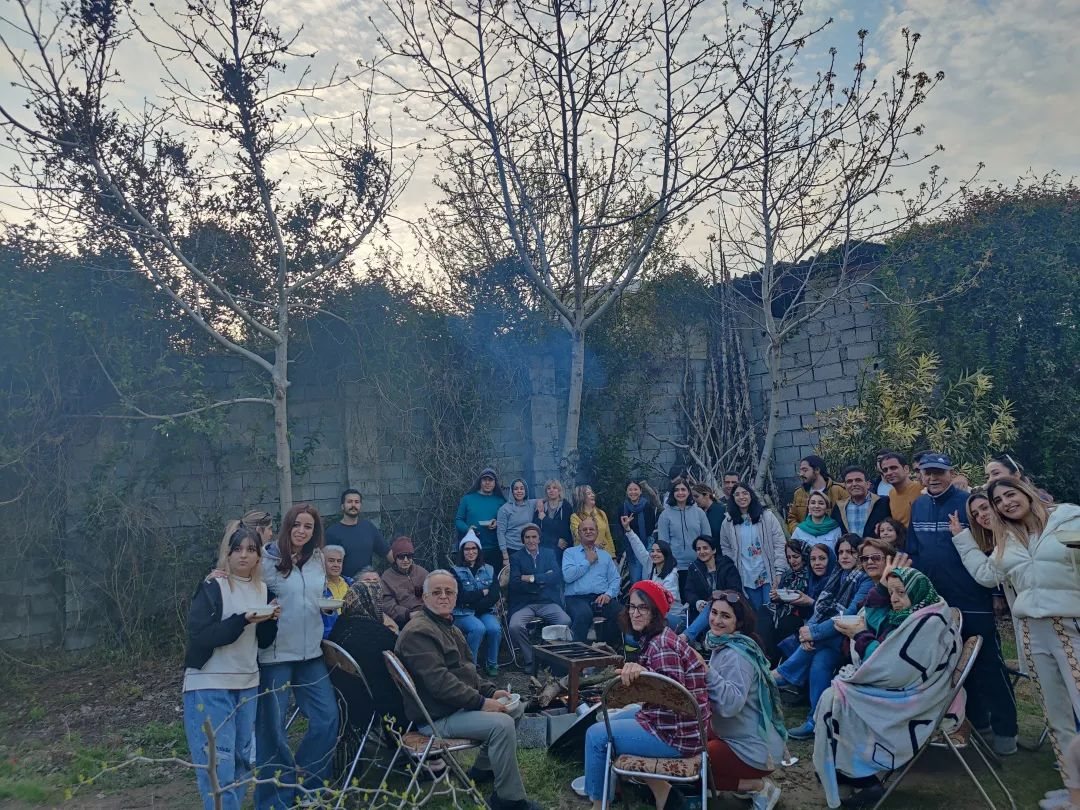
We stayed at Reza's house for three nights, in a three-bedroom apartment on the second floor, where they set up futons for us in a guest room. The living room was large, exquisitely and newly decorated, completely Western style. The next day, we attended a big family gathering with his friends, dozens of people, in a family's garden. In Iran, singing and dancing are not allowed in public. But at home gatherings, everyone was good at singing and dancing, full of enthusiasm. Some prepared various grilled meats, others set up a bonfire and cooked a big pot of thick soup. Everyone pitched in, orderly. Shortly after we arrived at the gathering, Reza said to me, "If you feel like leaving later, we'll go." "No, I feel great here." In the end, we stayed from noon barbecue all the way to a picnic dinner. In the evening, he and Majan were going to Reza's aunt's house for a visit, and took us along. The aunt had married into a traditional, religious Muslim family, where all women wore black chadors. It was quite different from the Westernized Reza family. Just before reaching the aunt's house, Reza's brother-in-law was holding a headscarf at the door, prepared for Majan. Majan, in her early twenties, ran a fashionable clothing store and posted Instagram photos and short videos for promotion. She disliked the headscarf, but at the aunt's house, she had to deal with it.
On the third day, we visited his parents' house and had dinner together. Reza's mother cooked. His father had been a factory director before retirement, living in a large villa with various things purchased from travels around the world. The oversized living room and furniture was a bit like a reception room for national leaders. We chatted until around 11 o'clock and then said goodbye. Late at night, we went together to the supermarket for shopping, sat by the street drinking coffee and chatting, talking about our lives, work, customs, and buying ice cream. Reza said that cafes had become very popular these years, and since there was no other entertainment at night, people just went to drink coffee and chat. The night was cool, but even cheap cafes had gas heating systems, making it comfortable to sit by the roadside. Energy was nearly free here (gasoline at that time was about 0.3 yuan per liter, cheaper than water).
During those days, Reza was careful not to let us be overwhelmed by hospitality, and he would occasionally check to see if we were uncomfortable. He was a decent, warm, and sincere person. We were fortunate to meet Reza, but it wasn't a coincidence. Many ordinary Iranians share this trait: decency and sincerity, whether rich or poor. For example, Mr. Abbas, whom I met at the post office this time.
At the post office, the staff didn't speak English, and communicating about the address was a bit difficult. At that moment, an Iranian man leaned over and asked, "Do you need help?" He looked around forty, not tall, slightly balding, wearing a shirt and trousers. His expression was serious and earnest, but friendly, and his English was fluent and standard. I said, "Almost done, should be fine." But he still asked the postal staff if there was anything unclear and helped me fill in the remaining information. Then he asked, "Do you have Iranian currency? If not, I can pay the postage for you." "Thanks, I have some." I showed him a few banknotes. He said, "No problem then," and left.
I took the completed form and the wrapped postal box to another counter for weighing and payment. After calculating the fee, the staff asked, "Do you have a card?" I said I only had cash. She probably didn't have change at the moment, and looked troubled. I didn't understand what she said. Since last year, I had learned that after the pandemic, Iranians had widely adopted card payments to reduce contact with banknotes; almost every shop had a POS machine. Just as I was struggling to communicate, the Iranian man returned, took out his card, and paid the fee. He probably anticipated that I might face payment issues and came back to check. He gave me a business card that read 'Dr. AbbasAli Paydar, Oral Pathologist.' He asked, "How many days are you staying in Shiraz?" I replied, "About two days." "If you have any problems these two days, call me anytime. The number is here," he said, pointing at the phone number on the card. "Let me give you the postage." "No, no," he said and walked away directly.
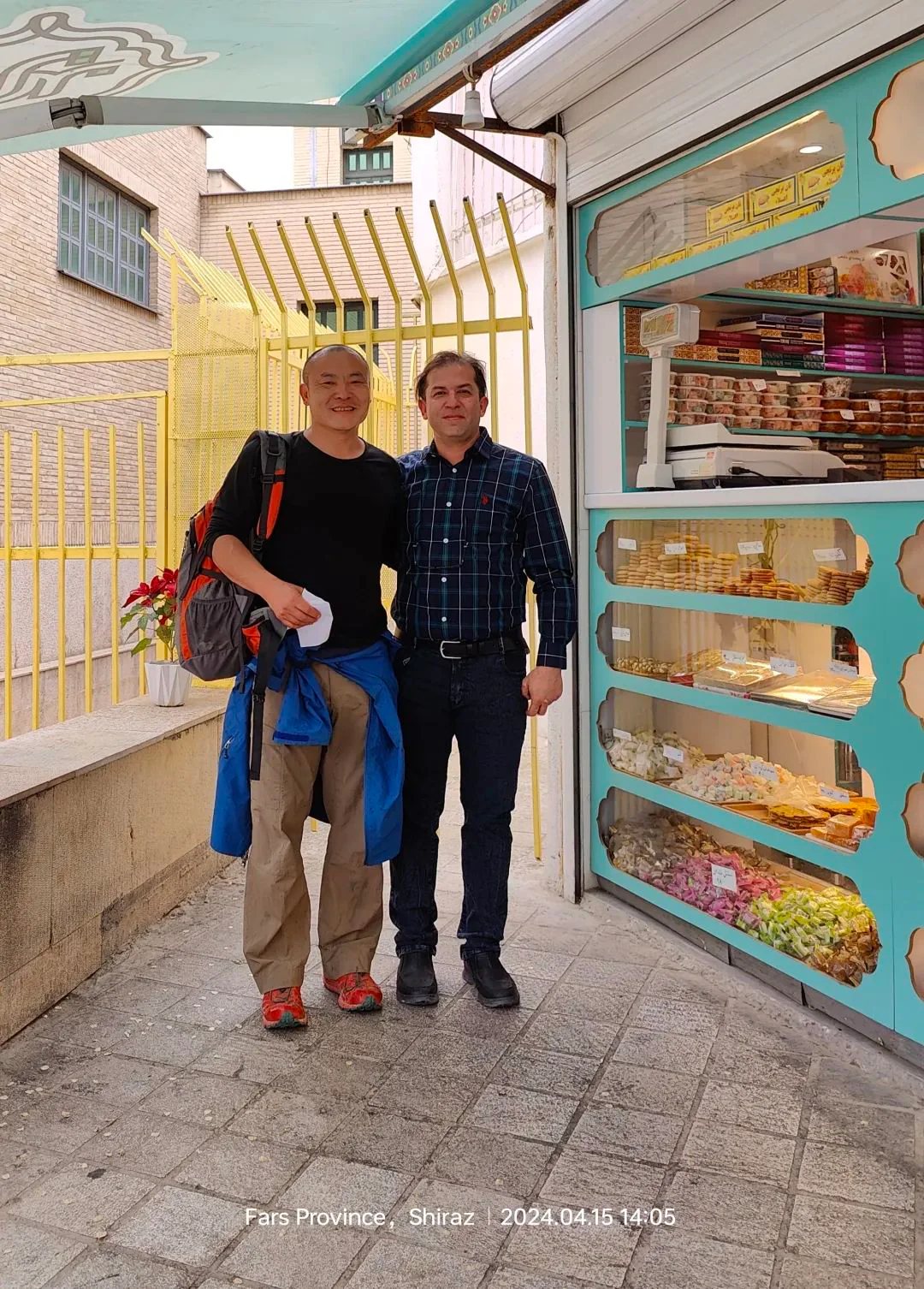
I was still a bit at a loss, immersed in a feeling: that sincere helping heart, the thoughtful consideration, and the concise, neat words. Walking out of the post office, I saw Mr. Abbas had already turned left at the street corner. I suddenly thought I should take a photo with him as a memento, so I chased after him. Not far around the corner, I saw him stop at a bakery to buy bread. I asked if we could take a picture together. He gladly agreed, and Wang Yue helped us take a photo.
Encountering such Iranians, I think it is not so accidental. Many of them, with their temperament, confirmed by these encounters, give me a sense of decency. Their eyes are clear, they treat people sincerely, and they make an effort not to cause you social embarrassment. They help and then leave.
Traveling in Iran, like in most parts of the world, places popular with tourists sometimes charge extra fees, and occasionally you might encounter unpleasant situations, though very rarely. But because I met people like Reza and Abbas, even if such things happen, they completely offset any other bad experiences.
My first understanding of travel in Iran came from many years ago when Shao Yue told me, "I recently went to Iran and it was really wonderful. After being a backpacker for so many years, I had lost some enthusiasm for travel, but this time in Iran, I found the feeling I had when I first started backpacking." I feel the same way. Iran is a place that can move people, not only with the cinematic experience of entering Persia and Islamic imagery, the long history and culture, but also with the lovely Iranian people. And you don't need a visa; you can just buy a plane ticket and go.
2024.04.15
Shiraz
The guesthouse where we met Reza 2023.03.23
New Year family gathering at Reza's friend's house 2023.04.02
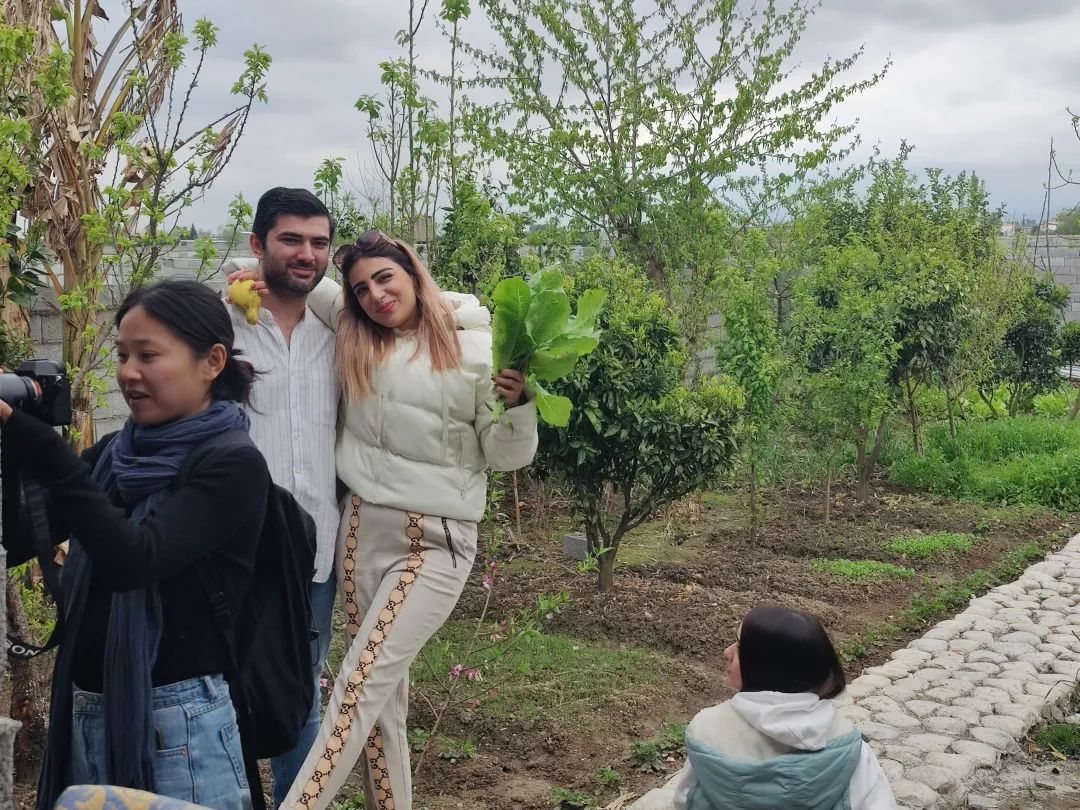
Reza and Majan, Xiaojing 2023.04.02
Caught up with Mr. Abbas for a photo
Photos
Keep reading
3
Jason | Using AI to Create Your Own Mini Program/Website
Two months ago in Chiang Mai, I stumbled upon the chance to start learning how to build mini programs. My AI programming mentor, Wangshen, told me, 'Once you finish your mini program, write a summary report.' Now I've completed the new mini program for Cangshan Hiking Home, and it's already being tested. It not only solves problems I've wanted to address for a while, like adding age tags to filter activities and providing an English version, but it has also introduced new features, such as browsing restaurants, guesthouses, and meeting points on a map for a more intuitive experience, and using AI to provide quite intelligent responses.
Learn AI Programming Together
Some information about AI programming
Celebrate the Torch Festival in a Nanzhao Royal Clan Village
Over the past two years, we have taken guests to celebrate the Torch Festival in Songhe Village, Eryuan. Together we slaughtered a sheep, and with the whole village, erected a huge torch in the center of the village square. Everyone made their own torches from hemp stalks, and together with the older and younger villagers, we rushed to grab the blessing baba (cakes) from the big torch, passing blessings to each other with fire. Even for me, a native Bai person, these are rare and precious traditional festival experiences. Dali has endless festivals, and I want to experience them more before they fade away. I remember the Torch Festival of my childhood: torches were no longer enough for me. Before the festival, I would tell my dad to prepare a bucket of waste engine oil and diesel, mix them together, and then I would tightly bind cotton and old cloth with rope into a ball (some kids would secretly take cotton from their quilts at home to make it). Finally, I would make an iron wire ball, soak it in the bucket of oil, and secretly take it out every day to look at it, looking forward to having a great time on the day of the Torch Festival. We would compete in the village and by the rice fields to see whose fireball or torch was more impressive. When the torches and fireballs were almost burned out, we would rush home, walk around the potted fruit trees in circles, and say blessing words, hoping they would grow even better in the coming year.