Liangzi | Jason's Ten Years in Dali
Some people come and go, some leave and return. Jason is always here, just like me.
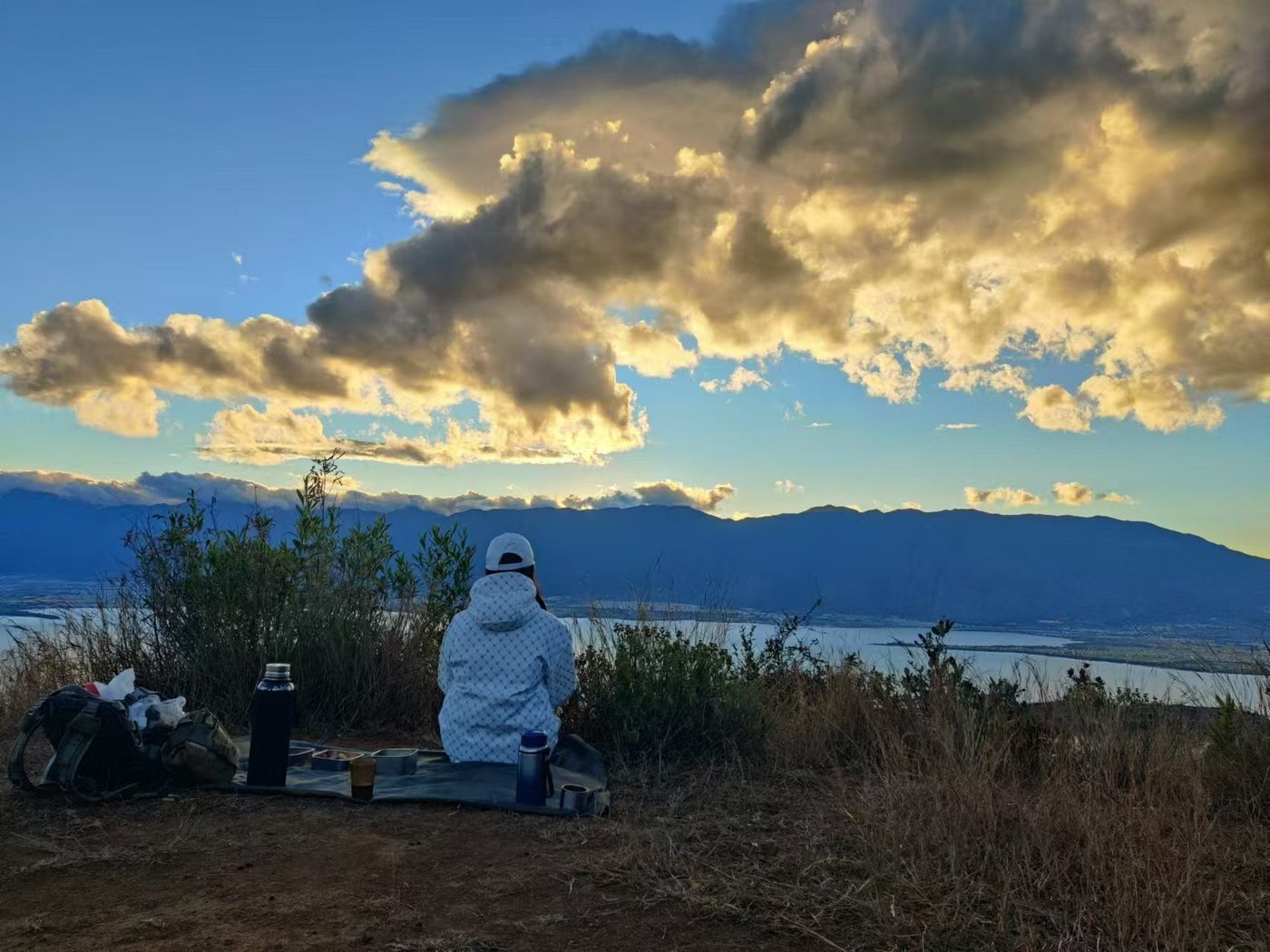
Yesterday I met up with Jason for a chat.
We marveled that it has already been ten years in Dali.
Before coming to Dali, Jason ran an outdoor supplies store in Shanghai. His first appearance in Dali, however, was as the operator of a late-night eatery.
I still remember a night many years ago when a friend said she would take me to eat braised pork rice. We walked through the pitch-black night to Chengxin Well, twisted and turned, somehow found our way into a small building, and ate a bowl of braised pork rice.
It was so long ago that I no longer remember the taste, but I still remember how I felt at the time: This Shanghai person is so strange. Why would he come to Dali to make braised pork rice? Why not during the day, but in the dark of night? Why are there such strange and unusual people and things in Dali? Why are they so odd yet so fascinating?
Ten years later, the friends who shared that braised pork rice have scattered to the four corners of the world and lost touch, but the person who made the braised pork rice has become a long-time friend of mine.
The first batch of people who opened shops on Renmin Road had relatively simple ideas. They wanted to stay and do something interesting. If they could make a small profit, that would be best; if not, it didn't matter.
Dali was like a utopia where young people could play at grown-up housekeeping on a grand scale. The mindset of the first-generation Renmin Road shop owners was all about having fun. No one thought about getting rich, and no one thought they could.
Around 2011, Jason's late-night eatery officially opened on the middle section of Renmin Road. Not long after, my little grocery store also quietly opened on the middle section of Renmin Road. Every night at nine, after closing the shop, I would stroll over to the late-night eatery and have a bowl of beef brisket noodles or fermented rice soup with egg, sometimes adding a plate of marinated dried tofu. This went on for several years.
If I hadn't gone to that late-night eatery, I wouldn't have known there were so many sleepless people at night. From around six or seven in the evening, people would drift in to eat, until four in the morning, when impeccably dressed people would quietly walk in and sit down to eat a plate of scallion oil noodles. They were neither drunk nor disheartened; they simply wanted a warm meal before dawn.
In the beginning, the mainstays of the late-night eatery were Jason, plus Xiaochun and Xiaohai who helped out. Later, the tailor and Sister Hua also joined. Together with Honghong's fish and chips during the day, the small shop bustled with a lively group of people, warm and united.
During the heyday of September on Renmin Road, countless late nights after the music had ended, listeners and singers alike would walk into the late-night eatery and have a bowl of noodles to soothe their loneliness.
When business was busy, Jason and his partners each showed their skills in the tiny kitchen. Garlicky seafood fried noodles, beef brisket rice and noodles, scallion oil noodles, fermented rice balls... they kept turning them out. At such times, since I couldn't help with anything else, I would wash dishes, serving as a temporary dishwasher, quickly scrubbing the cups, plates, and bowls piled in the sink. If you frequented the late-night eatery in those years, you might have used a bowl I washed.
The narrow, elongated old tile-roofed house was so packed that even the loft was filled with people sitting cross-legged. Waiters and customers, shoulder to shoulder, feet to feet, crowded together happily, grateful that someone would cook steaming hot food for everyone in the middle of the night. On snowy winter nights, a distant deity was not as good as a bowl of hot noodle soup right in front of you.
Whether old Dali residents or new Dali residents, everyone is someone who has re-rooted in Dali. The atmosphere Jason created in the late-night eatery made outsiders feel kindness and warmth: you are not alone.
I have seen heartbroken and depressed women walk into the late-night eatery and, without a care, lean on Jason's shoulder and cry. At that moment, he was frying rice or boiling noodles in the kitchen. He did not stop stirring with his spatula, nor did he push the woman away as she cried on his shoulder. Sitting in the corner, I witnessed that scene. Jason didn't say anything, but I felt his body language was saying to the crying woman beside him: If you feel sad, you can shed tears, but your hands cannot stop. Life must go on.
My twenty-sixth and twenty-seventh birthdays were both spent at the late-night eatery. My birthday falls during Dali's rainy season, when heavy rain pours down day and night. People living in old houses would greet each other with jokes: How bad is your leak? Do you have enough pots and pans to catch the rainwater?
The tile roof of the late-night eatery leaked too, with big rain outside and small rain inside. We laughed and sang the birthday song, blew out candles, cut the cake, and celebrated birthdays away from home after growing up. I shared the cake with the customers in the shop. Everyone who saw it got a piece; it was all a matter of fate. Strangers wished me well, wishing me a bright future and happiness in the mortal world.
The rent for that old tile-roofed house rose from twenty-five thousand to fifty thousand, and later the rents for surrounding shops all increased to over a hundred thousand or two hundred thousand. It was no longer meaningful to keep going. Jason chose to move the late-night eatery to Yincang Road. Just like before, it was small and quiet, cooking hot food in the deep night for people who didn't sleep.
During the era of skyrocketing rents, interesting shops on Renmin Road gradually disappeared. Some chose to leave Dali and return to the city. Others chose to buy property in Dali and invest in this small town. Wave after wave of people came to Dali with longing and dreams, replenishing the boundless vitality of this town in western Yunnan.
It is inappropriate to complain that Dali has changed, for everything in the world is changing. Positive people stay positive, constantly adjusting themselves like surfers, bobbing up and down but always riding the waves. Complainers stay put crying over spilled milk, while optimists have already crossed over to more beautiful scenery.
After the relocation, the late-night eatery gradually became stable enough to be managed without his constant presence. Jason began to return to the things he loved: hiking in the mountains and wilderness, listening to the bamboo groves and pine waves, watching the moon rise and the sun set, following small streams upstream with his two dogs, and camping overnight by wild hot springs known to few.
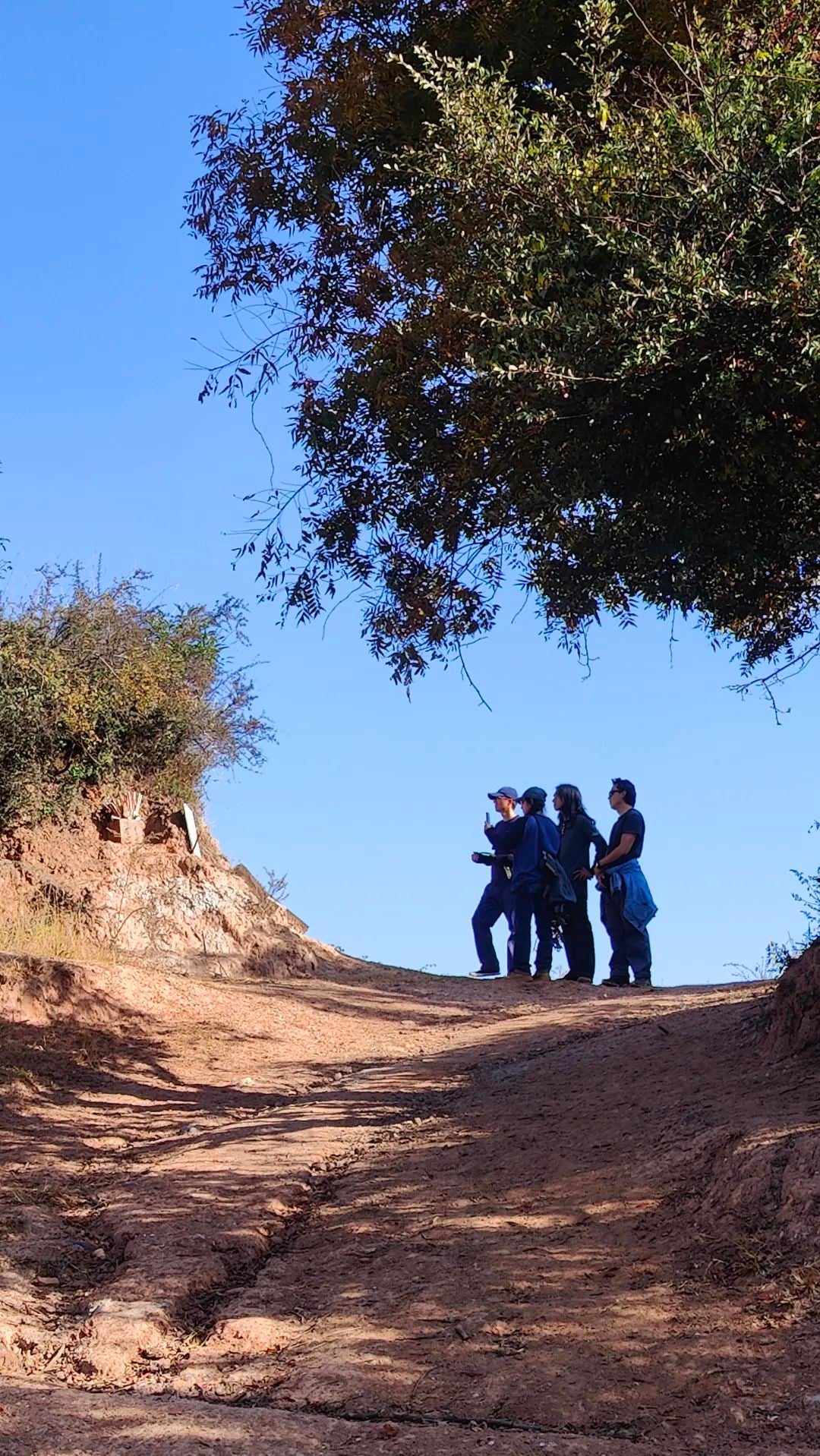
Jason and his friends have set foot on all nineteen peaks and eighteen streams of Cangshan Mountain, seeking hidden beautiful corners between the mountain and Erhai Lake. They have developed several classic routes and lead like-minded people on hikes that even those of average fitness can easily complete. This changed my prejudice that hiking meant carrying a heavy backpack and trudging painfully. It turns out that taking a walk between Cangshan and Erhai is such a light and wonderful experience.
In the past, many friends from elsewhere asked me: if I don't take the cable car and don't want to conquer the summit, but just want to walk in the mountains and look at the flowers and plants, how can I do it? In the past, this was also a difficult problem for me. Thanks to Jason for concretely presenting the answers to these questions, allowing many people like me who are not physically strong to fulfill their wish of walking in the Cangshan Mountains.
—— Some of Jason's Cangshan-Erhai hiking and camping routes ——
Walk the ancient Tea-Horse Road, overlook the Erhai sunset from the Nanzhao ruins.
Go picking mushrooms on Cangshan, visit Wuwei Temple, then go down the mountain to drink chicken soup with mushrooms.
Cross Mocan Stream, view Erhai Lake, and go to a hidden mountain temple for a vegetarian meal.
Ride a bicycle through the fields by Erhai Lake, have a home-cooked meal after sunset.
......
For more experience routes, you can follow Jason's public account, or search for "Cangshan Hiking Home" on Dianping. The routes have detailed written descriptions and real photos.
The leaders are still the old late-night eatery team: Jason, Honghong, the tailor, and the two dogs Nuomi and Harry.
The spirit of mutual aid and love among the old Dali residents has always been passed on, and this is especially evident in Jason. Sister Mao, also an old Dali resident, used to run Mao San Café near Chengxin Well. When she faced a business partner who breached the contract, she was on the verge of closure.
At that time, Sister Mao was in poor health and resting in her hometown, unable to come handle this mess. Our eternally warm and loving Jason stepped forward in time, rallied a group of enthusiastic and capable friends, and worked together to perfectly solve the relocation of Mao San Café.
Throughout the process, many practical difficulties arose, but with everyone lending a hand, the new Mao San Café rose from the ashes like a phoenix, especially beautiful.
The concept of the Mao San Café community kitchen was first proposed by Honghong and implemented by Jason. From August until now, it has been running well. Once or twice a week, good friends come to cook home-style dishes from their own hometowns. Simple and unpretentious, affordably priced, with each session serving about 20 to 30 people. A portion of the income is donated to the café, thanks to Sister Mao for providing the space.
Old friends gather in the courtyard of Mao San Café to share lunch. Chatting, basking in the sun, drinking coffee, time seems to have returned to 2010—forever young, forever with tears in our eyes.
Jason's ten years in Dali also represent a group of people like us who came from far corners of the world to this small town at the foot of Cangshan Mountain, warming the land with their enthusiasm, planting seeds of love, and blooming flowers of kindness.
Some people come and go.
Some people leave and return.
Jason is always here.
Just like me.
Photos


続けて読む
3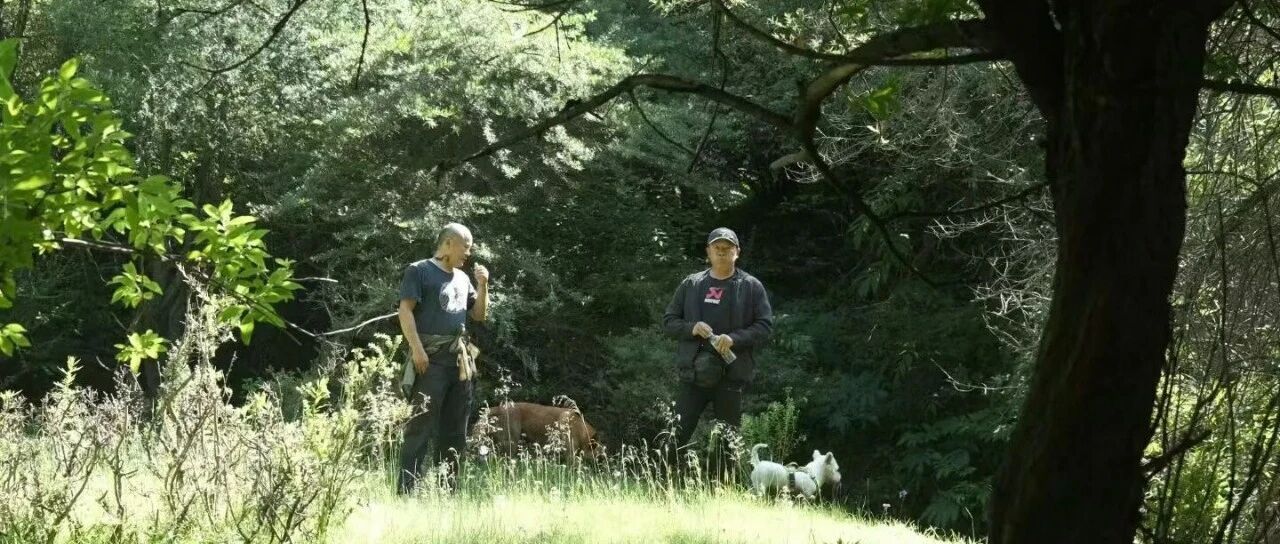
Jason | Using AI to Create Your Own Mini Program/Website
Two months ago in Chiang Mai, I stumbled upon the chance to start learning how to build mini programs. My AI programming mentor, Wangshen, told me, 'Once you finish your mini program, write a summary report.' Now I've completed the new mini program for Cangshan Hiking Home, and it's already being tested. It not only solves problems I've wanted to address for a while, like adding age tags to filter activities and providing an English version, but it has also introduced new features, such as browsing restaurants, guesthouses, and meeting points on a map for a more intuitive experience, and using AI to provide quite intelligent responses.
Learn AI Programming Together
Some information about AI programming
Celebrate the Torch Festival in a Nanzhao Royal Clan Village
Over the past two years, we have taken guests to celebrate the Torch Festival in Songhe Village, Eryuan. Together we slaughtered a sheep, and with the whole village, erected a huge torch in the center of the village square. Everyone made their own torches from hemp stalks, and together with the older and younger villagers, we rushed to grab the blessing baba (cakes) from the big torch, passing blessings to each other with fire. Even for me, a native Bai person, these are rare and precious traditional festival experiences. Dali has endless festivals, and I want to experience them more before they fade away. I remember the Torch Festival of my childhood: torches were no longer enough for me. Before the festival, I would tell my dad to prepare a bucket of waste engine oil and diesel, mix them together, and then I would tightly bind cotton and old cloth with rope into a ball (some kids would secretly take cotton from their quilts at home to make it). Finally, I would make an iron wire ball, soak it in the bucket of oil, and secretly take it out every day to look at it, looking forward to having a great time on the day of the Torch Festival. We would compete in the village and by the rice fields to see whose fireball or torch was more impressive. When the torches and fireballs were almost burned out, we would rush home, walk around the potted fruit trees in circles, and say blessing words, hoping they would grow even better in the coming year.