Qiqi | Songhe Village in Dali: Ten Thousand Acres of Ancient Plum Trees at the Foot of Snowy Mountains, Deep in the Mountains
This time I visited Songhe Village with the Plum Forest trip from Cangshan Hiking Home, led by Xiao Li, a Dali local whose home is in Eryuan, not far from Songhe Village, so naturally he knows the area better than we do. Although I am no stranger to Songhe Village, following Xiao Li's local perspective allowed me to see and feel many different things.
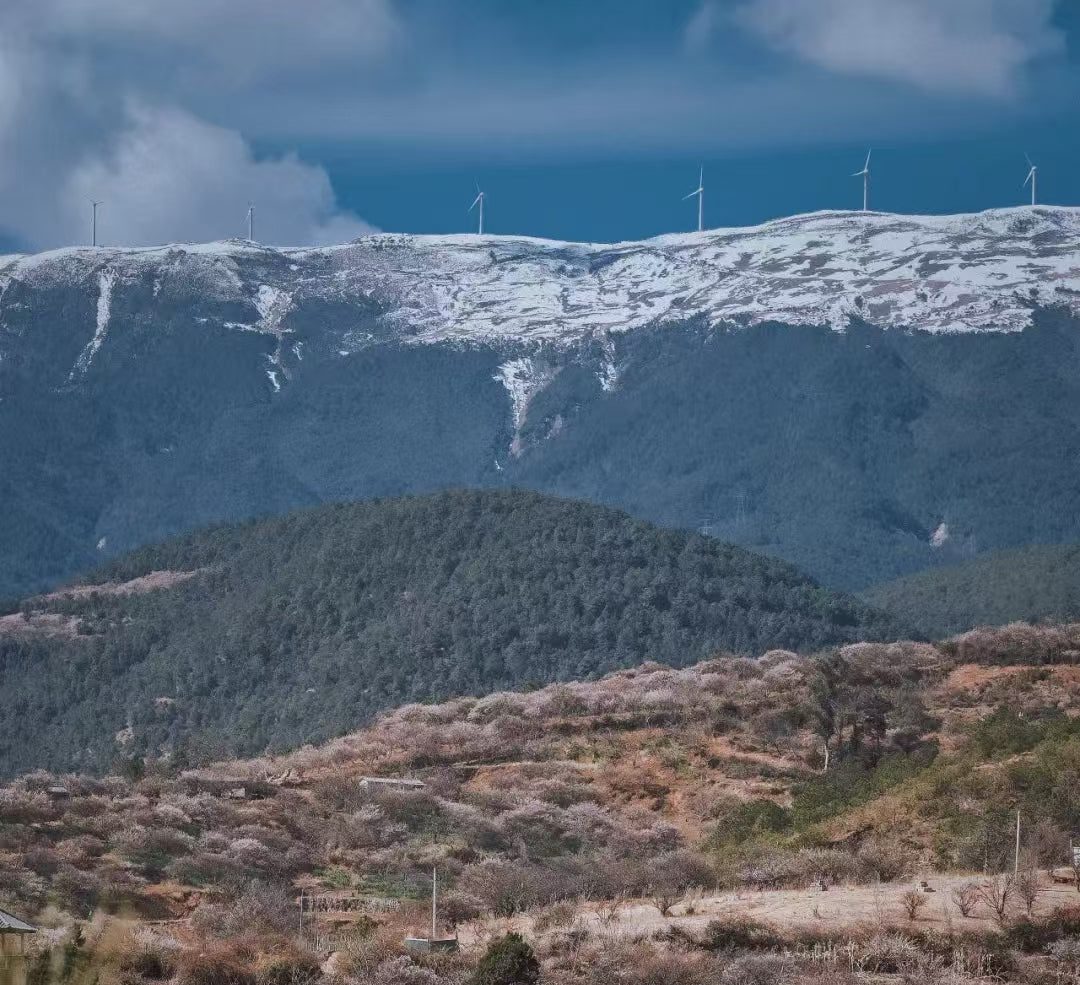
Hike in Songhe Plum Village every February.
Songhe Village belongs to Cibi Lake Town, Eryuan County, Dali City. It is located on the west side of Cibi Lake Town, bordered by Yuhe, Qingchang, and Edun forest areas of Cibi Lake Town to the east, Zhuangshang Village of Fengyu Town to the south, the foot of Luoping Mountain to the west, and Guosheng Village forest land of this town to the north. It administers three village groups: Dasongdian, Xideng, and Guji Zhaobi.
It is about 70 kilometers from Dali Ancient City to Songhe Village. The distance is not far, but due to mountain roads, it takes a little less than two hours by car.
From the foot of the mountain to the village at the top is only 8 kilometers, but with winding mountain roads full of sharp turns. If you are not confident about mountain driving, be cautious.
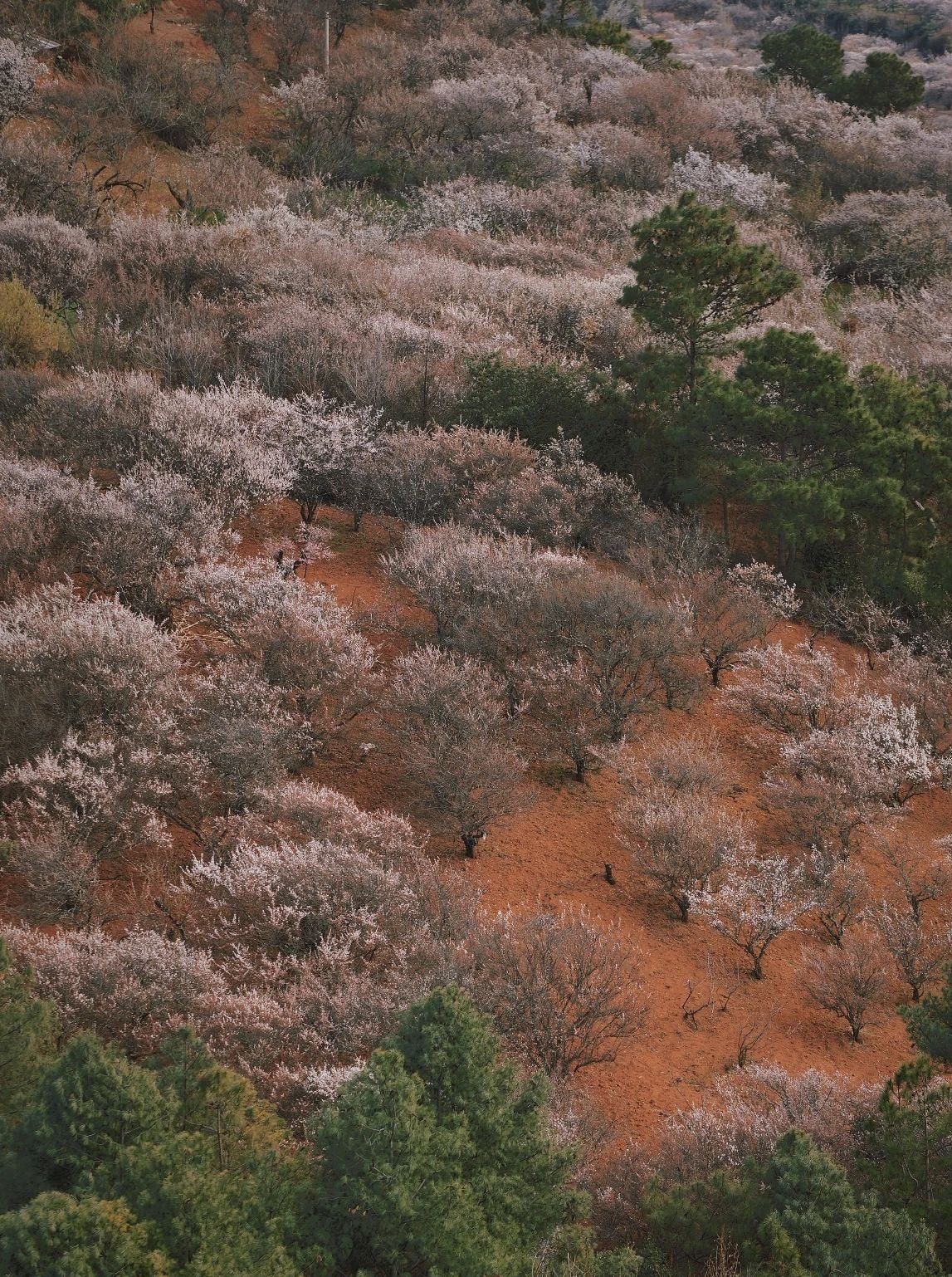
Songhe Village is most famous for green plums . In past years, I made many trips for the green plums, from fruiting to harvesting. This year, I finally visited during the flowering season and saw the plum trees in bloom, a spectacular sight stretching from the foot of the mountain to the distant summit. The tender pink of the plum blossoms covered the landscape, while the snow-capped Luoping Mountain in the distance added a misty touch.
A Little Science:
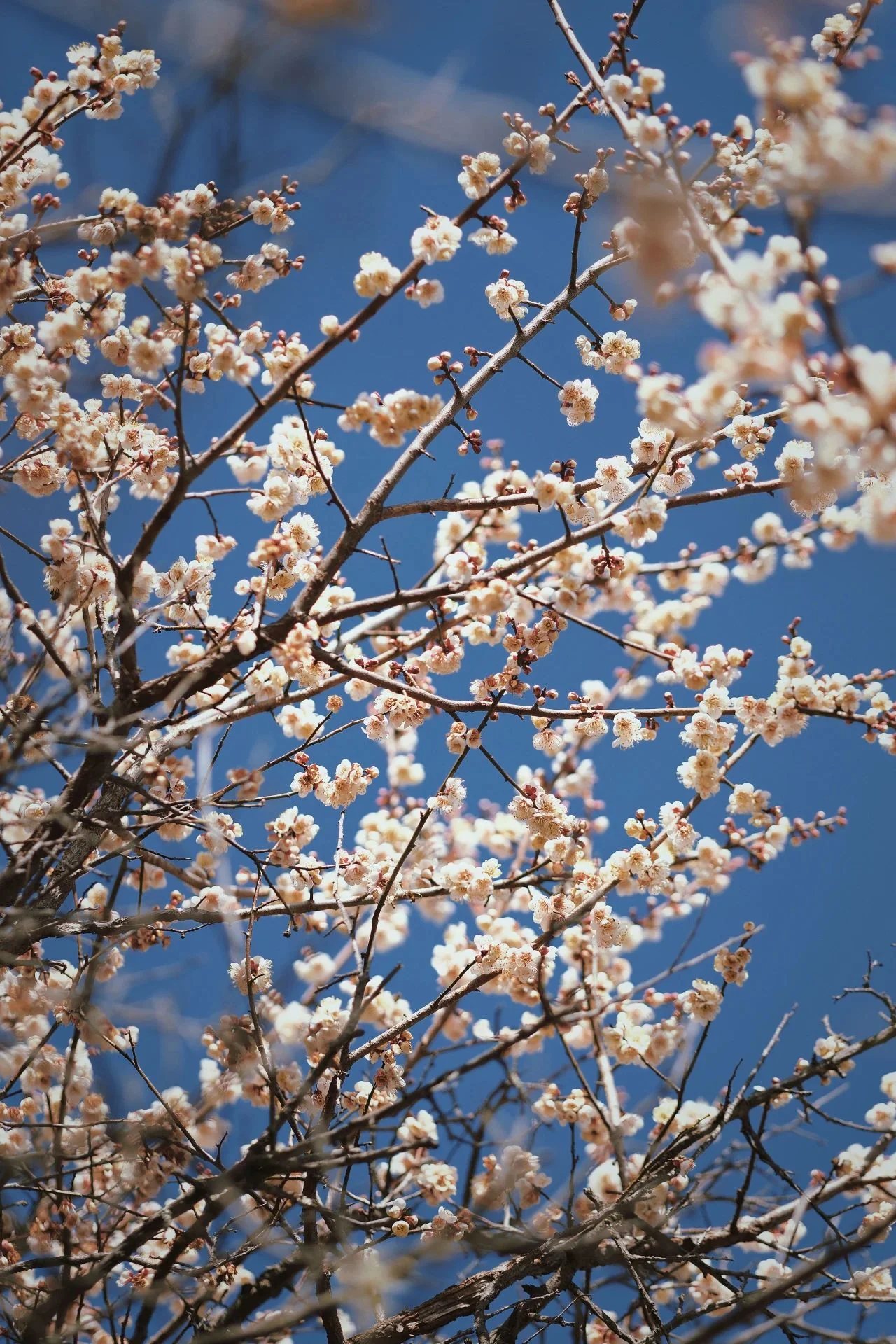
The plum blossoms in Songhe Village are the flowers of green plum trees, blooming only from late January each year, with the peak in early February, lasting about 20 days . The later it gets, the fewer blossoms remain. There are over ten varieties of plums in Songhe Village, among which salt plum, bitter plum, and Zhaoshui plum are the most common. Although the flowers differ, compared to ornamental red plum blossoms, they are lighter in color and rarely deep pink. However, they are more abundant and full, like popped popcorn.
The entire Songhe Village has over ten thousand acres of plum trees, spreading from the foot to the top of the mountain. Whether by fields, roadsides, slopes, or gullies, they are covered with plum trees. There are single trees yielding a thousand catties of plums, ten thousand acres of connected plum orchards, and even an ancient "Plum King" tree with a history of 886 years, truly magnificent.
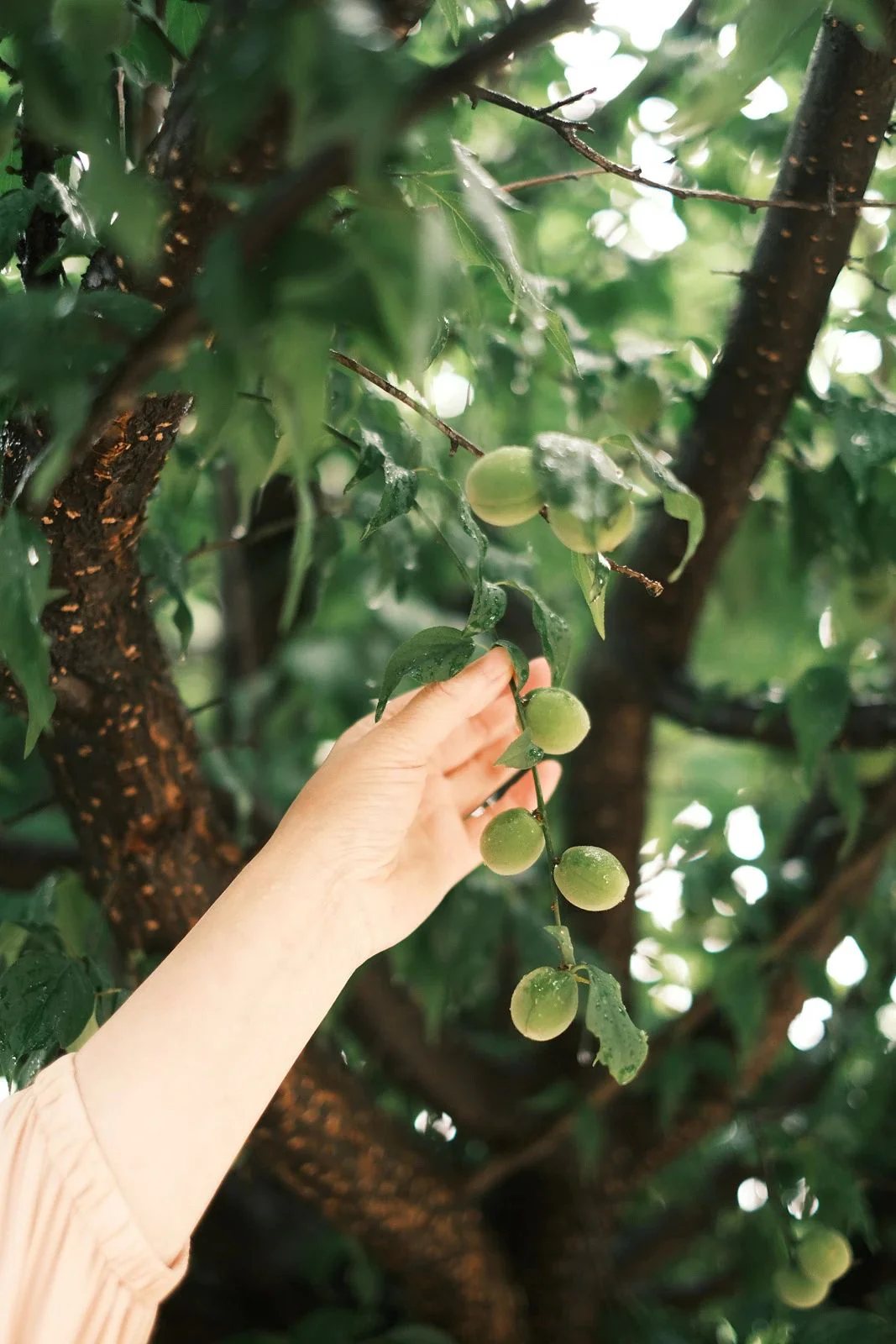
Green Plum: Belongs to Rosales, fruit of the plum tree (Armeniaca mume Sieb.), also called plum or sour plum. Native to China, it is a subtropical specialty fruit tree.
Plum Blossom: Deciduous tree in the Rosaceae family, Prunus mume. Plum blossoms typically bloom in winter and spring, and together with orchids, bamboo, and chrysanthemums, are known as the "Four Gentlemen." Along with pine and bamboo, they are also called the "Three Friends of Winter."
In the past two years, I visited Songhe Village several times, all related to the green plums. The first year, the plum blossoms had already passed, and the trees were covered with small, fuzzy green plums. Later, I returned during the ripe season, and the whole village was filled with the fragrance of plums.
Songhe Village sits at an altitude of 2,500 meters. Due to the variety, elevation, and growing conditions, the green plums here tend to be small and ripen much later than usual. The slopes are inaccessible by vehicles, so all plums must be transported by people and mules as the first step from tree to market. The square between the village committee and the primary school becomes a plum trading market in July. Every household, each person and mule, brings heavy loads of plums, marking the year's biggest harvest.
In April, the green plum trees in Songhe Village are full of fruit.
This time I visited Songhe Village with the Plum Forest trip from Cangshan Hiking Home , led by Xiao Li , a Dali local whose home is in Eryuan, not far from Songhe Village, so naturally he knows the area better than we do. Although I am no stranger to Songhe Village, following Xiao Li's local perspective allowed me to see and feel many different things.
The light hiking route he designed for Songhe Village is truly easy, like a casual walk with friends through the plum forests in the mountains. After returning home and flipping through over 200 photos, I couldn't wait to share them with you and convey: Travel is life .
This time I visited Songhe Village with the Plum Forest trip from Cangshan Hiking Home , led by Xiao Li , a Dali local whose home is in Eryuan, not far from Songhe Village, so naturally he knows the area better than we do. Although I am no stranger to Songhe Village, following Xiao Li's local perspective allowed me to see and feel many different things.
The light hiking route he designed for Songhe Village is truly easy, like a casual walk with friends through the plum forests in the mountains. After returning home and flipping through over 200 photos, I couldn't wait to share them with you and convey: Travel is life .
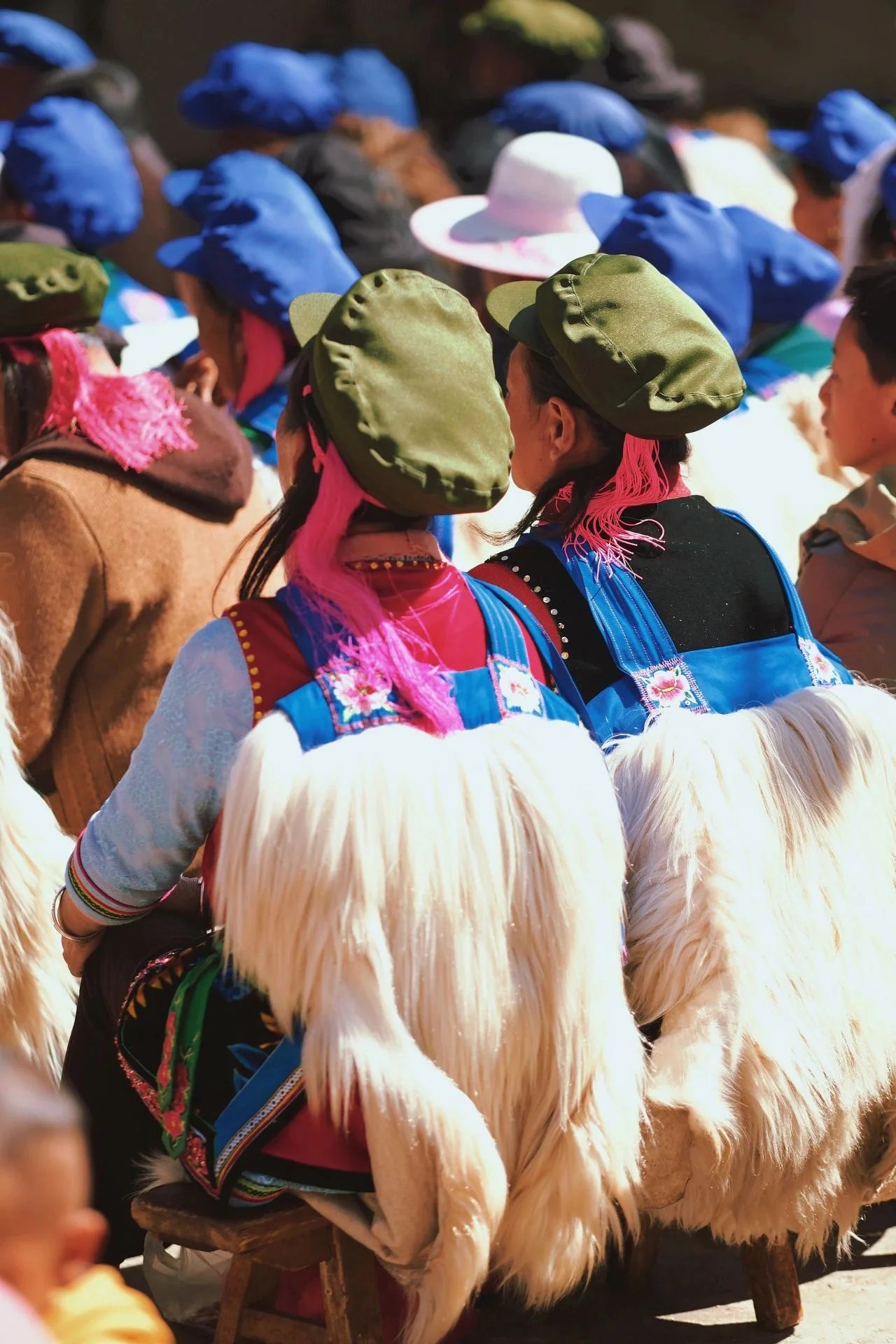
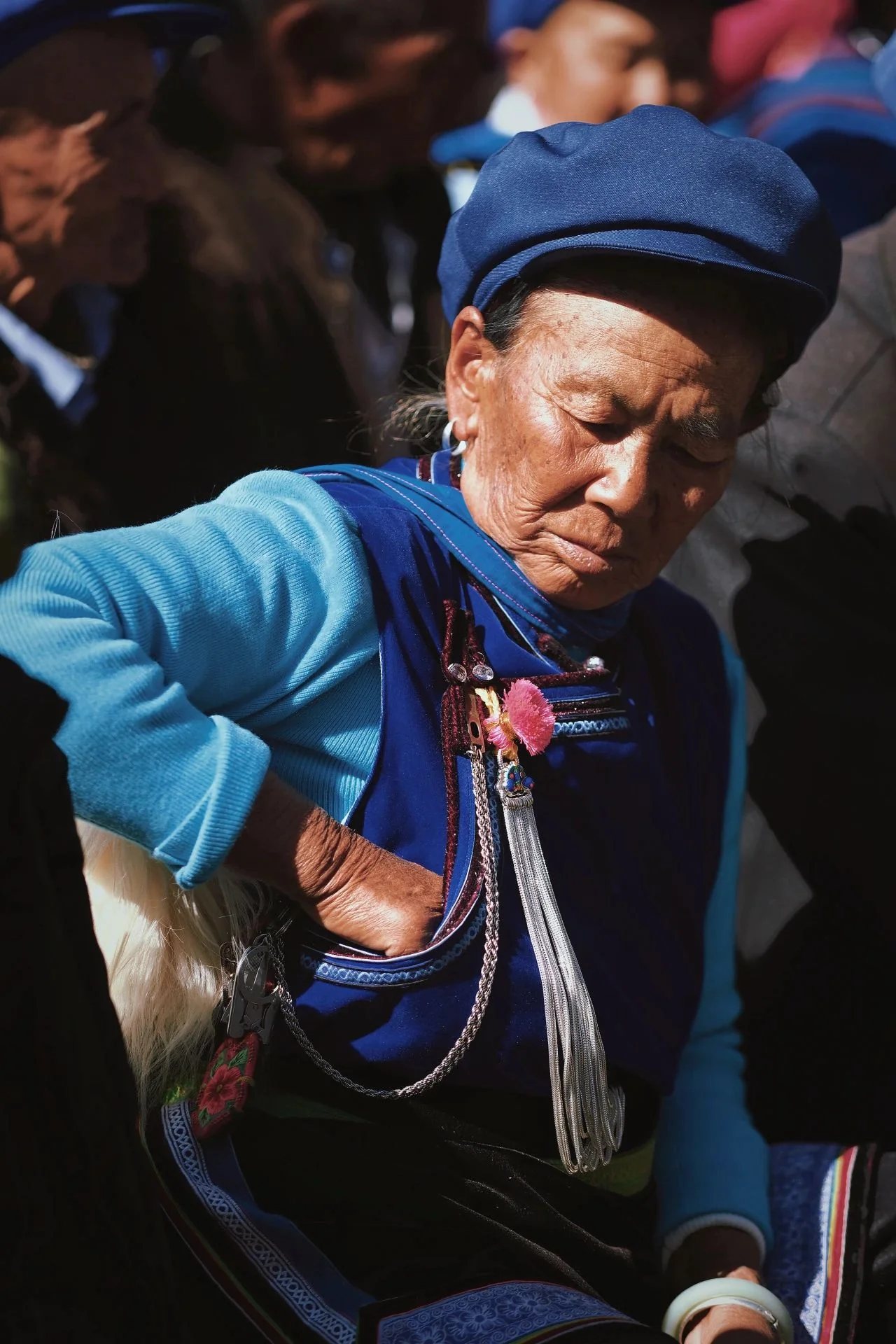
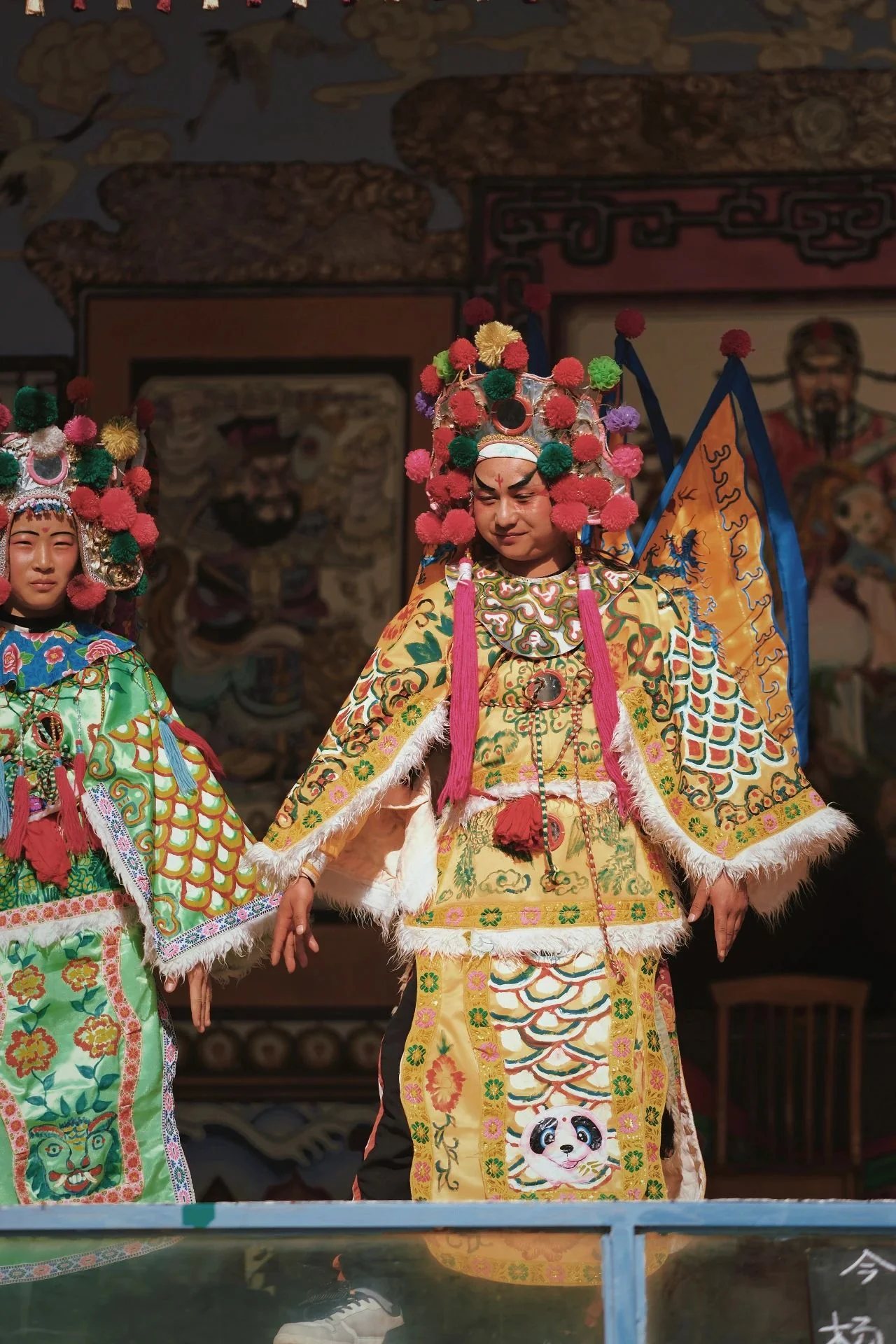
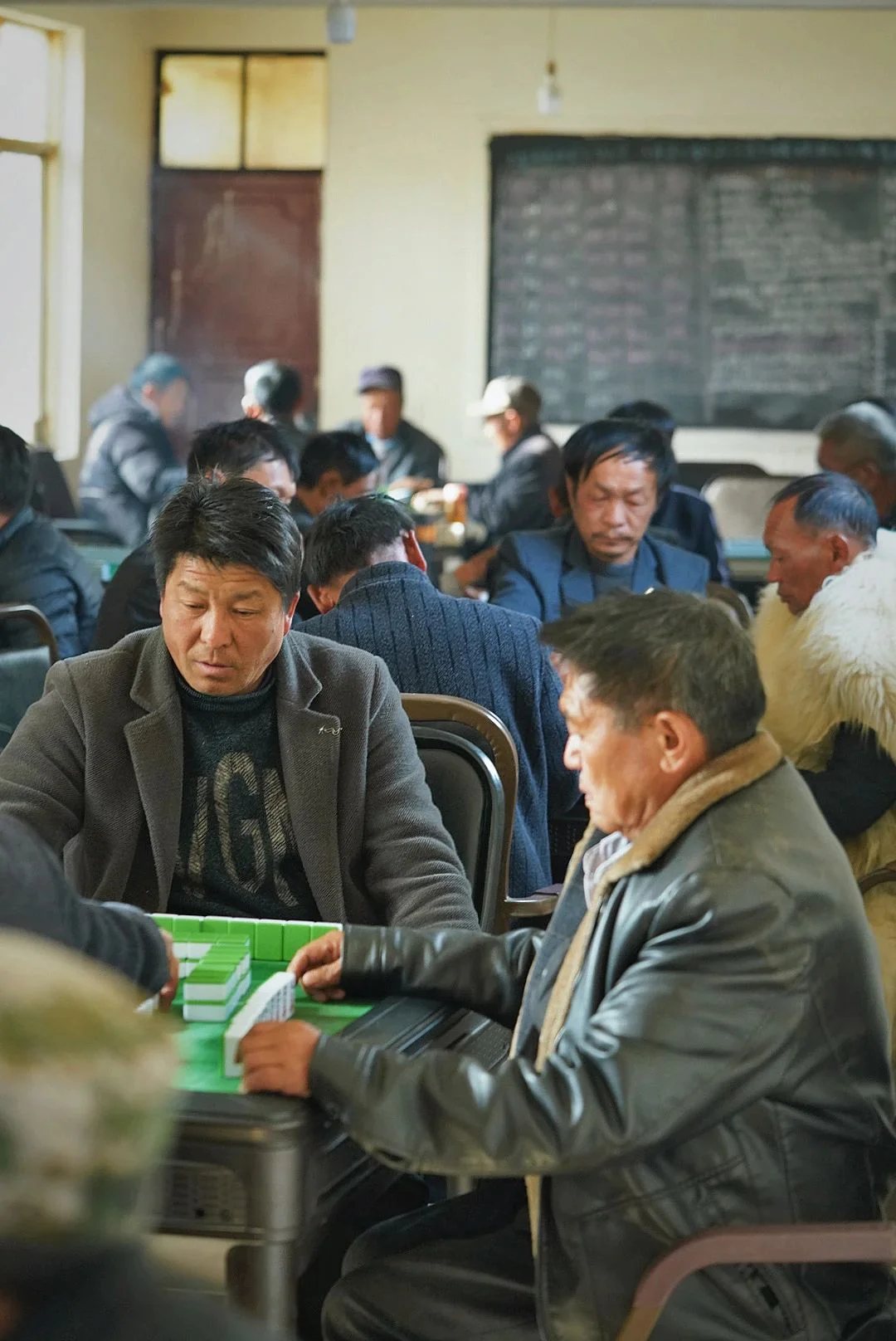
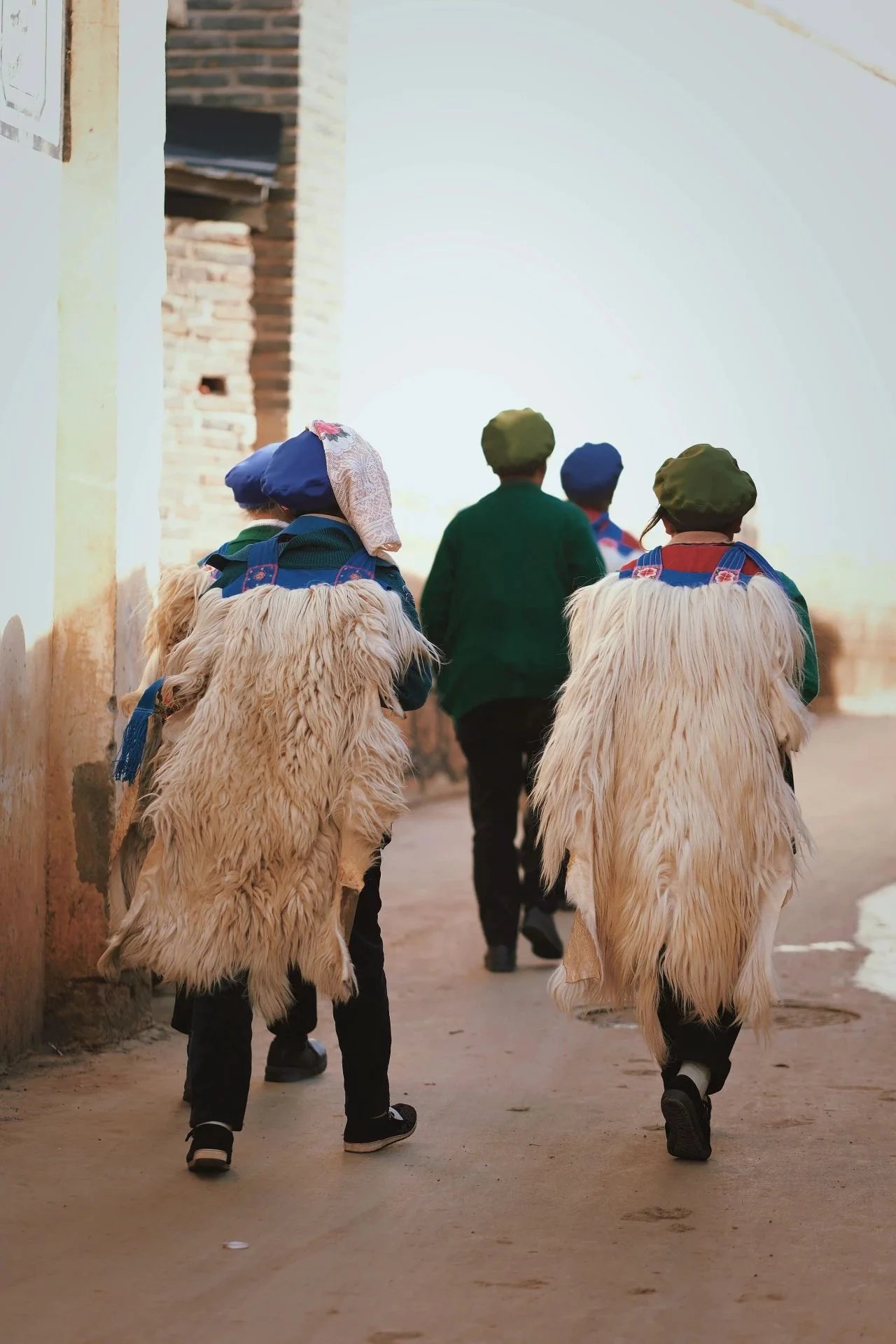
Upon arriving at Songhe Village, the village stage was performing. Opera is held from the first to the tenth day of the Lunar New Year. The audience is mostly elderly men wearing sheepskin vests and women with sheepskin draped over their backs. Unlike the Naxi "Pixinglye" pattern in Lijiang, the embroidery and colors on the two shoulder straps are typical Bai patterns.
Songhe Village is a mountainous administrative village in Eryuan County inhabited mainly by the Yi people. Among the 798 households, the vast majority are Yi, with only a few from other ethnic groups who married in.
Although it is a Yi village, due to long-term coexistence with Bai and Han people, it has preserved Yi traditional culture while absorbing Bai and Han culture. Thus, clothing shows Bai-style garments and Yi sheepskin drapes. As for headwear, for daily convenience, it has been replaced by hats.
Before leaving in the afternoon, I chatted with an elderly lady who had just watched the opera. She said, "We are 'Bai Yi,' meaning Bai and Yi as one family."
The New Year opera in Songhe Village has a story. It is not performed by professional troupes, but by villagers who turn 43 that year, performing for the elders. In Songhe Village, people born in the same year are called Da Laogeng, a custom that has lasted 25 years.
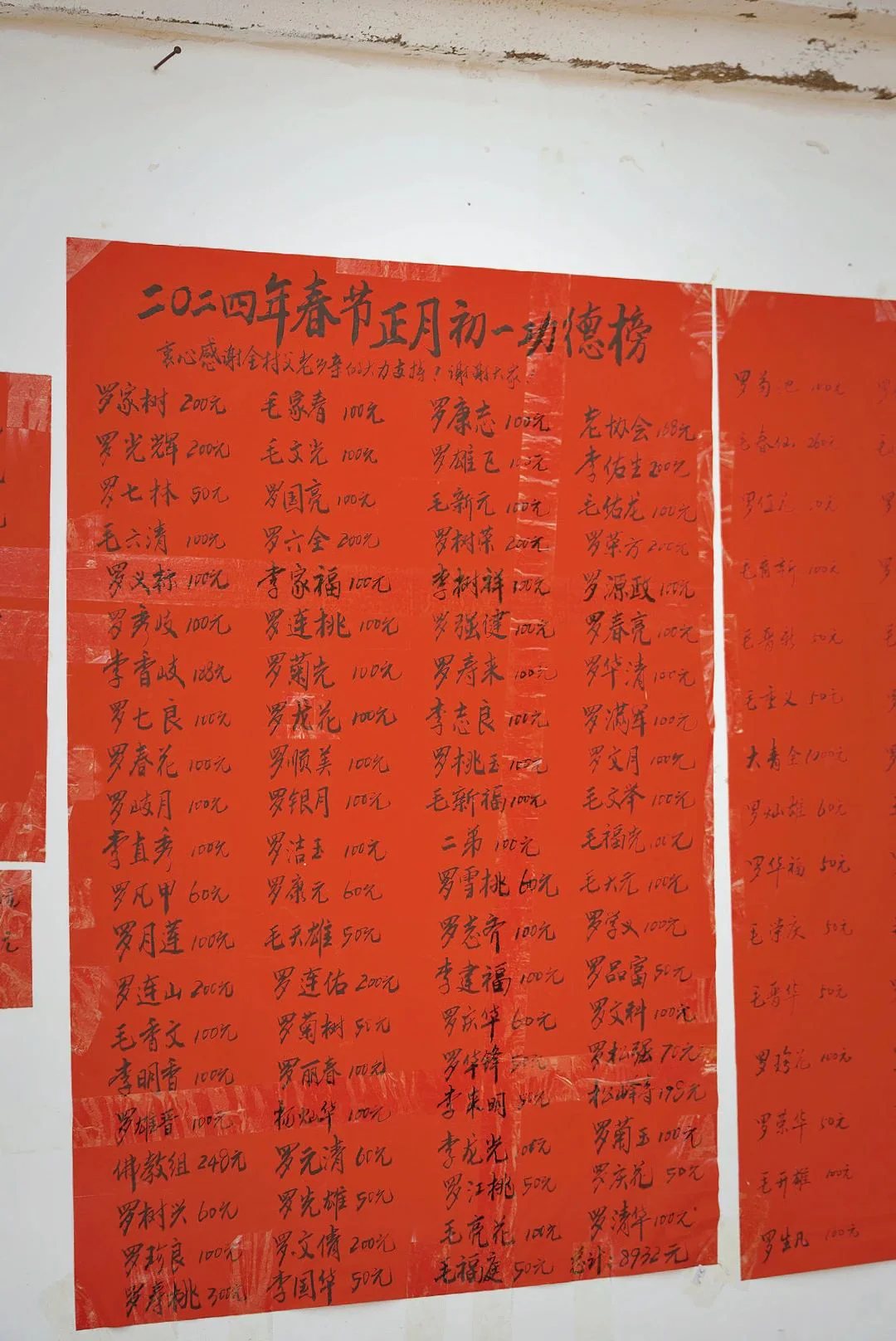
They perform opera during the day and dance at night. Besides the performers, other villagers donate money at the stage for daily expenses and to provide lunch for the elderly since the opera spans lunchtime.
Notably, almost every adult male in Songhe Village can play the suona. Besides their native language, they are also fluent in Bai language and master Bai arts such as the three-stringed instrument, suona, Bai tunes, and "chuichuiqiang." The village is famous as the "Hometown of Suona."
Villagers' merit list and Da Laogeng exclusive merit.
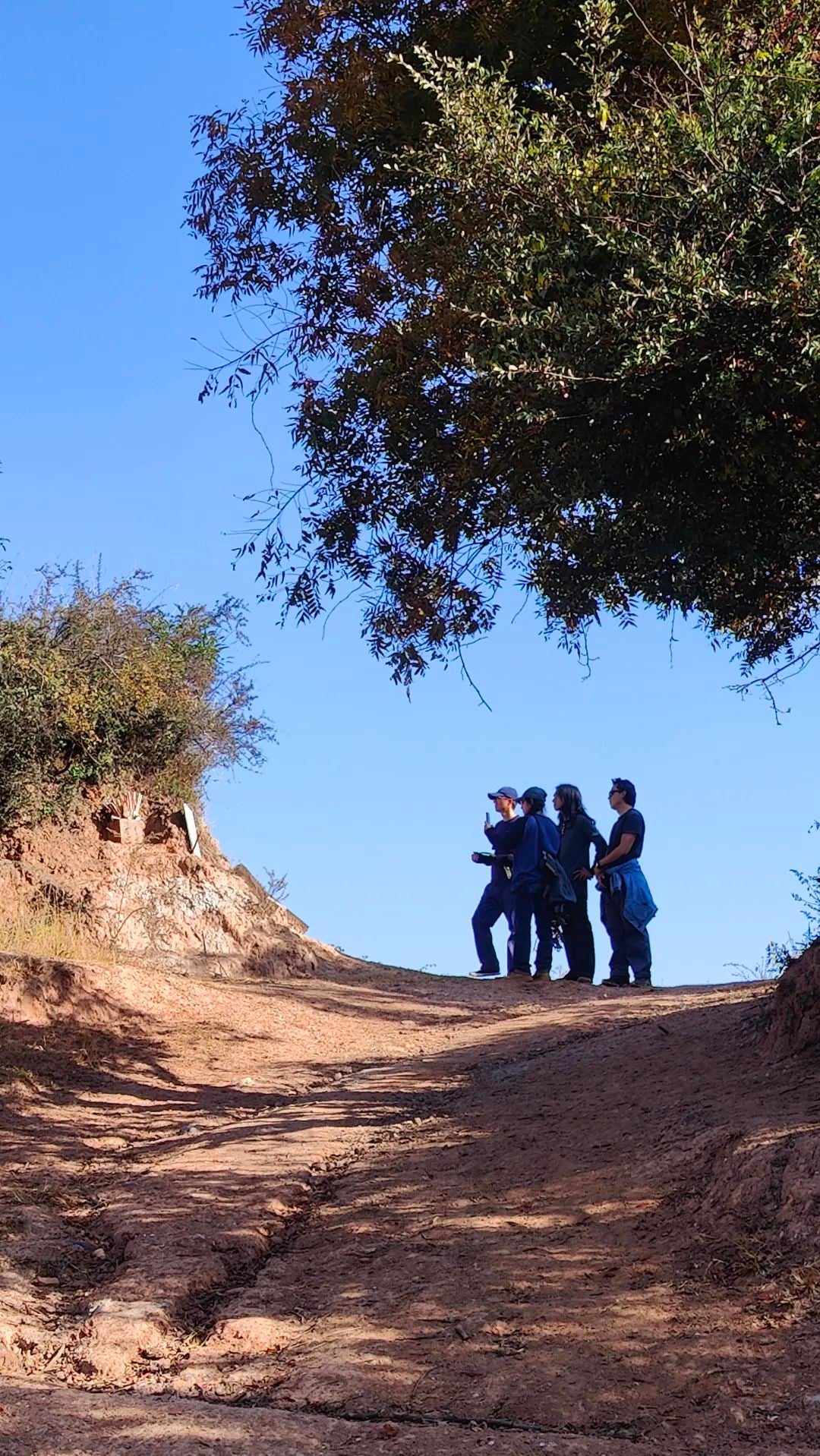
After watching the opera, I followed Xiao Li for the hike. The distance was short, only about 2 kilometers one way. We first drove to the viewing platform, passing through thousands of acres of plum forest, then started the second part of our journey on a narrow dirt road. Mid-February in Eryuan was already warm like spring, and the snow on distant Luoping Mountain could not block the warm sunlight. In the vast plum forest, there was only wind, trees, flowers, birds, bees, and us.
After just a few steps, Xiao Li asked, "Can you hear the bees?"
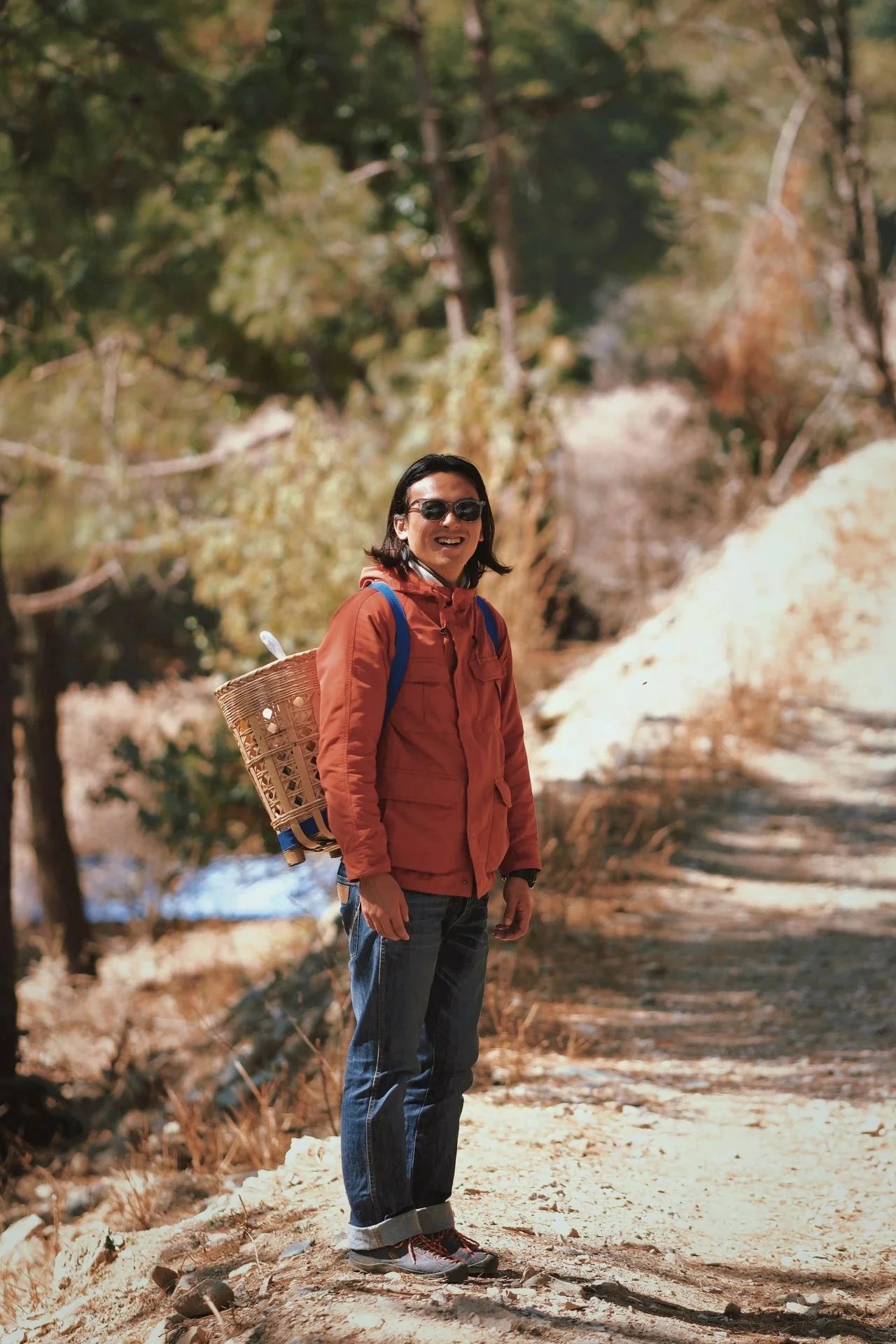
Guide Xiao Li.
The path was not difficult at all, with only one short uphill section. Because it was vehicle-free, the pine needles on the road were thick, making the ground feel soft to step on.
Most of the plum forests in Songhe Village are contracted by villagers, with some as contract bases for "Erbao," the largest plum processing factory in Eryuan. Some orchards along the way had simple gates, not to block people, but to prevent goats from escaping. Goats are the main "fertilizer producers" for the orchards. The ground is often interplanted with wild vetch for goat feed, or with the medicinal herb "Dian Chonglou" to increase income.
After walking through the sunny section, Xiao Li led us to rest under a big tree. He took out citron and purple radish from his basket, seasonal "fruits." He also had pastries, tea, and preserved plum juice to replenish energy. I mixed tea with some preserved plum juice; it was refreshing and thirst-quenching. On a nearby low tree, we found an abandoned bird's nest.
The round-trip hike of nearly 4 kilometers was indeed relaxing, and we completed it while chatting. I thought the journey would end here, but Xiao Li said he would take us to a plum garden where they also raise bees.
Arriving, I discovered a small house seen from the lookout point, nestled amidst a modest plum orchard. The orchard was not large, and neither was the house. Inside, there were about twenty to thirty small earthen houses nestled low among the plum trees. Sunlight spilled over the houses made of rammed earth, creating a picturesque scene. Busy bees congregated somewhere nearby, with countless bees buzzing busily throughout the entire orchard.
Tens of thousands of ancient plum trees, numerous pear trees, and an elevation of 2,500 meters with unique climatic conditions bring a rare wild plum blossom honey to Songhe Village.
Bees play two crucial roles in agricultural ecology: maintaining ecological balance and ensuring human food security. The vast plum orchards of Songhe Village depend on bees for pollination; bees have been present since the green plum trees were established.
The special honey source distinguishes Songhe Village's honey. Xiao Li said, "If guests here could directly taste the freshest honey, we wouldn't have to go through the trouble of selling it in the market."
The round-trip hike of nearly 4 kilometers was indeed relaxing, and we completed it while chatting. I thought the journey would end here, but Xiao Li said he would take us to a plum garden where they also raise bees.
Upon arrival, I discovered a small house seen from a lookout point, nestled amidst a modest plum orchard. The orchard was not large, and neither was the house. Inside, there were about twenty to thirty small earthen houses nestled low among the plum trees. Sunlight spilled over the houses made of rammed earth, creating a picturesque scene. Busy bees congregated somewhere nearby, with countless bees buzzing busily throughout the entire orchard.
In the village of Songhe, amidst tens of thousands of ancient plum trees, numerous pear trees, and an elevation of 2,500 meters coupled with unique climatic conditions, a rare wild plum blossom honey is produced.
Bees play two crucial roles in agricultural ecology: maintaining ecological balance and ensuring human food security. The vast plum orchards of Songhe Village depend on bees for pollination; bees have been present since the establishment of green plum trees.
The special honey source distinguishes Songhe Village's honey. Xiao Li said, "If guests here could directly taste the freshest honey, we wouldn't have to go through the trouble of selling it in the market."
Songhe Village has many such plum orchards, growing plum trees and raising bees. The bees have dedicated hives, and the houses where people live also serve as bee houses. The walls are made of beehives stacked as walls, allowing honey extraction from inside the house. Although it was warm outside, after sunset, the temperature in Songhe Village drops, and the fire pits in the houses keep the fire smoldering, ready to warm up anytime.
When it is time to harvest honey, take a handful of incense and light it quickly over the charcoal fire.
The bees in Songhe Village are Chinese honeybees (Apis cerana) introduced from outside, also called native bees. They do not need to be fed sugar water in winter. They suck nectar from various flowers, and in spring when the plum blossoms bloom, they collect plum pollen to produce honey with a plum blossom aroma.
Lighting a handful of incense, using a knife to scrape off the mud of the hive, gently smoking it, then cutting open a whole piece of honey with a knife. Dip a feather in water to brush off the bees lingering on the comb. Throughout the process, no protective gear was used, yet no bee attacks occurred. Perhaps it is through long-term harmonious coexistence that both sides get what they need.
The freshly harvested honey is golden yellow to greenish, like rapeseed oil. The farmer cut a large piece for us to taste; it was tooth-achingly sweet. Xiao Li then sliced some citron to pair with it. The slightly bitter citron complemented the plum blossom honey perfectly. I joked that we were enjoying a Michelin eight-star experience.
The honey from Songhe Village's plum orchards has an indescribable floral fragrance, most resembling the delicate scent of plum blossoms. Occasionally, a bit might taste slightly bitter. I think it is because the freshly cut honey comes from the same beehive without considering the fermentation time. Some honey has been aged longer while some is still immature.
Returning from the plum orchards, villagers are harvesting fodder. In the distance, fat sheep graze in the plum orchards. The sunlight is dazzling, shining on the plum blossoms, creating a dreamlike scene.
Returning from the orchards, villagers finish harvesting grass, and in the distance, fat sheep graze in the plum orchards. The sunlight is dazzling, shining on the plum blossoms, creating a dreamlike scene.
Coming to Songhe Village, you must buy some plums. Besides fresh plums, the village also produces many processed products: stewed plums, carved plums, black plums, perilla-wrapped plums, rose plums, and the plum vinegar essential for Dali people when cooking fish and eating raw pork, among others.
The villagers of Songhe are skilled in the art of carving plums. The process of making carved plums is complex, with the hardest part being the carving skill. On a small green plum, a carving knife is used to create continuous curving patterns on the flesh, squeezing out the pit, leaving a hollow center. It is then gently pressed into a chrysanthemum shape, forming a serrated plum cake.
Processed in this way, the plums taste fragrant, crisp, and sweet, with a sour-and-sweet flavor that refreshes the heart. They are perfect for braising meat, as the sweetness and sourness cut through the grease. The juice from the carved plums is also useful, for mixing with water, black or green tea, soda water, gin, or vodka. It is especially great. I bought a large jar to take home, and it is most satisfying chilled in hot weather.
I used the carved plums I brought home to make sweet-and-sour spareribs with carved plums. While braising, add 4-5 plums to simmer with the ribs. After removing from heat, place a few on top to serve with the meat. It reduces greasiness and adds a fragrant note.
Sweet-and-Sour Spareribs with Carved Plums:
Blanch 600g of spareribs, then stir-fry. Add cooking wine and bring to a boil, then add water, ginger, dark soy sauce, vinegar, a little sugar and salt, and five carved plums. Simmer until the meat is tender. Add a bit more vinegar, thicken with a light cornstarch slurry, and plate. Garnish with a few carved plums.
People often ask me how to eat and play in Dali. I always believe that travel is life. In every travel destination, the local life, food, and products contain the most interesting content.
If you are traveling to Dali, I highly recommend Cangshan Hiking Home . They have many interesting local activities that are well worth joining.
Founded by Jason, Cangshan Hiking Home started with just him and now has about ten to twenty guides. Their strongest characteristic is that every one of them is incredibly vivid.
They have their own lives, hobbies, and distinct personalities. Each is an independent individual, totally different from the cookie-cutter influencers on social media who do things just for traffic.
The routes of Cangshan Hiking Home are first chosen out of preference, then "developed." As someone who has lived in Dali for many years, observed, and participated in travel, I can see that their routes are mostly the daily life of people who love Dali: watching sunrise, hiking in the wild, picking mushrooms in the rainy season, boating on West Lake, bathing in hot springs, watching sunset on the mountain top, stargazing by the lake, and so on.
Compared to those over-packaged activities with deep meanings and sophisticated content, I would rather recommend Cangshan Hiking Home's offerings.
After all, the most you gain from travel should be yourself. Walking with these people who clearly know who they are will touch you more deeply.
Photos

続けて読む
3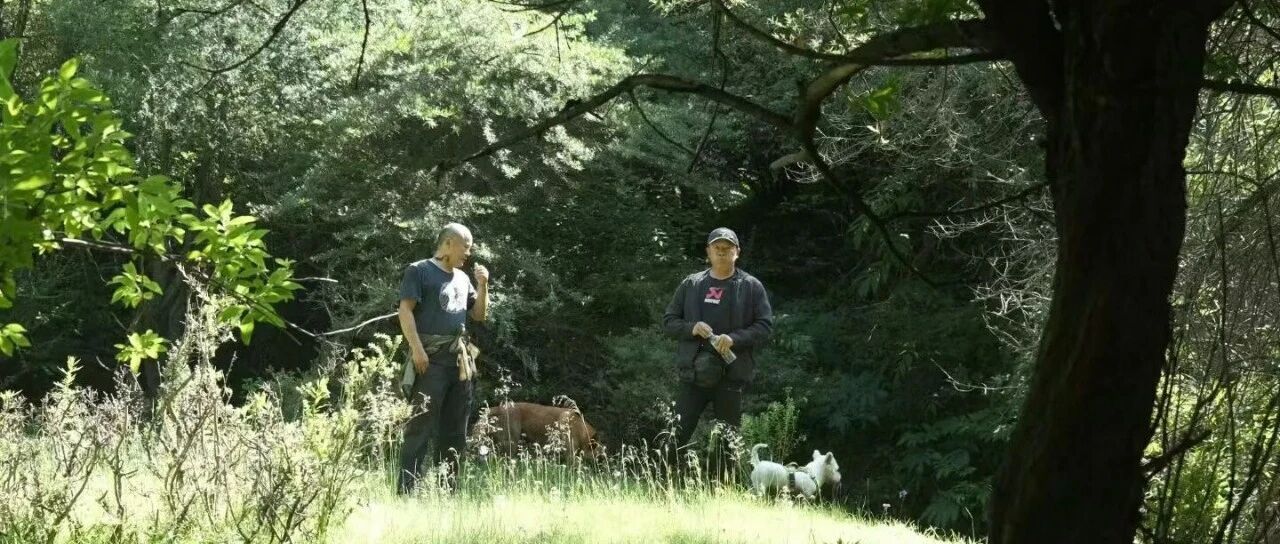
Jason | Using AI to Create Your Own Mini Program/Website
Two months ago in Chiang Mai, I stumbled upon the chance to start learning how to build mini programs. My AI programming mentor, Wangshen, told me, 'Once you finish your mini program, write a summary report.' Now I've completed the new mini program for Cangshan Hiking Home, and it's already being tested. It not only solves problems I've wanted to address for a while, like adding age tags to filter activities and providing an English version, but it has also introduced new features, such as browsing restaurants, guesthouses, and meeting points on a map for a more intuitive experience, and using AI to provide quite intelligent responses.
Learn AI Programming Together
Some information about AI programming
Celebrate the Torch Festival in a Nanzhao Royal Clan Village
Over the past two years, we have taken guests to celebrate the Torch Festival in Songhe Village, Eryuan. Together we slaughtered a sheep, and with the whole village, erected a huge torch in the center of the village square. Everyone made their own torches from hemp stalks, and together with the older and younger villagers, we rushed to grab the blessing baba (cakes) from the big torch, passing blessings to each other with fire. Even for me, a native Bai person, these are rare and precious traditional festival experiences. Dali has endless festivals, and I want to experience them more before they fade away. I remember the Torch Festival of my childhood: torches were no longer enough for me. Before the festival, I would tell my dad to prepare a bucket of waste engine oil and diesel, mix them together, and then I would tightly bind cotton and old cloth with rope into a ball (some kids would secretly take cotton from their quilts at home to make it). Finally, I would make an iron wire ball, soak it in the bucket of oil, and secretly take it out every day to look at it, looking forward to having a great time on the day of the Torch Festival. We would compete in the village and by the rice fields to see whose fireball or torch was more impressive. When the torches and fireballs were almost burned out, we would rush home, walk around the potted fruit trees in circles, and say blessing words, hoping they would grow even better in the coming year.