Jason | Using AI to Create Your Own Mini Program/Website
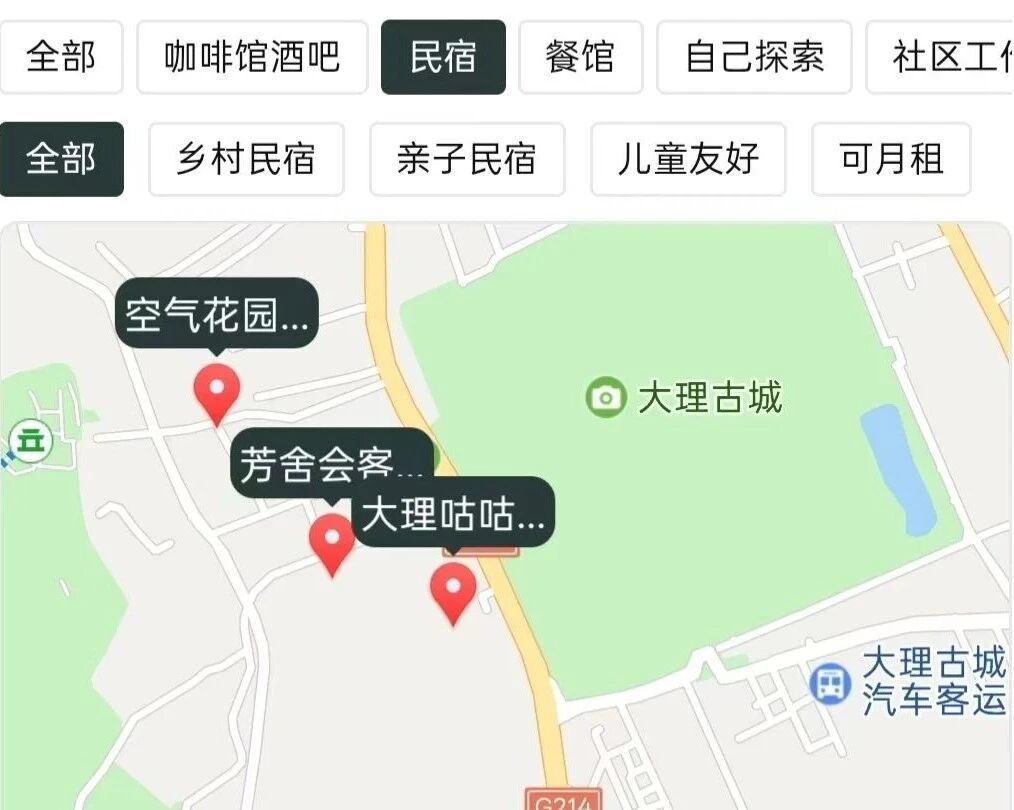
Two months ago in Chiang Mai, I stumbled upon the chance to start learning how to build mini programs. My AI programming mentor, Wangshen, told me, 'Once you finish your mini program, write a summary report.' Now I've completed the new mini program for Cangshan Hiking Home, and it's already being tested. It not only solves problems I've wanted to address for a while, like adding age tags to filter activities and providing an English version, but it has also introduced new features, such as browsing restaurants, guesthouses, and meeting points on a map for a more intuitive experience, and using AI to provide quite intelligent responses.
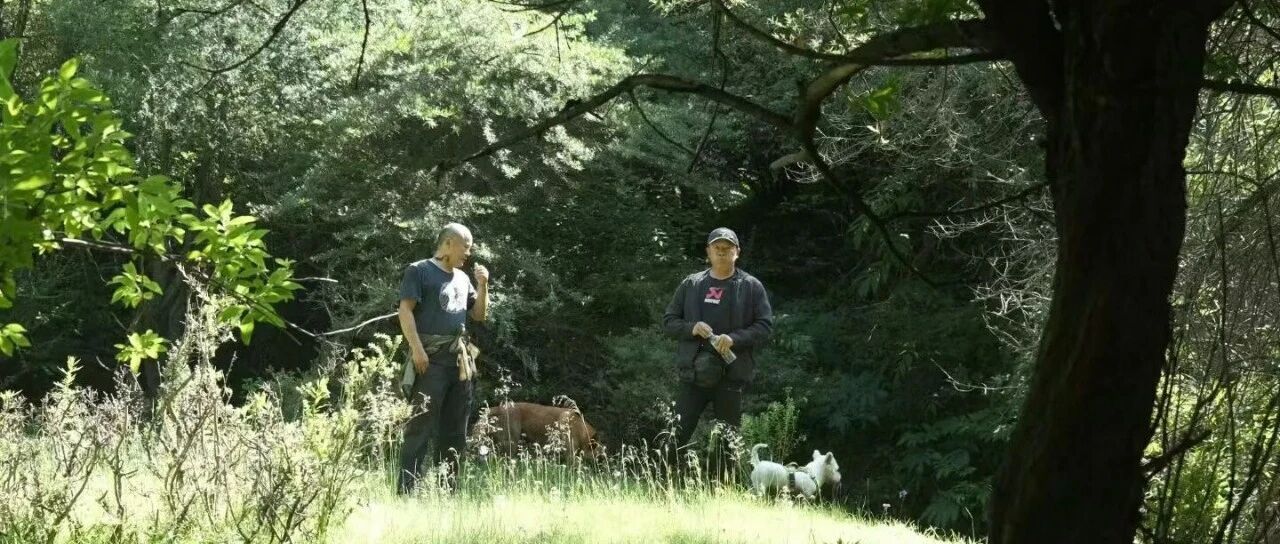
Two months ago in Chiang Mai, I stumbled upon the chance to start learning how to build mini programs. My AI programming mentor, Wangshen, told me, 'Once you finish your mini program, write a summary report.'
Now I've completed the new mini program for Cangshan Hiking Home, and it's already being tested. It not only solves problems I've wanted to address for a while, like adding age tags to filter activities and providing an English version, but it has also introduced new features, such as browsing restaurants, guesthouses, and meeting points on a map for a more intuitive experience, and using AI to provide quite intelligent responses.
Although at first glance, the new mini program looks similar in appearance to the one in use before, the core is already different—more powerful and user-friendly. More importantly, there are endless possibilities for future development. This way, when you have an idea, you can give it wings and make it happen, no longer being trapped.
I'm someone with almost zero programming background, so if I share my learning process, it's applicable to most people. That is, as long as you have something you want to make, you can make it. Because the biggest technical barrier is gone. Just like Wangsheng said, 'I thought I, an old programmer, couldn't do it, but now I can again.'
I have a few feelings:
To create something creative, you have to do it yourself. What's sold on the market is standardized, having to consider the commonality of many people. Maybe some have a bit of flexibility, but they're all modules, with limitations. For example, the mini program we bought is good, and the vendor is willing to improve it. But to add a new plugin requires many people to work together, and suddenly two or three weeks go by, or sometimes it just can't move forward. Or another example: I once used Shopify to build our multilingual website, dalitrip.com. It's good, but compared to doing it entirely on your own, the difference is huge.
So if you want to fully realize your ideas and create something creative, it's best if you can complete it independently; otherwise, you'll easily get stuck by various limitations. This possibility was almost impossible before the advent of AI programming, but now it's possible.
Getting started is easy, as long as your desire is strong enough. One day at the end of May, in the living room of CMI Guesthouse in Chiang Mai, Wangsheng was drinking chicken soup and said, 'Tell Codex to make a mini program that displays "hello world".' Sure enough, the code started scrolling, and soon a phone mini program interface appeared with 'hello world' on it. Now that I think about it, although Wangshen casually used this phrase, it was very symbolic because it opened up a new world for me. As soon as he finished his bowl of soup, the teaching was done, and I went off to explore on my own.
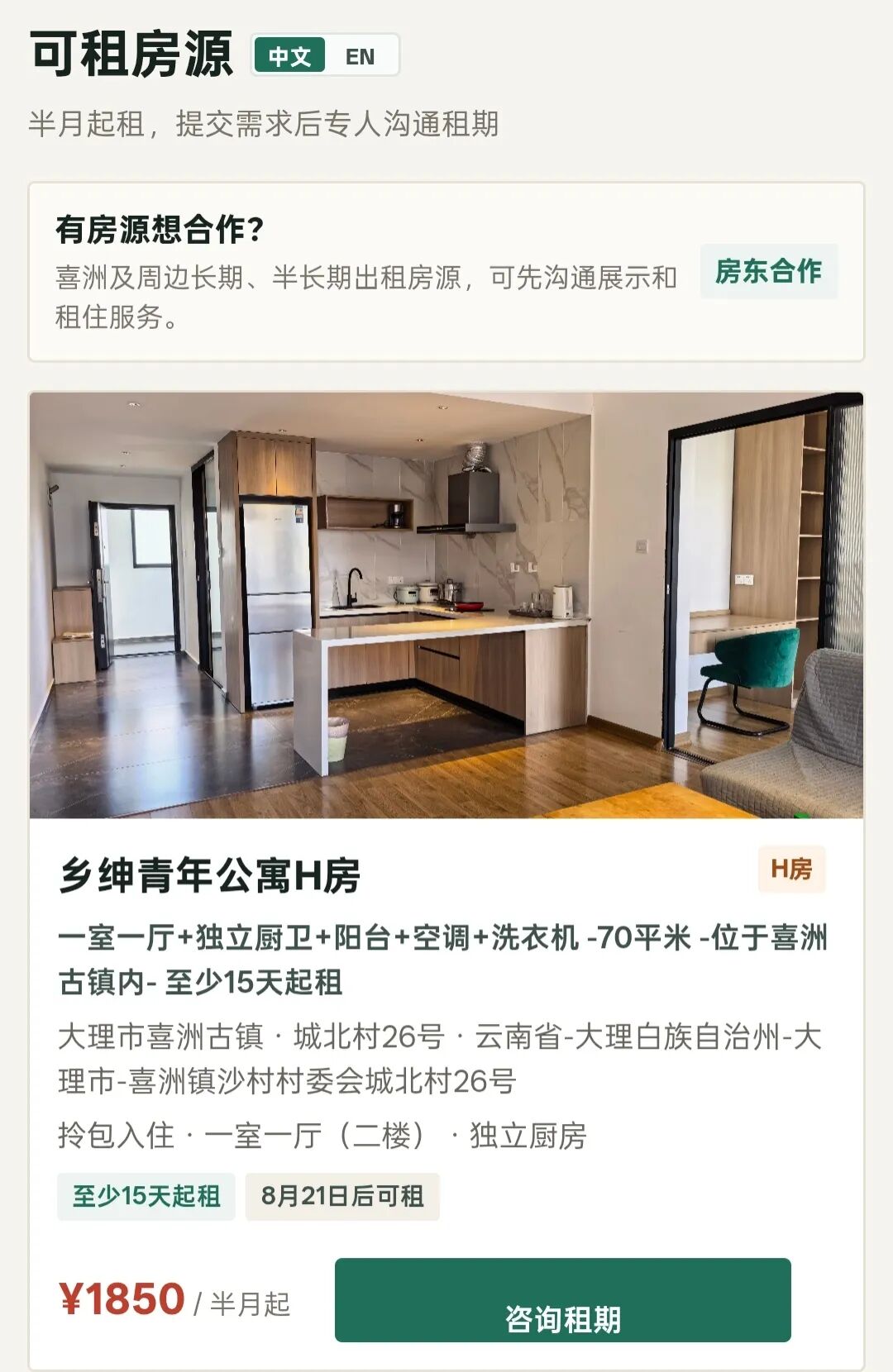
Not long after, I saw a mini program in Wenjin's WeChat Moments called 'Xizhou Long Stay'. It had some of her long-term rental listings and welcomed people to move in. Wenjin is someone who added my WeChat when consulting about our activities; we've never met in person. I could tell at a glance that she had made this mini program herself. I found it interesting and wanted to share it, but discovered that feature wasn't available. So I contacted her and we started chatting. She's also a programming novice. Last year, she tried to build a mini program herself but didn't succeed. Now with the rapid development of AI, she managed to do it. And because of the support of an AI knowledge base consultation, she no longer worries about having a temporary departure of an employee familiar with the business. That's also a great liberation. Wenjin finally said, 'I really want to have my own platform.' I think that's the most important driver. Also, only after talking with her did I learn that she had been watching me build my mini program and website and got some inspiration. Knowing this gives me even more motivation to share this.
Wenjin's mini program 'Xizhou Residence'
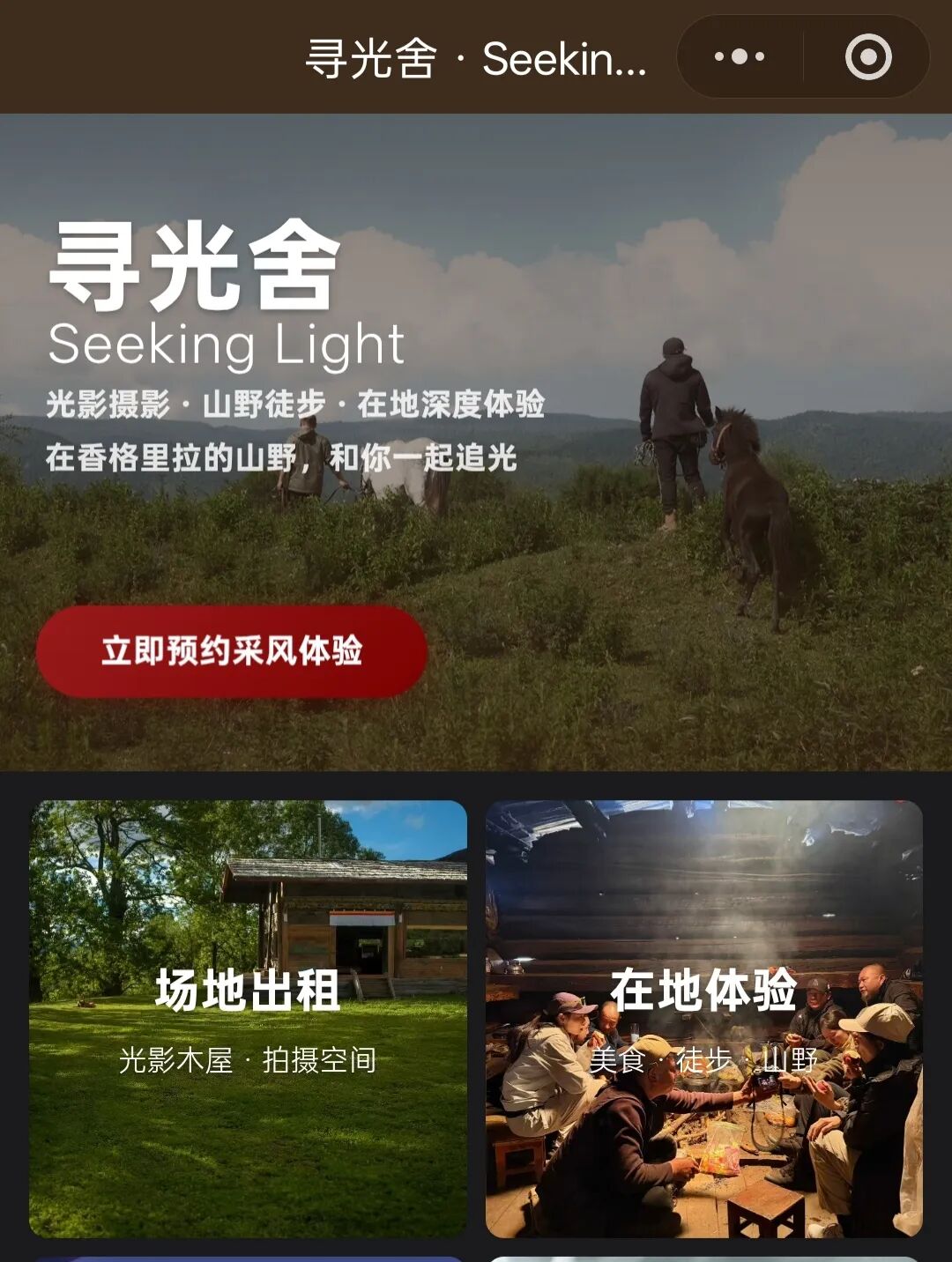
The other day, I went to Shangri-La and taught Cheng Chang for half a day how to use AI to write a mini program. He started from zero and took two or three days to set up the first version of his own mini program: 'Seeking Light'. Teaching benefits both teacher and student; from him, I also learned about the use of sound.
Cheng Chang's mini program: Xun Guang She (Seeking Light Studio)
Today, I went to A Jin's house. After chatting, he and Yang Qiao want to turn everything they've created into a mini program/website, including clay animation works (videos), prints, paintings, photographs, A Jin's writing (blog), and even the tea they made from wild tea picked on the mountain after their travel experiences. This is also almost impossible to do without doing it yourself, but it's not difficult.
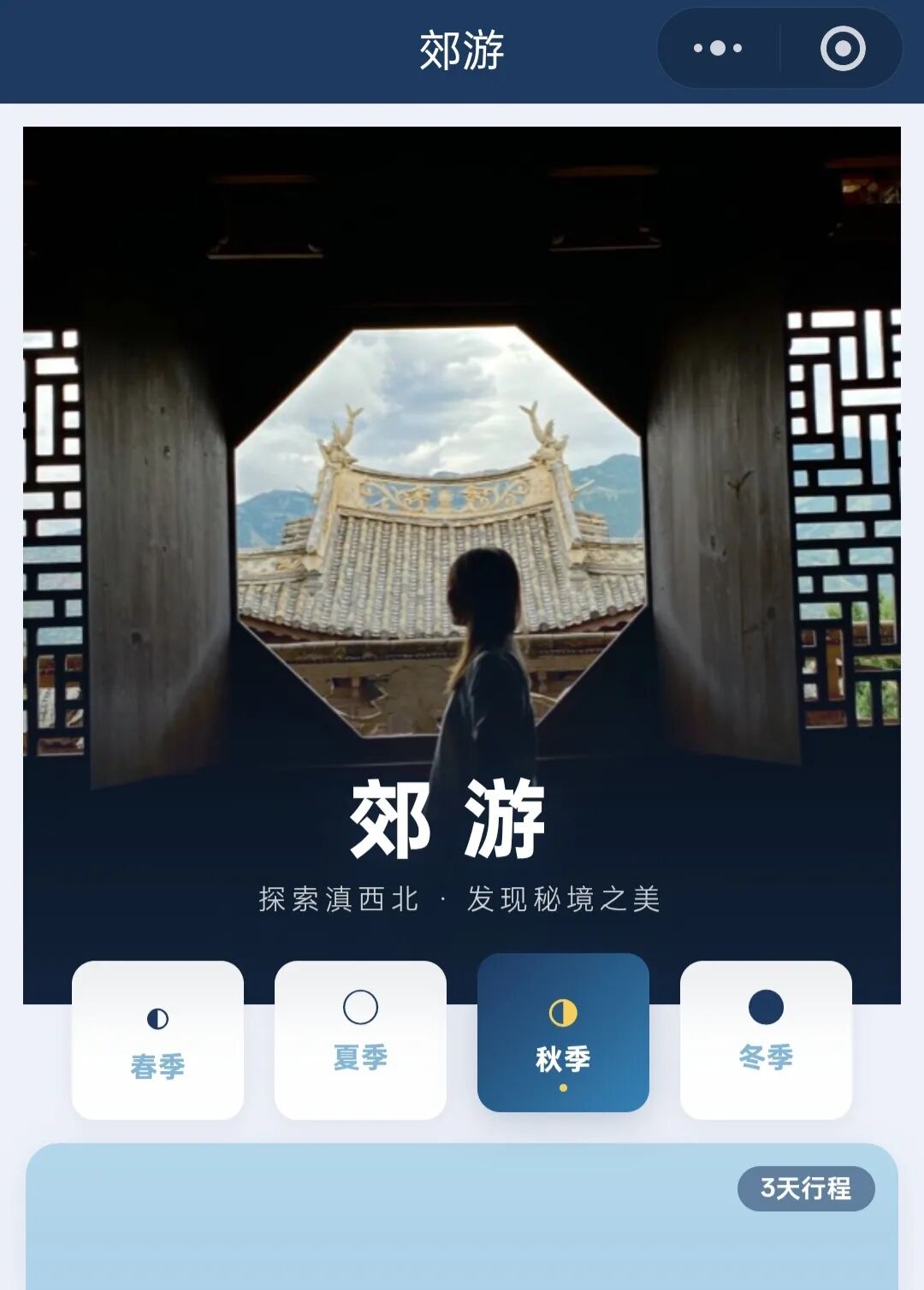
Xiao Jing plans to create a mini program about mushrooms and foraging, sharing her discoveries, and even learning to identify wild mushrooms with enthusiasts. Xiao Li bought a new computer and is preparing to create content about paddleboarding and local customs. He Chen and Wangwang are going to create an independent mini program 'Suburban Outings' for everyday, in-depth travel experiences in Yunnan. Dahai and Chen Wei will do content about their future Langu Valley wine grape growing and winemaking experiences. With possibilities, there's a lot to do.
Wangwang's experimental version of the 'Suburban Outings' mini program
Listing these mini programs is to say that anyone can do it. All you need to do is tell the AI your ideas, just like talking to a friend.
So if you've been strongly wanting to make your own mini program, website, or blog for a long time—whether it's commercial, personal expression, or presentation—just like the rest of us, start from scratch and give it a try. I think you'll definitely succeed.
What's the biggest difficulty? How to start? Previously, the biggest hurdle was that you didn't know programming, but now AI can do almost all of it. The most basic tasks, like registering a mini program, certification, and filing, have now become the most cumbersome initial work. However, before the official release, you can skip all these. Once you've finished your mini program or website, you won't give up just because of a little hassle. In one sentence: skip what's unnecessary, and just start.
What tools to use? The AI tool I use is Codex (ChatGPT), and I've also tried Claude Code. From my personal experience, both are very strong and friendly to beginners, but the cost is a bit high, and there are also inconveniences accessing them from mainland China (you need to solve VPN, payment, registration, and other issues).
To make it easier and more accessible in China, we're now trying Hermes (open-source and free) + DeepSeek (low cost) + Qianwen for image reading. There are other similar choices; as long as they have similar capabilities, you can use them as starting tools. The most important thing is to start, even if it's a rough start. As AI technology keeps advancing, what matters more may not be the most cutting-edge model, but using the tools at hand to learn and experiment, and you'll definitely create something. A beginner doesn't need to think about which tool is the most powerful; leave that question for later.
Programming tool Hermes download (copy to browser): https://desktop.hermesagent.org.cn/ #download. This is a Chinese-optimized version, and setting up the API is user-friendly. However, some machines might not be able to run it and may need an upgrade.
Then pair it with thinking capabilities: DeepSeek API: https://www.deepseek.com/. Register an account, generate an API key, and fill it into Hermes.
Cost: Hermes is free, DeepSeek is very cheap—about 50 RMB is enough to make an ordinary mini program or website. When going live: WeChat cloud space 19.9/month, WeChat certification fee 30. (For Codex, it's 20-100 USD per month.)
What's simple for someone who already knows is not easy for a beginner, and you'll encounter various problems along the way. Although I'm also a beginner, I've benefited from others' help in making my own mini program, so I'm very willing to help others in similar need get through this starting phase. If you want to know more or run into difficulties, feel free to add my WeChat: lingjiec Jason.
Or join this article and our learning group: 'Learn AI Programming Together' (The official account can't be updated frequently, so this information will be updated on the mini program side.)
AI is like a Doraemon. It has many wonders, and many things it can't do. Sometimes it messes up, but it's a Doraemon. It can achieve many things you can't do on your own. The freedom gained after learning is a degree. Even if it's not 100%, if it's 25, 50, 75%, that's all great.
In one sentence: start and give it a try!
-----------------------
Appendix: Some features of the new Cangshan Hiking Home mini program:
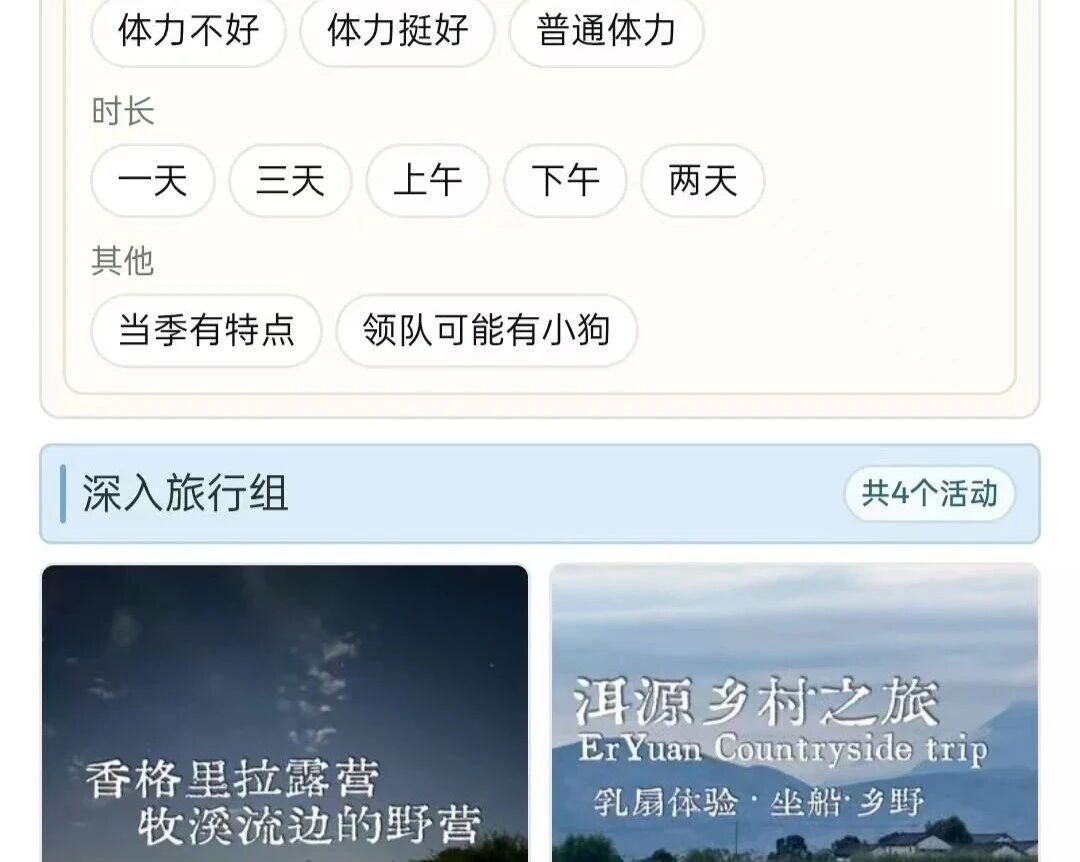
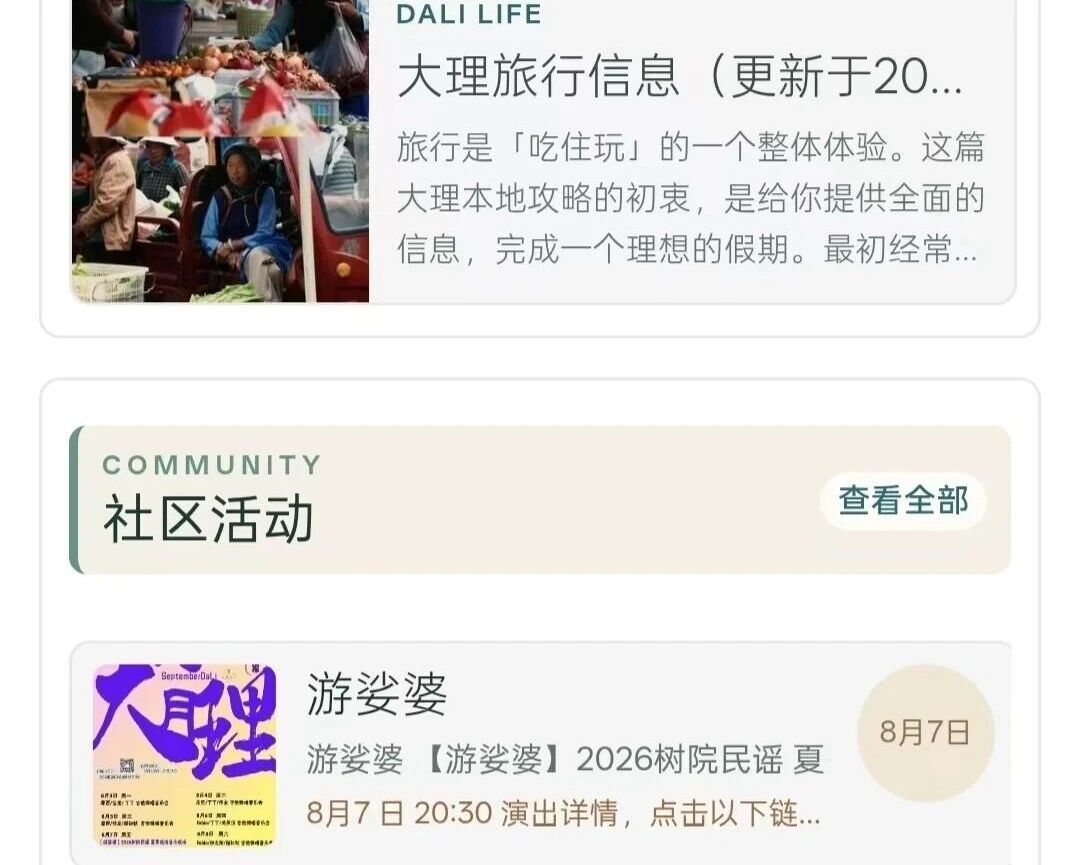
1. It integrates travel activities, Dali restaurants, guesthouses, markets, festivals, community events, introductions of our team and guides, and blogs together. It's more like a community website than a simple booking mini program.
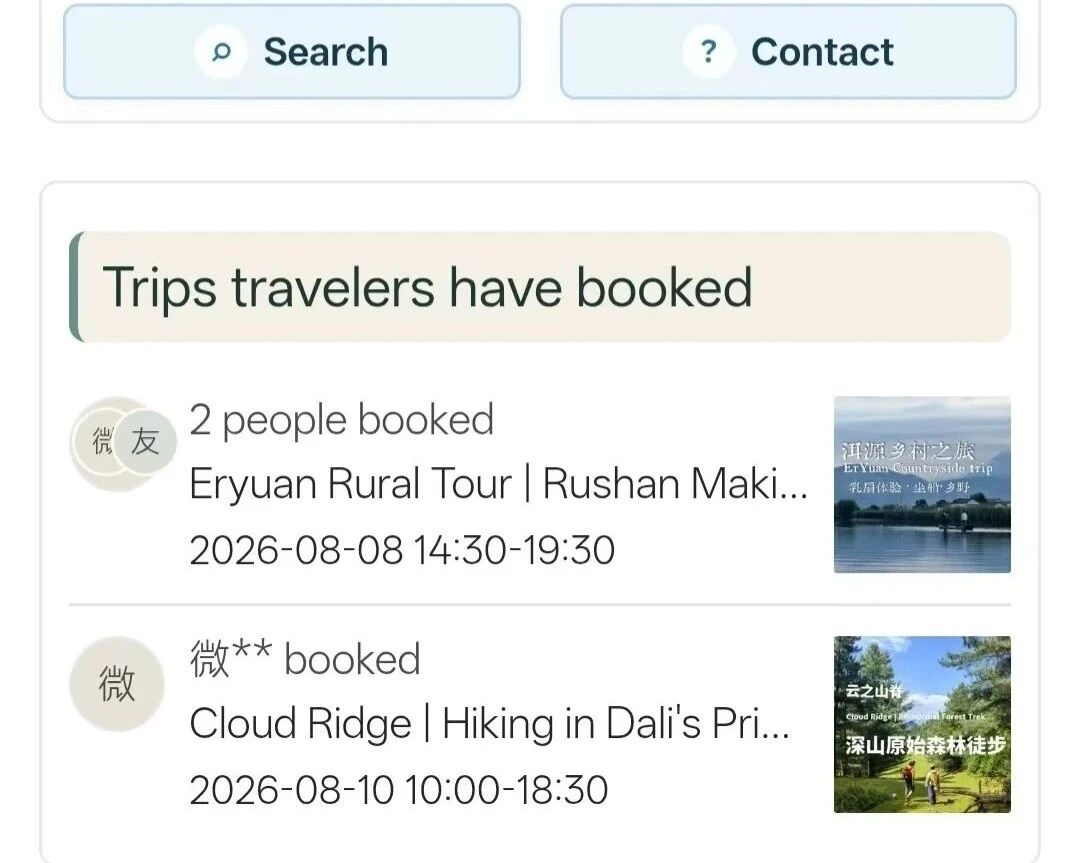
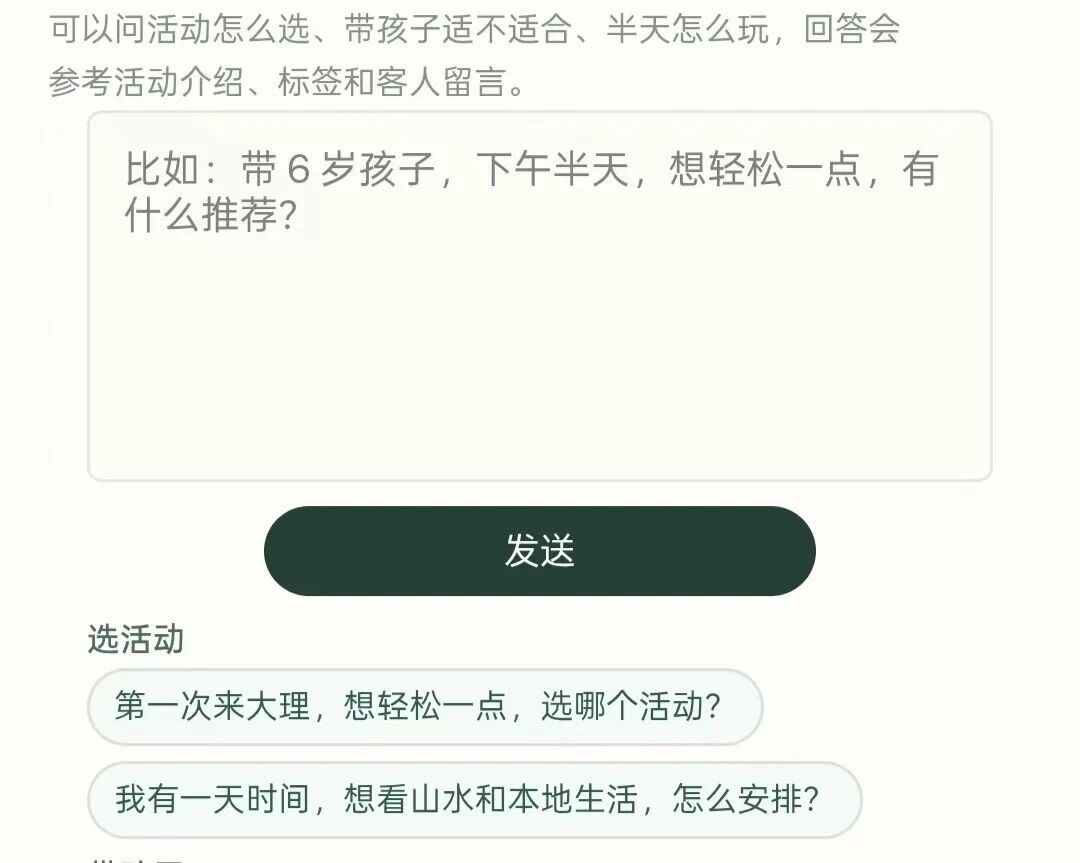
2. It introduces a community information map, fairly smart AI consultation (DeepSeek), tags for flexible categorization of various content (activities, restaurants, guesthouses, etc.), interoperability between information, and provides an English version.
3. The website www.dalitrip.cn (click the original link in the bottom right corner) was generated by a single command: 'Create a website based on the mini program's architecture.' Since it uses the same data as the mini program, there's no need for extra synchronization, and it can be generated directly. Although it's already quite good, it can also provide multilingual support.
Tag selection for activities (age, type)
English version
AI consultation
Local information map
About us and guides
Local information homepage
Photos

Weiterlesen
3
Learn AI Programming Together
Some information about AI programming
Celebrate the Torch Festival in a Nanzhao Royal Clan Village
Over the past two years, we have taken guests to celebrate the Torch Festival in Songhe Village, Eryuan. Together we slaughtered a sheep, and with the whole village, erected a huge torch in the center of the village square. Everyone made their own torches from hemp stalks, and together with the older and younger villagers, we rushed to grab the blessing baba (cakes) from the big torch, passing blessings to each other with fire. Even for me, a native Bai person, these are rare and precious traditional festival experiences. Dali has endless festivals, and I want to experience them more before they fade away. I remember the Torch Festival of my childhood: torches were no longer enough for me. Before the festival, I would tell my dad to prepare a bucket of waste engine oil and diesel, mix them together, and then I would tightly bind cotton and old cloth with rope into a ball (some kids would secretly take cotton from their quilts at home to make it). Finally, I would make an iron wire ball, soak it in the bucket of oil, and secretly take it out every day to look at it, looking forward to having a great time on the day of the Torch Festival. We would compete in the village and by the rice fields to see whose fireball or torch was more impressive. When the torches and fireballs were almost burned out, we would rush home, walk around the potted fruit trees in circles, and say blessing words, hoping they would grow even better in the coming year.
Qi Lin | April · Mangkuan
Foreword: Two years later, I invited a favorite guest to write again. The text Qi Lin sent back brought the wind of the Nu River, along with our longing for Huang Ping. Over a month ago, the evening breeze of the Nu River blew. At that time, little Huang Ping was too small, looking up at me, unable to climb onto the rock where I sat. Wangwang, April 2026