Qiqi | Dali Bai Torch Festival
The Torch Festival is one of the most important traditional festivals of the Bai ethnic group, held annually on the 25th day of the sixth lunar month. Originating from fire worship, it was also called the "New Fire Festival" in ancient times. Read more.
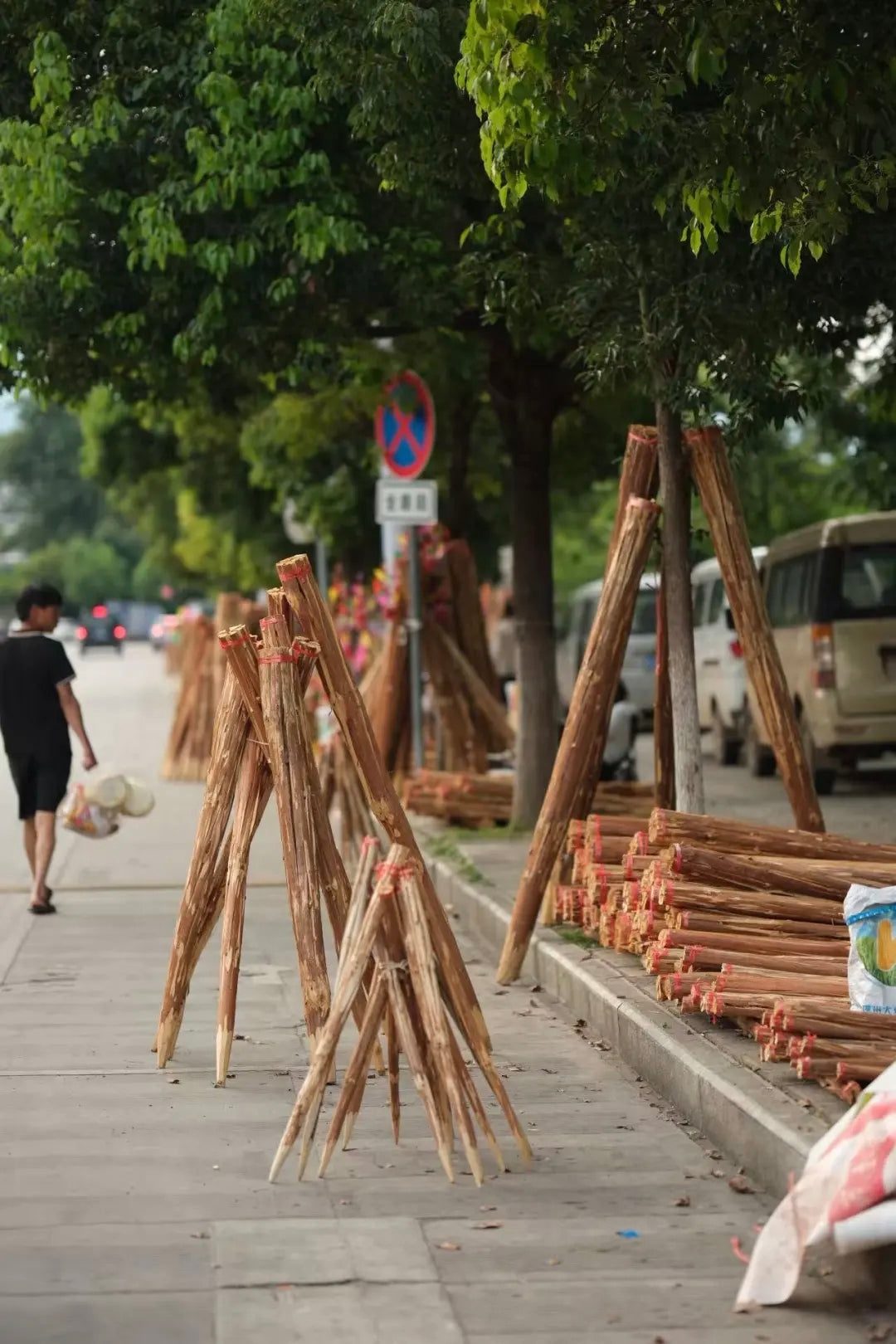
The Torch Festival is one of the most important traditional festivals of the Bai ethnic group, held annually on the 25th day of the sixth lunar month. Originating from fire worship, it was also called the "New Fire Festival" in ancient times. In Dali's folk legends, the Torch Festival comes from the story of "Burning the Pine Torch Tower" and was established to commemorate the loyal Lady Baijie. Before the Torch Festival, women dye their nails with impatiens flowers, which is also related to Lady Baijie. In addition to the Torch Festival, the Sea Festival on the eighth day of the eighth lunar month in Dengchuan and Xizhou areas also traces its origin to Lady Baijie's drowning in the lake.
The most important activity of the Torch Festival is the construction of giant torches, which is a key custom in every village. Every year, experienced craftsmen are responsible for making the torches. Large torches, up to ten to twenty meters or even higher, are made from dry pine wood and fatwood, erected in the village square or other important locations. Men are typically responsible for tying and assembling, while women handle incense burning and prayers.
At the top of the torch is a handmade bamboo and paper structure called a "shengdou," which is the core decoration, symbolizing abundant harvests, national peace, favorable weather, and other auspicious meanings. Around the edge of the shengdou and on the torch, handmade paper flags, fruits, and more are hung. Among the fruits, the most special is the torch pear, which ripens around the Torch Festival and has red spots on the sun-exposed side, signifying a bountiful harvest. After the torch burns and the shengdou falls, villagers scramble for it, as it is believed that whoever grabs it will have good luck.
The craft of making the shengdou is a regional paper-making technique. The number of tiers on the shengdou varies, and the meaning differs accordingly. Some shengdou have a base shaped like a lotus platform, but all are auspicious. It is said that the largest shengdou in Zhoucheng requires hundreds of people to make together. The tradition of business in Xizhou also influences the inscriptions on their shengdou, which often focus on themes like seeking wealth throughout the year.
During the Dragon Boat Festival, Dali people tie five-color threads on their wrists for protection and to ward off evil and disasters. During the Torch Festival, these five-color threads are thrown into the fire to burn. Fire symbolizes purification and rebirth, and throwing the threads, which have absorbed evil and bad luck, into the torch symbolizes the complete disappearance of the past year's misfortunes in the flames.
Throwing rosin powder is also an important part of the Torch Festival. From a safety perspective, it is generally thrown toward the fire source, or the torch is lowered and the powder is thrown downward. The sudden burst of flame symbolizes driving away evil and bringing light, and wherever the fire shines, diseases and disasters are eliminated. Some villages retain the ancient custom of walking around rice paddies with torches late at night and throwing rosin powder, aiming to burn pests and protect the harvest.
The Bai and Yi ethnic groups around Dali all celebrate the Torch Festival, but in Fengyangyi, the Torch Festival is held without fire. Legend has it that the fire scared away the village's phoenix. Since then, although there is no fire in Fengyangyi's Torch Festival, it is still lively. On the Tea Horse Road, horse racing competitions are held, and the sound of hooves on the smooth stone slabs is like a cheerful tune. A stage is set up in the small village square, where Bai folk songs, Dabenqu, and sanxian music are performed.
The most exciting part is the "noodle grabbing" event. During the Fengyangyi Torch Festival, a bowl of noodles is served, and as long as you can grab it, there is an unlimited supply. One year, I was responsible for grabbing noodles, and relying on my height and physique, I successfully broke through the crowd of several hundred. If people who are afraid of fire still want to participate in the excitement of the Torch Festival, Fengyangyi is highly recommended.
🔥 Torch Festival travel tips:
March Street in Dali Old Town: The closest to the old town. The torches are usually lit after dark, and people gather from Cangshan Gate toward the center of March Street Square. This year's giant torch has already been set up. The night market and bonfire dancing will also be very lively.
Zhoucheng: The most authentic Bai Torch Festival around Dali. In past years, Zhoucheng's torches were the largest among nearby villages!
Eryuan West Lake: The water torch festival is quite unique. Holding torches and rowing on West Lake at night, with firelight and starlight reflecting on the lake, is very beautiful just to imagine.
🔥 Torch Festival purchasing tips:
Combine large and small torches; shengdou and colored flags are essential decorations. Other decorations such as fruits and pine branches can be added according to personal preference.
Buy a bag of rosin powder; it can be used for many throws. Do not use too much, and pay attention to safety.
You can also buy a few bundles of kindling wood to insert into the gaps of the large torch, making it easier to ignite.
🔥 Torch Festival safety tips:
When throwing rosin powder, do not aim it at anyone's face, hair, or body, as it is very dangerous. Generally, lower the torch below knee level and throw downward. Also, do not throw a large handful; a small pinch is enough. Happy festivals, safety first.
Photos and videos
Weiterlesen
3
Jason | Using AI to Create Your Own Mini Program/Website
Two months ago in Chiang Mai, I stumbled upon the chance to start learning how to build mini programs. My AI programming mentor, Wangshen, told me, 'Once you finish your mini program, write a summary report.' Now I've completed the new mini program for Cangshan Hiking Home, and it's already being tested. It not only solves problems I've wanted to address for a while, like adding age tags to filter activities and providing an English version, but it has also introduced new features, such as browsing restaurants, guesthouses, and meeting points on a map for a more intuitive experience, and using AI to provide quite intelligent responses.
Learn AI Programming Together
Some information about AI programming
Celebrate the Torch Festival in a Nanzhao Royal Clan Village
Over the past two years, we have taken guests to celebrate the Torch Festival in Songhe Village, Eryuan. Together we slaughtered a sheep, and with the whole village, erected a huge torch in the center of the village square. Everyone made their own torches from hemp stalks, and together with the older and younger villagers, we rushed to grab the blessing baba (cakes) from the big torch, passing blessings to each other with fire. Even for me, a native Bai person, these are rare and precious traditional festival experiences. Dali has endless festivals, and I want to experience them more before they fade away. I remember the Torch Festival of my childhood: torches were no longer enough for me. Before the festival, I would tell my dad to prepare a bucket of waste engine oil and diesel, mix them together, and then I would tightly bind cotton and old cloth with rope into a ball (some kids would secretly take cotton from their quilts at home to make it). Finally, I would make an iron wire ball, soak it in the bucket of oil, and secretly take it out every day to look at it, looking forward to having a great time on the day of the Torch Festival. We would compete in the village and by the rice fields to see whose fireball or torch was more impressive. When the torches and fireballs were almost burned out, we would rush home, walk around the potted fruit trees in circles, and say blessing words, hoping they would grow even better in the coming year.