Jason | Kameda Shogen
Although we didn't get to meet Shogen this time, it seems I've already met him. In fact, I've learned a lot more about him from over a decade ago. Past experiences, present life, and future possibilities all seem to intertwine. Time is quite magical. More
One day, Captain Tie sent me a handwritten note with detailed address: Kameda Shogen, Yuimyoji Temple, 48 Monzen-cho, Murasakino, Kita-ku, Kyoto City, Japan. Phone: xxx...
There was also a voice message:
"Today I found this contact info for Shogen, because he left a small notebook with me before. Yeah, it's been about ten years since we last met. He used to love cycling too. Since his father is the head of a temple in Japan, and it's hereditary, he was in Dali back then, pretty hippie, hanging out with us. We had a brief time together. Yeah, and he loved cycling around Southeast Asia, just running away from his family at that time, riding a bike, and he lived in Dali for a long while.
I don't know if you two can meet, so I'm sending this to you. If you happen to pass by his temple, you can ask about him. I don't know if he's gone back to be a monk at his family temple or what."
I don't know Shogen, probably never seen him, but I vaguely remember the story. "A young Japanese man lived in Dali for a while, his family had a temple, his father wanted him to inherit it, but he didn't want to go back."
In the ancient town of Dali over a decade ago, many people came from all over the world. Shogen was one of them. Maybe there are still many people coming now, but Dali was small back then. If someone stayed for a while, even just appeared, they became known. Limited foreigners, limited hostels, limited shops. People hadn't widely used WeChat or mobile phones yet. Most socializing was through face-to-face conversations and hanging out together. Daily life was confined to a few streets, and people easily ran into each other.
Most of these foreigners later left. On one hand, Dali became a tourist hotspot, more expensive, more commercialized, more turbulent. On the other hand, visa policies tightened for a while, making it hard to come back once a travel visa expired. A few stayed through marriage or other complicated methods, but after all, most couldn't find such ways.
Another reason I remember Shogen is because from that casually heard story, I learned for the first time that in Japan, some temples are family businesses. The owner can marry and pass it down as an inheritance, which is quite different from temples in China.
With such a shallow connection, I wasn't sure if it was appropriate to visit him, so I put it aside for the time being.
Last Saturday, not wanting to stay in the dorm all day, I biked to the Kamo River in the afternoon and followed the stream toward the mountains. When it got late, I started heading back. Upon returning to Kyoto city, I suddenly remembered that Yuimyoji Temple was not far away. I checked the map and headed there, about three kilometers.
I arrived soon and saw the temple I'd heard about ten years ago. It was on a quiet street with little traffic. From the outside, the temple was not large, a traditional architectural compound with the main gate closed. When I walked to the side to take a look, I saw someone coming out of a side door next to the main gate—a family with a child. I wasn't sure if I should approach and ask. I watched them slowly walk to the street corner and turn. Then I went home too.
A few days later, after class, not wanting to go home right away, I rode my bike around the school. Suddenly I thought of visiting Yuimyoji again. It wasn't far, so I biked over.
When I got there, the door was still closed. I thought to myself, why do I want to meet this person who is so distant and not really connected to my past? I guess I still want to know what happened to that young man who left Japan over ten years ago, traveled around the world by bike, and didn't want to go home to a normal life. Often, the thoughts and passions of youth can lead to very different outcomes over time.
With that thought, I walked to the side door. There was a doorbell, so I pressed it. Soon, someone inside spoke. From the tone, it sounded like "Who is it?" I didn't hear clearly. I asked in Japanese, "Is Shogen here?" The door opened. It was a very old lady. She looked me over, a bit puzzled. I continued, "I came from China. I'm a friend of Shogen from ten years ago, when he was traveling in China." The lady then understood and said to me, "Shogen doesn't live here." She pointed to the left and said, "Turn there, then turn again. He lives in a house in that area."
I wasn't sure if I could find it, and was about to go check. The old lady called over an old gentleman, thin and lean, saying, "Shogen's father." The old gentleman muttered something to the old lady. I guessed it was because she spoke English, and he was teasing her. I explained the situation again, and he signaled that he would take me.
We walked together toward Shogen's residence. The old gentleman said, "Shogen might be at his place playing guitar, but I don't know if he's there. Sometimes he goes to America." He said a few more things I forgot, partly in English, partly in Japanese. His English was decent; he could express himself well.
Turning into a small alley behind the temple, there were small traditional houses and lush plants on both sides. Following the alley, we came to one of the small houses. It was a very Japanese low house with an extremely tiny courtyard, overgrown with plants. Shogen's father leaned in to look, called out, but there was no response. He said, "But his bicycle is here; maybe he went to America." Seeing that I didn't understand, he said, "Musical instrument shop."
I said, "It's okay. I was just passing by and didn't contact in advance. Sorry to bother you. I'll go back and add him on WeChat, then arrange a time with him." My language skills were limited, so I mixed Japanese and English.
On the way back, I asked Shogen's father, "Is Shogen married now?" "No, he hasn't married yet." His father was a very gentle man, not talkative, but clear and concise. After taking leave of his father, I thought since I was already there, I searched Google for musical instrument shops. Indeed, there was one nearby called "America-ya Gakkiten." I biked there quickly, but the shop had no customers. I guessed he probably wasn't there. So, based on the contact information from the note, I sent a WeChat friend request, then biked back.
In the evening, Shogen accepted my WeChat request. I told him the general situation, saying I had been to Yuimyoji.
He said, "Really!? The main gate must have been closed, right?" "I met your father."
"Sorry, I usually spend the afternoon by the Kamo River playing guitar."
"It's fine, it's my fault. I happened to be nearby, so I was an uninvited guest."
"I miss Dali. Cangshan Mountain is my territory. Wow! A friend from Dali coming near my place feels like a miracle. It's a rare opportunity."
"Yeah, I heard from Captain Tie, and I also wanted to meet you."
"I miss Dali terribly. A friend told me that the ancient town of Dali has changed too. Shuanglang and Caicun have changed too, right?"
"It's more commercialized. People live in more distant villages now."
"Oh.. still commercialized.. I guess the Dali ancient town I knew is gone 😅. I don't know much about Dali at night. When I was in Dali, I got up early every day to climb Cangshan, ate something after coming down, did yoga, and at dusk performed or set up a stall on Renmin Road."
Although we didn't get to meet Shogen this time, it seems I've already met him. In fact, I've learned a lot more about him from over a decade ago. Past experiences, present life, and future possibilities all seem to intertwine. Time is quite magical.
Continuer à lire
3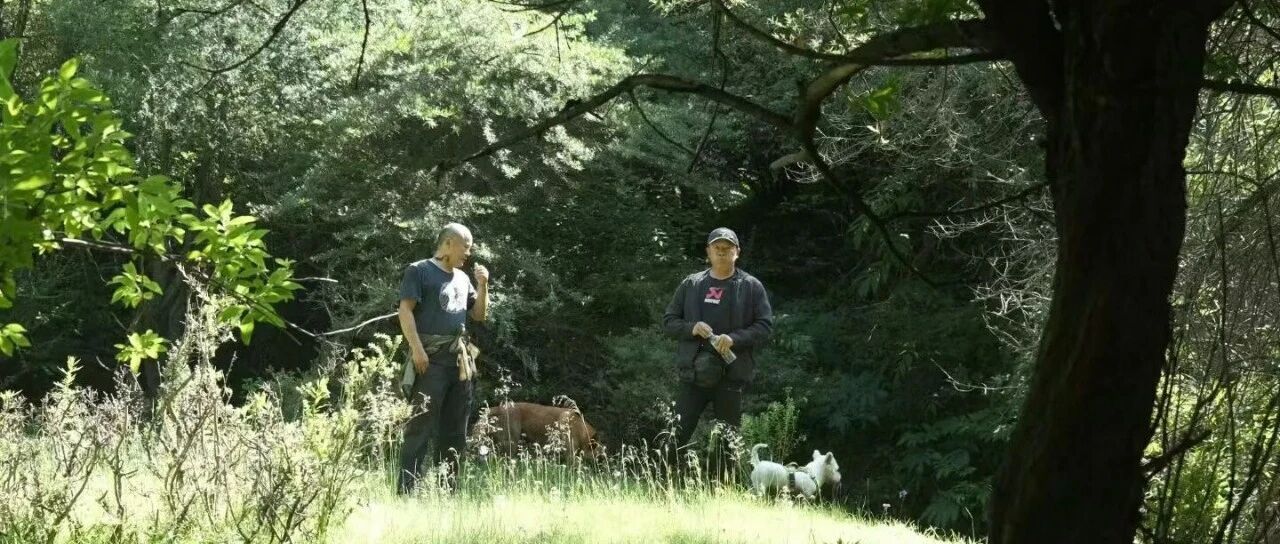
Jason | Using AI to Create Your Own Mini Program/Website
Two months ago in Chiang Mai, I stumbled upon the chance to start learning how to build mini programs. My AI programming mentor, Wangshen, told me, 'Once you finish your mini program, write a summary report.' Now I've completed the new mini program for Cangshan Hiking Home, and it's already being tested. It not only solves problems I've wanted to address for a while, like adding age tags to filter activities and providing an English version, but it has also introduced new features, such as browsing restaurants, guesthouses, and meeting points on a map for a more intuitive experience, and using AI to provide quite intelligent responses.
Learn AI Programming Together
Some information about AI programming
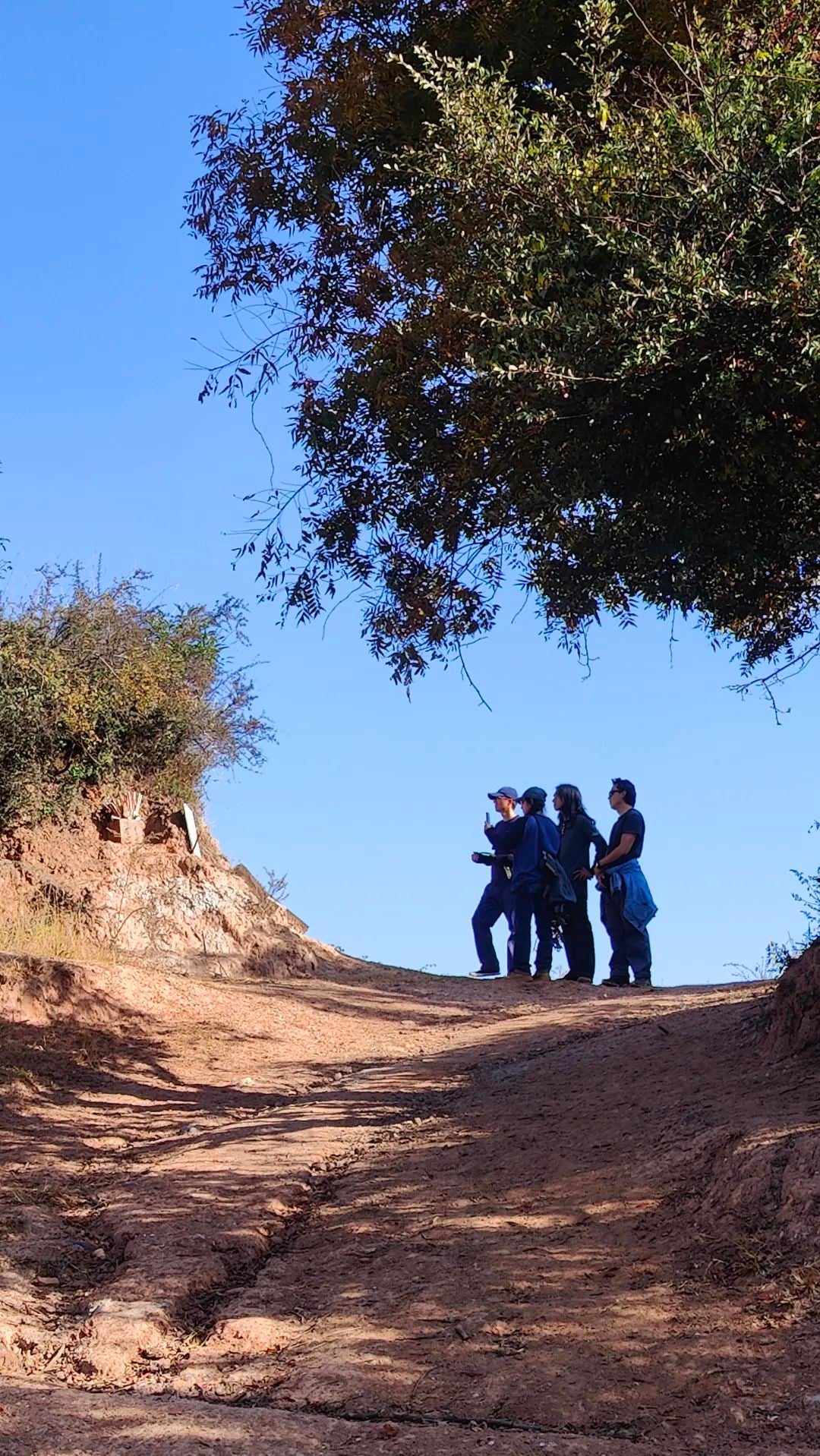
Celebrate the Torch Festival in a Nanzhao Royal Clan Village
Over the past two years, we have taken guests to celebrate the Torch Festival in Songhe Village, Eryuan. Together we slaughtered a sheep, and with the whole village, erected a huge torch in the center of the village square. Everyone made their own torches from hemp stalks, and together with the older and younger villagers, we rushed to grab the blessing baba (cakes) from the big torch, passing blessings to each other with fire. Even for me, a native Bai person, these are rare and precious traditional festival experiences. Dali has endless festivals, and I want to experience them more before they fade away. I remember the Torch Festival of my childhood: torches were no longer enough for me. Before the festival, I would tell my dad to prepare a bucket of waste engine oil and diesel, mix them together, and then I would tightly bind cotton and old cloth with rope into a ball (some kids would secretly take cotton from their quilts at home to make it). Finally, I would make an iron wire ball, soak it in the bucket of oil, and secretly take it out every day to look at it, looking forward to having a great time on the day of the Torch Festival. We would compete in the village and by the rice fields to see whose fireball or torch was more impressive. When the torches and fireballs were almost burned out, we would rush home, walk around the potted fruit trees in circles, and say blessing words, hoping they would grow even better in the coming year.