Ajin | Stories Within Stories
Last year at Wayuan I didn't yet have the awareness to write stories; I only occasionally recorded some bizarre dreams. One morning when I woke up, I shared with Yuanjun a story I had written on a whim: The Art of Wave Riding, a story about a young man who controls the waves, based on our mutual friend Xiaohei. Xiaohei poops in the water, farts in the water, does everything in the water—that's his life. Yuanjun was very excited as he described his feelings after hearing the story, and encouraged me to keep writing. Later, I began to consciously choose to listen to the stories of friends around me, using their real experiences as a foundation to start writing. Originally my goal was thirty stories, but Banxie said that was too few; eighty would be enough for publication. So far I have written: Golden Dream, Urgent as Fire, Cloud Infant, Mountain-Summoning Talisman, Mountain Ghost Money, Beauty Festival, Popcorn Pill, The Art of Wave Riding, Eternal Wonder Qing, Porcelain Fragment Person, Red Bird, and so on—about fifteen stories in total. That day Lina and Ranjie came, and their encouragement made me realize I could connect these stories with my actual life. So I launched an activity: 'Writing Poems and Telling Stories in the Forest.' This plan also received Jason's instant like, instant reply, and instant support.
Last year at Wayuan I didn't yet have the awareness to write stories; I only occasionally recorded some bizarre dreams. One morning when I woke up, I shared with Yuanjun a story I had written on a whim: The Art of Wave Riding, a story about a young man who controls the waves, based on our mutual friend Xiaohei. Xiaohei poops in the water, farts in the water, does everything in the water—that's his life. Yuanjun was very excited as he described his feelings after hearing the story, and encouraged me to keep writing. Later, I began to consciously choose to listen to the stories of friends around me, using their real experiences as a foundation to start writing. Originally my goal was thirty stories, but Banxie said that was too few; eighty would be enough for publication. So far I have written: Golden Dream, Urgent as Fire, Cloud Infant, Mountain-Summoning Talisman, Mountain Ghost Money, Beauty Festival, Popcorn Pill, The Art of Wave Riding, Eternal Wonder Qing, Porcelain Fragment Person, Red Bird, and so on—about fifteen stories in total. That day Lina and Ranjie came, and their encouragement made me realize I could connect these stories with my actual life. So I launched an activity: 'Writing Poems and Telling Stories in the Forest.' This plan also received Jason's instant like, instant reply, and instant support.
What excited me was that some people actually signed up! My first batch of experience participants was Sijia and her two children.
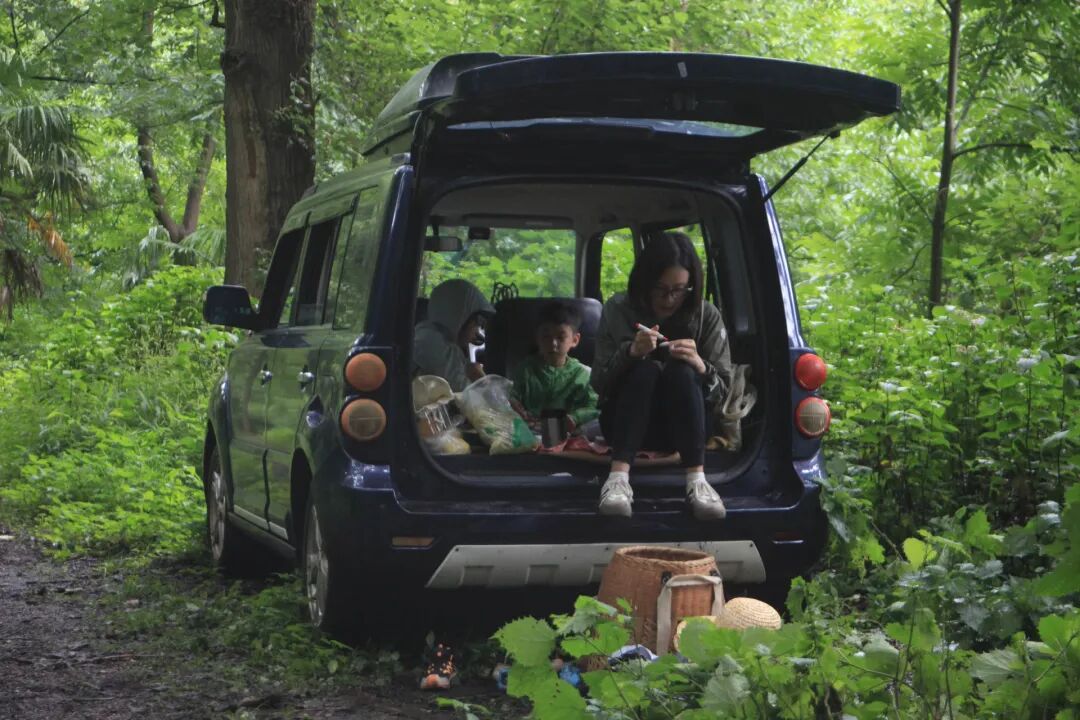
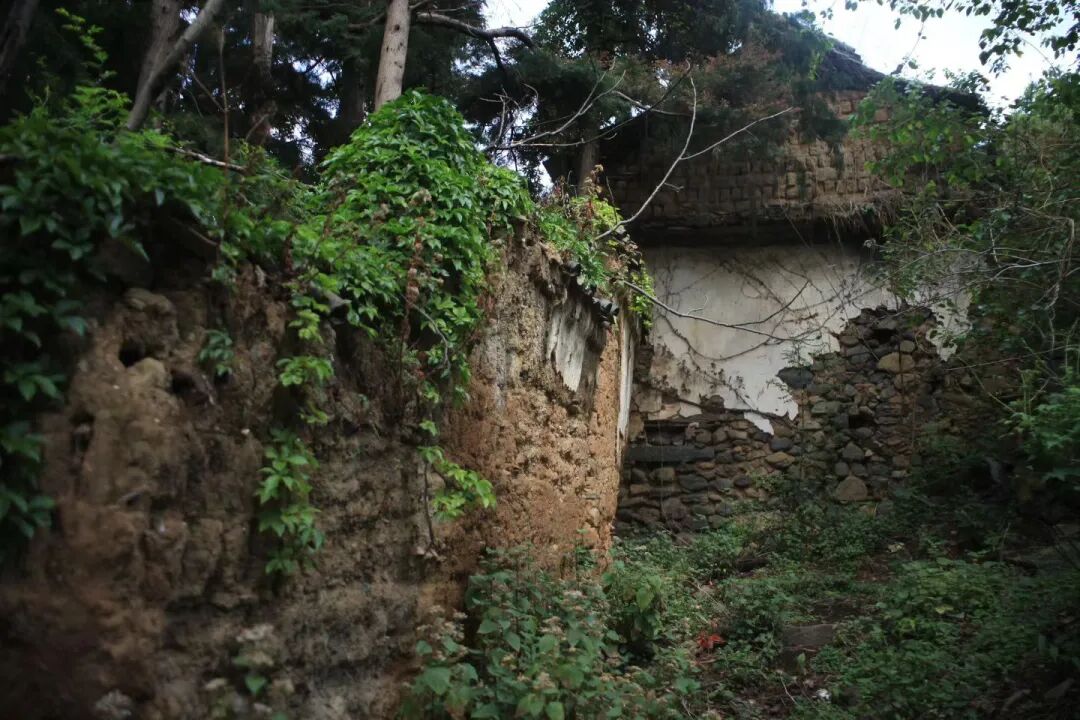
This was the first activity of writing poems and telling stories in the forest. The night before, I was thinking about how to introduce each plant. I read the Book of Songs, which describes many connections between plants and human emotions, between plants and time, and between plants and life. But I always felt that the Book of Songs is, after all, the Book of Songs; its lyricism and romance sometimes cannot match the authenticity of a torrential rain. That day it rained quite heavily, but we still chose a difficult path that required adventure. Wet and dripping, we got into the car and, listening to the raindrops outside, began telling stories.
Sijia shared a story from her hometown, Honghe, about the Sino-Vietnamese War. The younger brother shared the story of 'Woman as Tiger.' I shared a new story I had written: Mountain Ghost Money.
Sijia: This was told to me by my mother's colleague. She used to be a soldier in the army. My hometown is Pingbian, under Honghe in Yunnan. Pingbian is very close to Hekou. China and Vietnam had fought a war there, and many people died. But they couldn't find out where their homes were, because their faces had been blown apart by shells. So they buried them in Dawei Mountain in Pingbian. The roads back then were winding. It takes about forty minutes to get to Pingbian now, but when I was young, it took four hours to drive there. One night, a very heavy rain fell; the car couldn't move at all in the mountains. Then fog began to spread through the mountains, and there were cliffs on both sides, so they dared not go on. But you know what they heard? They heard someone in the mountains singing army songs, but they couldn't see anyone!
I had seen similar descriptions in Chen Quzhen's 'The Wildland Dust Dream,' and later I referenced it in my film 'Night Tales from the Wasteland.'
Ajin: Mountain Ghost Money is a kind of Taoist amulet, a talisman left over from around the Qing Dynasty.
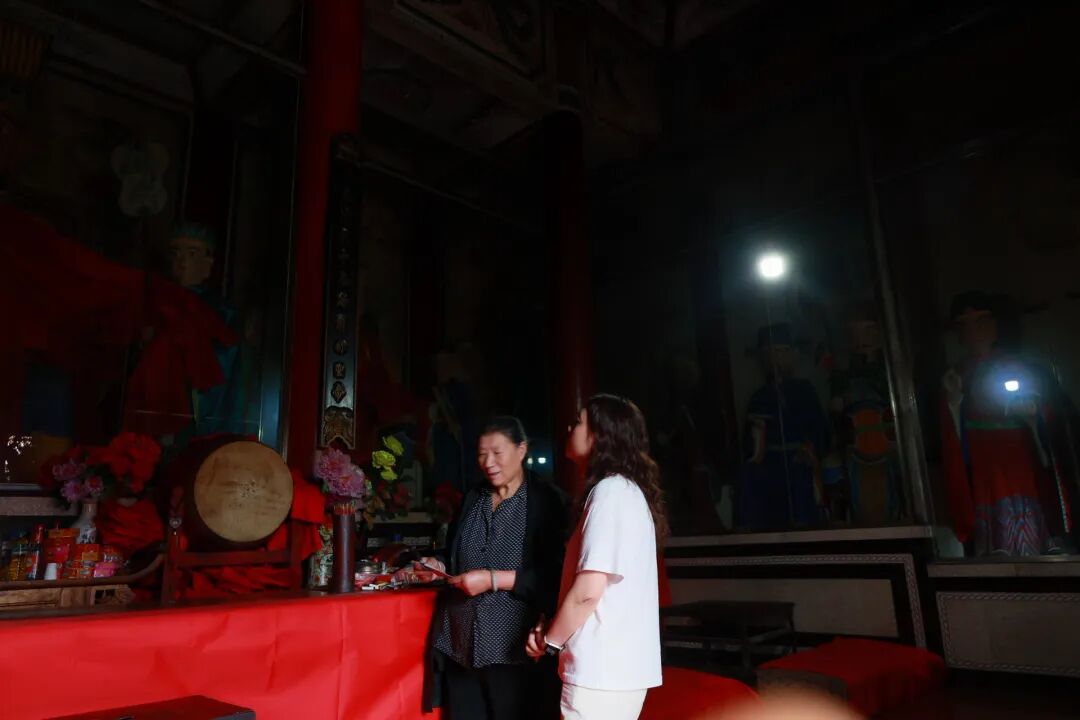
Lina came from Jinhua, Zhejiang, working as a teacher. Recently she was physically and mentally exhausted—partly because of work troubles, and partly because her depression had become severe. She chose to come to Dali to relax. Lina chose to join Ajin's hiking activity. They met at Baolin Temple. Ajin led Lina into Baolin Temple. At the entrance to the main hall, Lina asked Ajin to look at her heart area, which she covered with her hand. She slowly moved her hand away, and a hollow appeared in her chest. Lina said: 'Look, it's empty inside.' Ajin looked in and, through the hole in her heart, saw the Judge on the left side of the temple hall, which was then obscured by rolling clouds. Inside the hole, rain kept falling, lightning flashed and thunder rumbled. As the rain stopped and the clouds dispersed, a hollow coin appeared in the hole. Ajin reached in and took out the coin. Lina said: 'You can see it, right? This is a talisman given to me by a Zhengyi Sect Taoist. Since I got this talisman, my health and career have both declined significantly.' Ajin looked closely at the coin; on it were the words 'Mountain Ghost Money.' Lina said: 'That Taoist claimed to be from the Zhengyi Sect, showed me his Taoist certificate, and invited me to his temple to undergo an exorcism ritual.' The Taoist told Lina that when walking at night, you must not frequently look back; if you look back, your breath will blow out the two flames on your shoulders. Think about it—people who frequently look back are hesitant in their actions. Hesitation leads to a scattered mind. Once the flames go out and you lose the protection of the shoulder flames, you will be haunted by spirits. On your left shoulder sits a Hollow Spirit; it frowns at everyone you meet, scrutinizing good and evil. But afraid of making mistakes, it always cautiously leads you to keep distance from everyone. On your right shoulder sits a Money-Scattering Spirit; it makes you give everything to everyone. The Hollow Spirit prevents you from finding true love and makes you feel deeply lonely, while the Money-Scattering Spirit will make you dissipate all your wealth.'
The story does not end here, but I dare not continue writing it, for fear that Lina might see this article. Perhaps she doesn't want such a description at this moment. What she needs is more strength.
Sijia: A friend passed away. On the way for his wife to pick up the cremation urn, a grasshopper jumped onto the urn and couldn't be shooed away no matter what. His wife flicked it out of the window and drove on. But when she stopped at a rest area, the grasshopper was on the urn again. Later, when they went to bury the urn, the grasshopper jumped into the grave and was buried together with the urn.
Ajin: When I was very young, my cousin and I went to Jijiling, a graveyard by our village, to catch eels. It was said that those buried there could be reborn from ashes. In the dark night, we only had the light in front of us illuminating the fields. My cousin caught a huge eel! But because it was too big, it escaped from the bucket. Many years later, my cousin died in a car accident in Beijing. I got the news when I was a sophomore in university. Exactly ten years later, on a night in a foreign land, I dreamed that I had returned to my hometown again. An eel was firmly clamped by my middle finger. Then something strange happened: the eel actually spoke. It said: 'Will you let me go?' I said: 'Where do you want to go?' It said: 'I want to go back to Beijing.' I continued: 'How will you get there? Beijing is so far.' It said: 'I'll swim through the soil from here all the way there.' This dream was like an omen. Nostalgia is sometimes far-fetched. Each person's memories pile up into countless hometowns. When I pay attention to the present moment, the present is the past. In stories, 'story' means the 'past' in the present. My assumption that my cousin wanted to return to his hometown is a subjective interpretation of a raconteur.
So every story contains real circumstances that we don't know about and could never reach. That's the most moving aspect of stories.
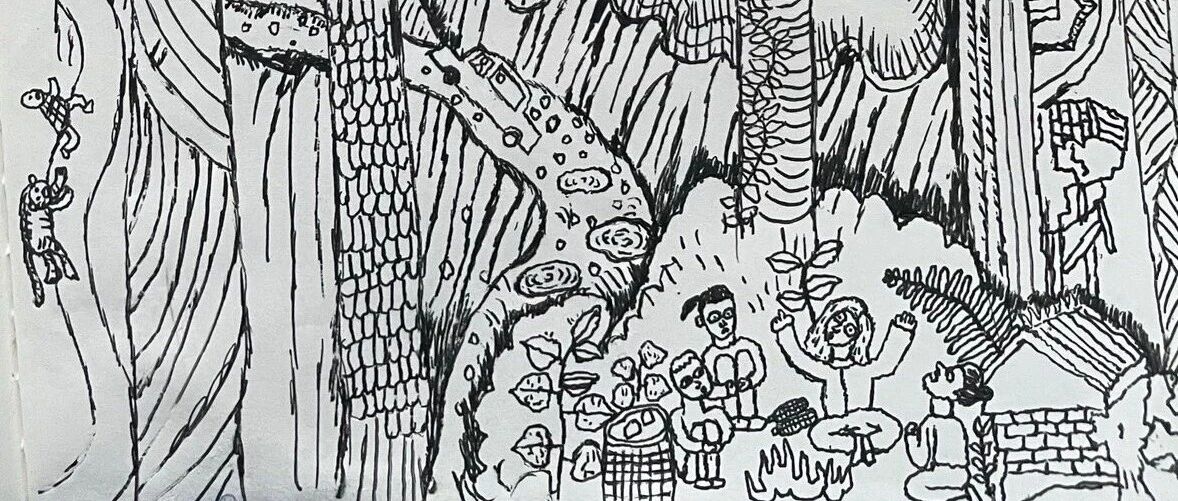
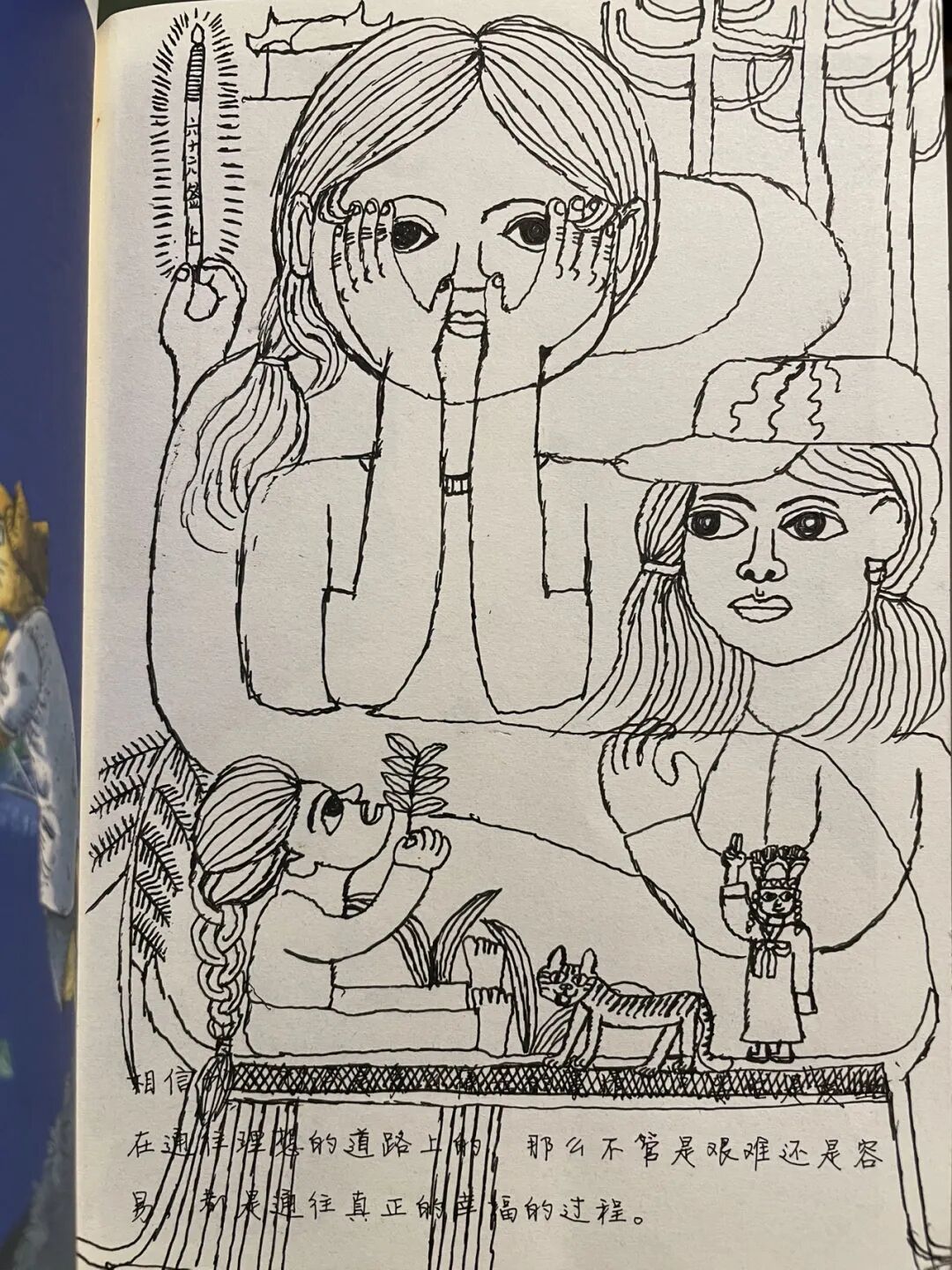
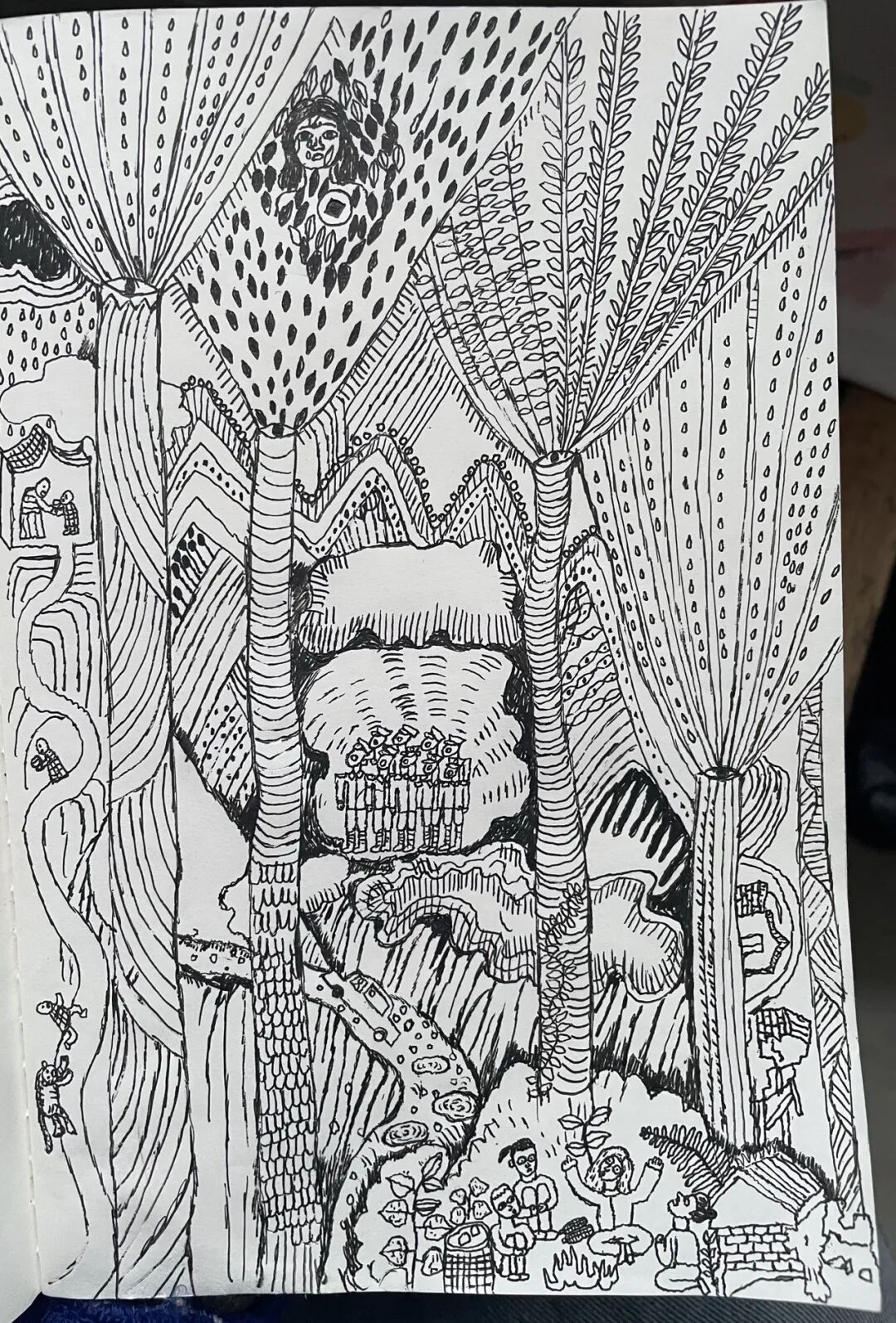
I drew that day's scene. At the bottom, the one raising both hands and speaking is Sijia. On the left are her two children, and on the right is me.
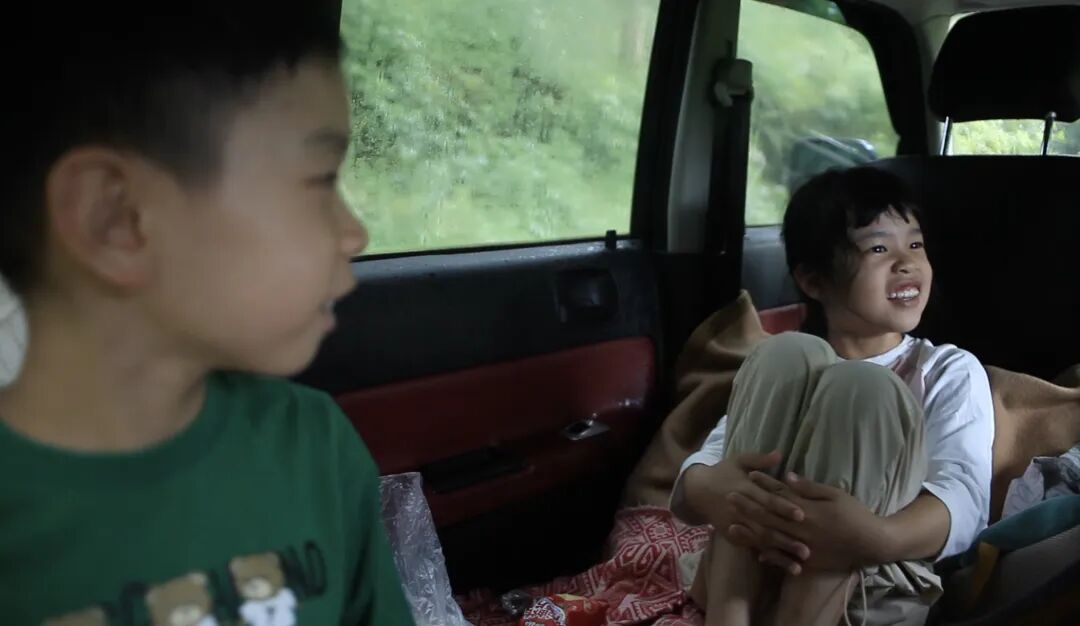
The happiest ones at this activity turned out to be the children. One of them said: 'I want to split the time for painting stones and use half for storytelling.' I asked him why. He said: 'So I can go to school and share these stories with my friends.' Thus I gained two new friends.
Photos
계속 읽기
3
Jason | Using AI to Create Your Own Mini Program/Website
Two months ago in Chiang Mai, I stumbled upon the chance to start learning how to build mini programs. My AI programming mentor, Wangshen, told me, 'Once you finish your mini program, write a summary report.' Now I've completed the new mini program for Cangshan Hiking Home, and it's already being tested. It not only solves problems I've wanted to address for a while, like adding age tags to filter activities and providing an English version, but it has also introduced new features, such as browsing restaurants, guesthouses, and meeting points on a map for a more intuitive experience, and using AI to provide quite intelligent responses.
Learn AI Programming Together
Some information about AI programming
Celebrate the Torch Festival in a Nanzhao Royal Clan Village
Over the past two years, we have taken guests to celebrate the Torch Festival in Songhe Village, Eryuan. Together we slaughtered a sheep, and with the whole village, erected a huge torch in the center of the village square. Everyone made their own torches from hemp stalks, and together with the older and younger villagers, we rushed to grab the blessing baba (cakes) from the big torch, passing blessings to each other with fire. Even for me, a native Bai person, these are rare and precious traditional festival experiences. Dali has endless festivals, and I want to experience them more before they fade away. I remember the Torch Festival of my childhood: torches were no longer enough for me. Before the festival, I would tell my dad to prepare a bucket of waste engine oil and diesel, mix them together, and then I would tightly bind cotton and old cloth with rope into a ball (some kids would secretly take cotton from their quilts at home to make it). Finally, I would make an iron wire ball, soak it in the bucket of oil, and secretly take it out every day to look at it, looking forward to having a great time on the day of the Torch Festival. We would compete in the village and by the rice fields to see whose fireball or torch was more impressive. When the torches and fireballs were almost burned out, we would rush home, walk around the potted fruit trees in circles, and say blessing words, hoping they would grow even better in the coming year.